
Loading...

Research & Compare the Top Invisible Braces

TL;DR:

Choosing the best invisible braces means balancing cost, convenience, and clinical supervision. This guide compares Invisalign, hybrid, and at-home aligners to help you decide what’s safest and most effective for your smile.

  • Invisible braces cost typically ranges from around $1,100 to $7,000 + depending on complexity and oversight.
  • Invisalign is the most established, doctor-supervised option for mild to complex cases.
  • At-home aligners may work for minor relapse cases but lack in-person exams and attachments.
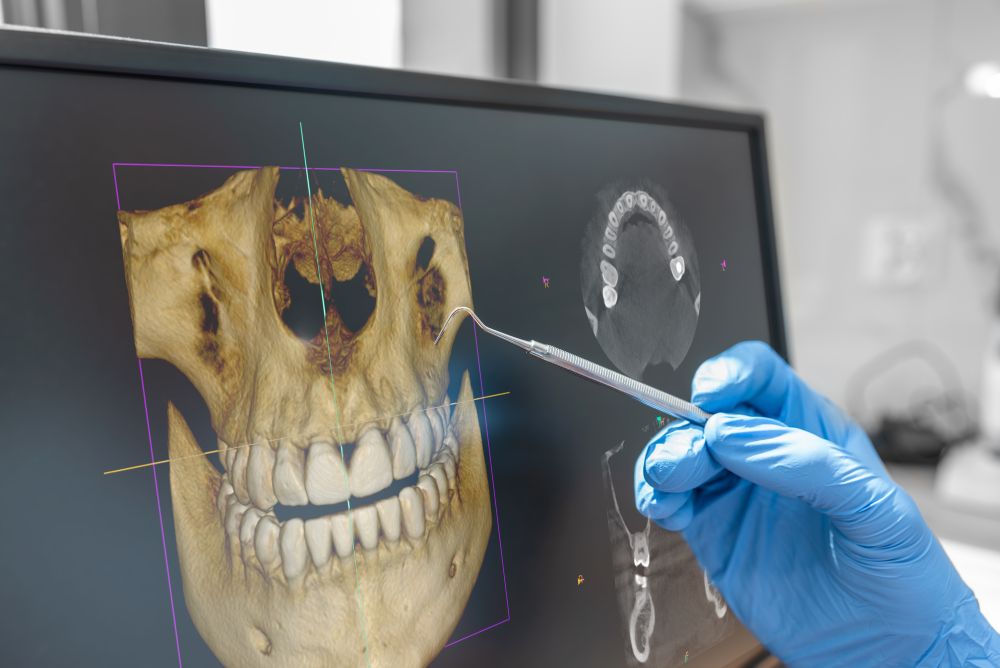
  • A professional consultation and X-rays are strongly recommended before starting treatment.
  • Retainers and addressing root causes are essential to maintain long-term results.

Straightening your teeth has always been associated with metal braces, but advancements in dental technology and health care have given people a new option: “invisible braces” or clear aligners. Today, people have more choices than ever in deciding what company to choose and which direction to take their teeth-alignment journey.

Invisible Braces & Clear Aligners Vary Drastically

Clear aligners or invisible braces vary drastically in price, medical oversight, and treatment plans. They do have a few big caveats to be aware of also. Namely, there’s a difference between companies like Invisalign, which require some in-office appointments with a dental professional, and direct-to-consumer sites that take molds remotely and ship aligners to your house without any check-ups. Mostly, direct-to-consumer sites are more affordable, but they are generally not recommended by many dental and orthodontic professionals, including the American Dental Association.

What Are the Best Clear Braces: Compare Direct to Consumer & Orthodontist-Prescribed Options

After SmileDirectClub shut down, leaving many customers in the middle of their treatment, the ADA issued a general statement (which did not name any particular company) about the potential dangers of straightening your teeth at home without medical oversight. In some cases, moving teeth without knowing the full picture of someone’s oral health can cause bone loss, teeth loss, gum issues, bite problems, pain in the jaw and permanent issues, the ADA asserted.

This isn’t meant to scare you out of a treatment you want, but it’s an important reminder that our teeth are an important part of our body — the head — and safely straightening your teeth needs to be considered in the context of your gum health, bone health, the roots of your teeth, your jaw and more. That’s according to our very own Dr. Kami Hoss, orthodontist and founder of SuperMouth, an oral care company. The bottom line? You really can’t understand that context without an examination by a doctor and some X-rays.

Dr. Hoss doesn’t recommend direct-to-consumer aligners for the majority of people (more on that below), but people who are interested in straightening their teeth solely at home should be sure to get an exam of their oral health before they go ahead. It’s important to understand that most orthodontists already offer free consultations, so there’s a chance you’ll be able to finesse a no-cost dental exam before you make your decision. (Here’s a provider-finder link from the American Association of Orthodontists, or you can call your local dentist.)

“If you are gonna be in that group where you absolutely want to do this at home, at least get the orthodontic consultation,” Hoss said. “Get a feel for how complex your case is.”

‘Appointment-Required’ Aligners vs. ‘At-Home Only’ Aligners: Here’s What to Know

In-office aligners route

An exam of your mouth and X-rays of your teeth should be included by the company’s care plan and whichever doctor’s office you’re working with. Dentists and orthodontists can become providers with different aligner companies, including the likes of Invisalign, Spark, Reveal, and Candid. You’ll have appointments along the way to check your progress, but the frequency of your appointments and what your care plan will look like depends.

In addition to having oversight by a doctor who can adjust treatment if something isn’t working, Hoss said another plus of these clear aligner companies is that they offer attachments in many cases. Attachments are small, often unnoticeable little nubs attached to some teeth that hook to the aligner and help them move. He compared attachments to handles on furniture.

“If you want to open a cabinet or move it around, it’s a lot easier to have a handle on that cabinet,” he explains.

Clear Aligner treatment from home (direct-to-consumer)

You’ll normally sign up through the company’s website and wait for your shipment of an at-home mold to provide an impression of your teeth. Then, the company’s medical network will review the results of your mold to determine whether you can go forward with treatment. You’ll be shipped new aligners every couple weeks or so, depending on the company and your individual plan. Because at-home only companies are just that — at home — you won’t get attachments.

According to Hoss, people who could benefit from a direct-to-consumer alignment option include what he calls “minor relapse cases.” These are people who may’ve already had braces, but their bottom teeth have moved a little, and they need some minor aligner treatment in straightening them back up again.

Different Invisible Braces for different needs

Again, he stressed the importance of having confirmation that your teeth and everything else is healthy. In some cases, evidence of damage caused by unsafe teeth alignment may show up years later when someone goes to the dentist for another problem, according to Hoss. Also, he said, straightening your teeth with aligners — even if effective at first — may miss the root of the issue, and ignoring the cause of the problem may cause problems or cause teeth to revert back after initial treatment.

Wherever you get your clear aligners, they’ll typically need to be worn throughout the day, unless you’re eating. Some people may also choose a “night-time only” plan.

While what’s best for you will depend on your needs, here are some companies to consider.

A screen shot of a clear aligner from Invisalign

What Are the Best Invisible Braces?

Invisalign

Invisalign is the name that kicked the whole idea of invisible braces into the mainstream. It works similarly to “traditional” braces in that you’ll need to find a doctor to start your treatment and work alongside for your entire treatment plan. You’ll find a provider in your area, come up with your treatment plan, get fitted for attachments or whatever you need, and then be on your way to straighter teeth.

The cost is comparable to regular braces, Invisalign says, though how much you’ll end up paying will depend on your specific needs. Depending on your plan, dental insurance may cover up to $3,000 of the cost, according to Invisalign, and you can use your FSA/HSA dollars. Because you’ll be working with a doctor, you may also be able to work out some sort of payment or installment plan.

After treatment, your doctor may recommend you use a retainer to keep your teeth in place. How that looks will depend on your treatment plan.

Reveal

Reveal is similar to companies like Invisalign and Spark because it requires check-ups and appointments with a dentist or orthodontist to keep you on track throughout your treatment.

We’re including it on this list because the claims the company makes on its website may make it a good aesthetic option for people more concerned about the clarity of their aligner. Reveal says that its aligners are guaranteed to maintain their clarity after two weeks of wear and drinking things like coffee. The company also says it’ll minimize its use of attachments, which are typically used for clear aligners since they help teeth move, but some people may want to minimize them.

To get started, find a provider in your area by searching your ZIP code. Reveal says its prices are between $2,000 and $5,000, and the company has a monthly payment option.

AlignerCo

AlignerCo is a direct-to-consumer company, so it’s best to get a clean bill of oral health from your dentist — and ideally a consultation with an orthodontist — before going this route so you can make sure you’re the right candidate for this treatment.

If you get the all-clear for at-home aligners, AlignerCo seems to be one of the most affordable options out there. The company offers a flat rate of $1,095 (or a discounted price) for a one-time payment, which includes the cost of the impression kit and retainers. AlignerCo also offers the option to divide the cost into 12 monthly payments with Affirm. There’s also a six-month plan.

The company isn’t working with any insurance providers, but you can use your FSA/HSA. You can always try to submit a claim after the fact to your insurance company.

If you have concerns about your treatment along the way, AlignerCo says you can contact your “Smile Crew Member,” which is a designated person who will pass along your requests to a dentist. If you want direct contact with a health care provider leading your treatment plan, this may not be ideal.

On its refund and return policy page, AlignerCo says you need to go through your entire treatment and follow your treatment plan’s rules in order to be eligible for “additional aligners.” While it doesn’t appear to give refunds for its treatment once you’re approved and started on your plan, you’ll get a refund for your impression kit if it turns out you’re not a candidate.

Candid

Candid started out as a strictly direct-to-consumer company but made the switch to requiring some doctor involvement. The result is a pretty cool model which may help chip at some doctors’ fears of unmonitored or hands-off teeth alignment while blending in the benefits of telehealth, like virtual check-ins and a majority at-home approach.

To start, you’ll need to find a provider to meet with you to start your treatment. Then, you’ll share updates on your progress through an app, and your provider may have you come in again if they sense something is going off track.

For information on price, ask your provider, but Candid’s hybrid model is meant to make the aligners cheaper than traditional braces. Candid also sells retainers in a similarly hybrid model, for which you can use your HSA/FSA dollars.

How We Chose the Best Invisible Braces

We selected clear aligner companies with different models by taking into account concerns people may have over medical oversight, affordability, type of care needed, and how well-known the brand of aligners is. When applicable, we also took into account what makes a company different.

FAQs

Are Invisible Braces Worth It?

Yes, invisible braces are worth it for many teens and adults who want a discreet, comfortable way to straighten their teeth. They’re removable, easier to clean than traditional braces, and often more convenient. However, results depend on wearing them consistently and being a good candidate for treatment.

What is the best brand of invisible aligners?

The best brand of invisible aligners depends on your individual needs. Invisalign is often considered the gold standard because it’s doctor-supervised and capable of treating mild to complex cases. Other strong options include Reveal, Spark, and Candid. For minor relapse cases, some at-home brands may work — but a professional exam is always recommended first.

What is the best invisible braces company?

The best invisible braces company is one that matches your oral health condition, budget, and treatment goals.

Invisible Braces vs Invisalign: What’s the Difference?

The main difference between invisible braces vs Invisalign is that Invisalign is a specific brand of clear aligners, while “invisible braces” is a general term that includes many companies. Invisalign treatment is doctor-supervised and can address more complex bite issues, while some at-home invisible braces are best suited for mild alignment cases.

Is $6,000 normal for Invisalign?

Yes, $6,000 is within the normal range for Invisalign treatment. The average invisible braces cost for Invisalign typically ranges from $3,000 to $7,000, depending on case complexity, length of treatment, and location. Many dental insurance plans contribute toward orthodontic treatment, and HSA/FSA funds can often be used.

What are the best discreet braces?

The best discreet braces include clear aligners like Invisalign and Reveal, as well as clear ceramic braces. Clear aligners are removable and nearly invisible, making them popular for teens and adults. Ceramic braces are less noticeable than traditional metal braces but remain fixed to the teeth.

5 Thumb Sucking Prevention Tips for Kids That Actually Work

TL;DR: Looking for gentle, effective ways to stop thumb sucking without the tears? This quick guide shares expert-approved thumb sucking prevention tips to help your child break the habit and protect their growing smile.

Here’s what you’ll learn:

  • Why thumb sucking is normal in early childhood—but may cause issues if it continues past age 4.
  • The difference between passive and vigorous thumb sucking (and why it matters for dental health).
  • 5 practical strategies to stop the habit, from thumb-free bedtime routines to positive reinforcement.
  • How tools like thumb guards or bitter nail solutions can act as gentle habit breakers.
  • When to talk to a pediatric dentist about long-term effects like thumb sucking teeth damage or potential need for braces.

Many babies and toddlers suck their thumbs. Developmentally, it’s completely normal. But most little ones also eventually stop sucking their thumbs between the ages of two to four years old. It’s when they don’t kick this habit by that time that it can become problematic, leading to dental issues such as bite problems or misaligned teeth. But luckily, with the right strategies, you can help your child stop sucking their thumb fairly easily, without all the tears and stress.

Why Kids Suck Their Thumbs (& Why it Matters)

Thumb sucking is a common self-soothing behavior, and many toddlers engage in it when they’re tired, anxious, or beginning to fall asleep, but as the American Dental Association notes, this normally stops by around age four. But some kids may continue to suck their thumbs as a method of comforting themselves past the preschool years.

That’s usually problematic, because prolonged thumb-sucking leads to many oral issues, such as:

  • Thumb sucking teeth damage
  • Changes in the jaw or roof of the mouth
  • Speech issues and social challenges
  • A higher likelihood of needing braces

Should You Try to Stop Your Kid’s Thumb Sucking Habit?

Yes. If they are over the age of four or you start noticing changes in their teeth, then it’s a good idea to start the process of breaking the habit gently.

5 Thumb Sucking Remedies That Actually Work

Here are five proven strategies for helping your little one stop their thumb sucking habit.

1. Create a New Bedtime Routine

If your little one tends to suck their thumb around bedtime, try replacing thumb sucking with other creature comforts, like a soft blanket, calming music, or engaging bedtime stories. Gently remove their thumb from their mouth while they’re sleeping if necessary.

2. Keep Them Busy

Similar to the way that telling bedtime stories keeps them occupied, keeping your little one’s minds – and hands – busy can help them stop them from sucking their thumb. So occupy them with puzzles, crafts, or anything else to keep them busy. This can be especially helpful to implement when they’re watching television, which often leads to unconscious thumb-sucking.

3. Use a Thumb Sucking Habit Breaker

For kids whose habit is a bit more pervasive, you might consider trying gentle habit breakers like wool or fabric mittens, thumb guards, or non-toxic bitter nail polish. These help your child develop awareness of when they’re sucking their thumb without feeling punished.

4. Praise Their Progress

Be sure to celebrate their wins with rewards like stickers, extra storytime, or high-fives and compliments. Varying rewards can be helpful, as can alternating between praising and withholding praise (within reason) so that the act of giving them praise remains meaningful. But remember, overall, praise works better than criticism.

5. Identity & Address Specific Triggers

From stress to fatigue to boredom, there are many things that might cause your kindergartener or grade school-aged kid to suck their thumb. Keep track of what they are, and then use the above strategies to pinpoint each of them. You may find it helpful to provide them a calm-down space, break time, or even a micro cuddle session.

Final Thoughts

If you’ve tried these tips and your little one continues to suck their thumb, then it may be time to talk to a pediatric dentist. There’s a correlation between thumb sucking and braces. That is, if you can’t get your child to stop, they may require braces (which can be pricey) down the line, when getting them might otherwise be preventable. So reach out today for help if you need it!

What Causes Gingivitis in Kids? What to Know About Periodontal Disease in Children

TL;DR: Gingivitis in kids is common. Thankfully, it’s also highly treatable! This guide helps parents understand what causes gingivitis, what to look out for, and most importantly, how to treat gingivitis in toddlers and children before it turns into something more serious.

  • Common symptoms include swollen, red, or bleeding gums
  • Poor brushing, nutrition, or mouth breathing can trigger it
  • Gingivitis won’t go away on its own—early treatment is key
  • Brushing twice daily, flossing, and regular dental checkups help
  • Choose kid-friendly fluoride or nano-hydroxyapatite products

If you have ever noticed your child’s teeth bleeding during brushing or flossing, or their gums are swollen or painful, your child may have gingivitis. Gingivitis is the first stage of periodontal disease and is, fortunately, easily treatable and reversible.

Symptoms of gingivitis in kids are fairly easy to detect. But is gingivitis common in kids? Yes. Still, even though gingivitis is very common in children, that doesn’t mean it’s good. That’s why taking the necessary measures to help prevent, treat, and cure gum disease before it worsens is essential.

What Is Gingivitis?

Gingivitis is a mild form of periodontal disease in children. Gingivitis happens when bacteria and plaque build up on the teeth, likely due to a lack of a good oral hygiene routine. It can cause a few uncomfortable symptoms, including:

It’s important to take gingivitis in kids seriously. Since it is the earliest stage of gum disease, there are specific steps you can take to help treat gingivitis before it becomes problematic. If gingivitis worsens and is not treated, children can develop periodontitis, a more severe form of gum disease, which typically involves irreversible loss of bones and gums.

Causes of Gingivitis in Kids

Kids can get gingivitis when there is a buildup of plaque and bacteria on their teeth. Plaque contains bacteria, and if the plaque is not removed, it hardens and is considered tartar or calculus.

If children lack a good oral hygiene routine, it causes plaque to build up in the mouth, eventually becoming gingivitis. Children should brush their teeth twice a day, once in the morning and once at night, as well as floss once daily.

Risk Factors

While plaque and bacterial build-up are the most common causes of gingivitis in kids, some risk factors can contribute to gum disease development. Some risk factors include:

  • Poor nutrition
  • Poor oral care at home
  • Mouth breathing
  • Teeth grinding
  • Vitamin C deficiency
  • Medical conditions

Especially in young children, such as toddlers, healthy eating is essential for their growth and development. Children need vitamins such as vitamins C, K2, and D, minerals, and protein to help build strong teeth and prevent gum disease and tooth decay. Poor nutrition can also make it difficult for children to fight off infections, putting them at risk of developing gingivitis.

Gum bleeding and inflammation

Can Gingivitis Be Cured on Its Own?

Gingivitis cannot be cured on its own. If a child has gingivitis, it is imperative for them to develop a consistent oral hygiene routine, supported by their parents. In addition, it can be treated with regular dental checkups. Remember that children still need help brushing their teeth until they are around age 7 to 8.

To help cure gingivitis, children may need to brush more frequently if they eat or drink anything sugary throughout the day. Your child should brush their teeth after each sugary snack or drink, as foods and drinks that are high in sugar may attack their tooth enamel and lead to gingivitis.

Before and After Gingivitis in Kids

When you begin treating gingivitis in kids, symptoms should go away within a few days to a few weeks of treatment. The gums should go from irritated and sore to a normal pink and unswollen state. The gums should be less irritable and sensitive overall, as long as the child maintains their oral hygiene routine.

How to Treat Gingivitis in Toddlers & Children

While there isn’t anything that explicitly kills gingivitis, there are ways to cure it. Using a fluoride mouth rinse is an excellent way to help treat gingivitis. Other ways to help treat and prevent gingivitis include:

If gingivitis turns into moderate gum disease, your child may need scaling and root planing, also known as a deep cleaning.

This type of treatment is designed to eliminate tartar and calculus from beneath the gum line to help reduce inflammation and prevent any further damage. While scaling helps to remove tartar from the teeth, root planing smoothes out the root surfaces and removes any infected tooth structure.

Conclusion

Gingivitis in kids is a common periodontal disease in children. Fortunately, it can be treated with proper care. Suppose you notice symptoms of gum bleeding, swelling, tooth sensitivity, or any type of gum irritation in your child. In that case, it is essential to make an appointment at The Super Dentists to determine if the symptoms are caused by gingivitis.

An oral hygiene routine consisting of brushing twice daily and flossing once daily is essential. Also, attending regular dental checkups can help prevent and treat gingivitis, prevent cavities, and promote good oral health.

Schedule an appointment today at The Super Dentists!

Gingivitis in Kids: FAQs

Can kids get gingivitis?

Yes! Gingivitis is very common in children, especially between the ages of 6–11. Teens are also at risk due to hormonal changes and inconsistent brushing habits.

Is gingivitis in children serious?

While early gingivitis is mild, it can progress to periodontitis, which can damage gums and bone. Catching it early is key to avoiding more serious dental issues.

What’s the best mouthwash for kids with gingivitis?

Look for an alcohol-free fluoride or nano-hydroxyapatite mouthwash designed for kids. These help fight plaque and strengthen enamel without harsh ingredients.

How long does it take to treat gingivitis in kids?

With good brushing, flossing, and a dental cleaning, gingivitis can clear up in 1–2 weeks. If symptoms continue, your dentist may recommend a deeper cleaning.

Can my child brush away gingivitis?

Yes — with help. Brushing and flossing can reverse gingivitis, but young children need adult support and routine dental checkups to fully get rid of plaque and tartar.

Does diet affect gingivitis in children?

Definitely. Kids who lack vitamins C, D, and K2 are more prone to gum inflammation. Too many sugary snacks can also feed the bacteria that cause gingivitis.

Should I worry if my toddler’s gums bleed when brushing?

Occasional bleeding can be normal, but persistent or painful bleeding may be a sign of gingivitis. Schedule a dental visit if symptoms don’t improve in a few days.

Caring for Toddler Teeth: Super Tips for Preschool Smiles

TL;DR: Caring for Toddler Teeth: Super Tips for Preschool Smiles

Keeping up with toddler teeth care between ages 2–5 is key to building lifelong healthy smiles. This blog shares expert-backed guidance from The Super Dentists, IAPD, and AAP on how parents can make brushing fun, prevent cavities, and stop thumb-sucking habits before they affect little smiles.

Here’s what you’ll learn:

  • How to brush a 2-year-old’s teeth and choose the right toothpaste amount.
  • Tips to prevent cavities from bottles, sippy cups, and sugary snacks.
  • Gentle, effective ways to get your toddler to stop sucking their thumb.
  • When to see a dentist for 2-year-olds and key dental milestone ages.
  • The best tools and oral health for preschoolers, including SuperMouth products designed for ages 2–5.

From first words to first friends, the toddler years and early preschool years are filled with milestones, and, let’s be honest, a heavy dose of the “terrible twos”…where kids learn the word “No” and may become tantrum-prone. But one thing you definitely don’t want to observe in your little ones if you can help it? Cavities!

Just how common are cavities in 5-year-olds? Well, according to Healthychildren.org, between a quarter and a third of kids develop cavities by age 5, and 1 in 4 children from ages 2-5 show decay in their baby teeth. Thankfully, your little ones don’t have to be a statistic. In fact, research shows that most cavities are preventable.

As you’ll also read about, cavities aren’t the only oral health concern to center on in your little one’s toddler and preschool years. We’ll also provide you with tips on how to get your toddler to stop sucking their thumb, as well as more practical considerations, like tips on the mechanics of how to brush a 2-year-old’s teeth.

1. Toddler Teeth Basics: Why Early Care Matters

Baby teeth eventually fall out, but they still play a huge role in your little one’s overall development, and you shouldn’t think that just because the “Tooth Fairy” might come collect them on a pillow one day, things like cavities in baby teeth don’t matter. On the contrary. Baby teeth help with:

  • Chewing nutritious foods
  • Speaking clearly
  • Holding space for future permanent teeth

Maybe even more importantly, the answer to the question “Do cavities in baby teeth affect permanent teeth?” is, unfortunately, yes. Early decay can damage developing permanent teeth (AKA “adult teeth”), and it can also lead to spacing and bite problems.

This is why there are certain pivotal ages when it’s vital that your little one visit the dentist. For instance, seeing a dentist for 2-year-olds is important. Actually, according to the International Association of Pediatric Dentistry (IAPD), you should wait until no later than your child’s first birthday to see a dentist. But we digress.

The reason that these visits are crucial is that they allow the dentist to see if permanent teeth are coming in normally and if baby teeth are healthy or show signs of decay. They can also help catch the effects of things like thumb-sucking or provide treatments to remedy any issues that are occurring.

Did You Know? A main reason for early tooth decay in toddlers and preschoolers is called “baby bottle tooth decay”, and it often happens when little ones fall asleep with bottles or sippy cups containing milk or juice. So try giving your little one a sippy cup with water in between meals instead to rinse their mouth out of cavity-causing sugar monsters!
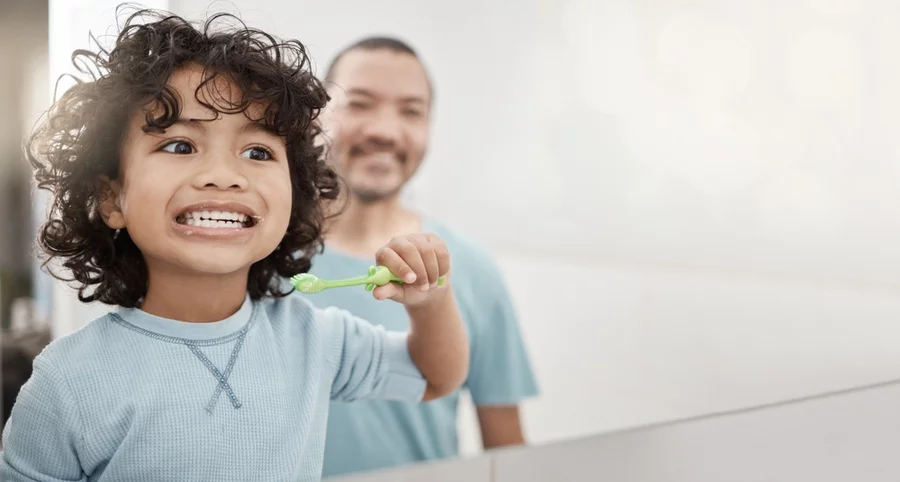
Dad brushing teeth with young son

2. Brushing & Flossing Fun: Building Healthy Habits Early On

Knowing how to brush a 2-year-old’s teeth is as important, if not more important, than knowing that doing so is important in the first place. Because let’s be honest, toddlers and preschoolers can be stubborn…which may be why you find yourself here!

Because of this, experts recommend making tooth brushing fun by turning it into a game or even a family activity! You can:

  • Play your little one’s favorite two-minute song
  • Use animal voices (i.e., “Brush like a lion!”)
  • Create a sticker or reward chart (this works for more than brushing, by the way 😉)
  • Try “family brushing contests”

As for the mechanics and logistics of brushing, the IAPD recommends:

  • Using a soft-bristled child-sized toothbrush or even a musical singing toothbrush
  • For kids under 3, use a grain-of-rice-sized smear of pH-balanced non-fluoride toothpaste
  • For kids over 3, use a pea-sized amount of pH-balanced fluoride toothpaste
  • Brush twice a day for two minutes during each session
  • Don’t rinse – just brush and spit out! Or, if your little one prefers, rinse and then follow up with an anticavity pH-balanced mouthwash (rinsing toothpaste effectively removes anticavity properties of toothpaste, in case you didn’t know)

Super Product Pick: The SuperMouth Oral Care System for Ages 2–5 includes fun toothbrushes, safe toothpaste (fluoride or non-fluoride), and musical brushing routines that help your child love oral care time.

3. Cavity Prevention, Thumb Sucking, and Dental Visits

Stop Cavities Before They Start

Over 40% of children develop cavities by kindergarten, but making small daily changes like the following can make a HUGE difference:

  • Limit your kiddos’ intake of sugary drinks and snacks and instead encourage consumption of veggies, cheese, yogurt, and other healthy snacks
  • Have them rinse their mouth with water after meals and snacks – especially sweets
  • Make sure they brush and floss twice daily with dental products that are safe and effective at cavity prevention and oral microbiome maintenance

How to Get Your Toddler to Stop Sucking Their Thumb

Why is this even important? Although sucking seems soothing to your little ones, it can cause bite problems after the ages of 3-4! To help them stop:

  • Celebrate and praise all “thumb-free” moments
  • Gently remind your child about the habit, especially at bedtime
  • If the habit continues after age 6, ask your pediatric dentist for advice

When to Visit the Dentist

As our dental milestone guide recommends, you should make dental appointments for your little ones to ensure everything is progressing smoothly and recommend or administer any needed treatments at these ages:

  • Age 1: First visit and parent education
  • Ages 2–3: Monitor new teeth and habits
  • Age 4: Address fluoride and thumb-sucking
  • Age 7: First orthodontic check

You’ve Mastered Toddler Tantrums. Let Us Help with Toddler Teeth!

From cavity prevention to tooth removal; thumb-sucking help to product recommendations, at The Super Dentists, we’re here to be your resource for everything related to toddler and preschool dental health and oral care!

Bring your child to one of our locations near you today and see why kids LOVE visiting The Super Dentists in San Diego + beyond!

Make it a Super School Year with This Handy Back-to-School Checklist for Parents

Blog Summary: Back-to-school season is the perfect time to reset routines and prioritize your child’s health, well-being, and confidence — here’s everything you need to know as a parent of a school-bound kid to get them ready before the first bell rings:

  • Practical tips to help your child transition smoothly into the school year with structure and support
  • Healthy habits for balanced nutrition, strong daily routines, and effective dental care
  • A dentist-approved oral hygiene checklist designed for busy families
  • Key reasons to schedule a back-to-school dental appointment and what to expect during the visit
  • Actionable strategies to build independence, reduce stress, and support your child’s overall success

The start of a new school year provides us a chance to do more than just buy school supplies and complete summer reading assignments or projects last minute (let’s be honest, we’ve all been there!) It’s also the perfect time to hit the reset button, turn over a new leaf, and examine our routines.

When it comes to the health and well-being of your little ones in particular, there are several steps you can take.

We hope this blog will serve as a quick back-to-school resource for parents who are busy but also want to make sure they’re not forgetting any important action items before the first bell rings in a new academic year! With that said, we’ll go over some key ways you can help your whole family, including your school-bound kiddo, transition back into the school year. From health to organization and preparedness, we cover it all!

How to Help Your Kids Prepare for & Transition into a New School Year

The transition from the carefree vibes of summer to the diligence and intentionality required during the school year can be a tough one for both kids and their parents! So one of the best things that you can do for both your sakes is to create some structure by establishing routines.

It’s also important to treat this transition positively. Remember: from a developmental perspective, your little ones are hardwired to model your behavior!

Here are four concrete ways to ring in the new school year with positivity and preparedness in equal measure:

  1. Start Back-to-School Routines Early: Ripping off the band-aid isn’t always the best option when it comes to making changes. It’s best to bring back regular wake-up times and bedtimes at least 1-2 weeks before school starts to help reset your little one’s internal clock. That way, they’re better prepared for their first day. This is also a good opportunity to reassess other routines like daily dental hygiene or chore structure.
  2. Do a School Day “Dress Rehearsal”: Practice the entire first morning a couple of times – especially for kids who are headed to school for the first time. This includes everything from waking up and brushing teeth to packing lunch and getting out the door on time for the bus (or your personal, unpaid limo service 😉).
  3. Create Visual Checklists: Use fun charts or calendars so your kiddos can track their daily routines, thereby taking an active interest in them and fostering a sense of self-reliance. Include things like packing their backpack, getting dressed, and picking out clothing, or even helping make lunch.
  4. Talk it All Out: Discuss what your kids should expect during the school day, especially if starting a new grade or in a new school. For instance, it’s usually wise to go through their schedule with them. Consider also sharing your own positive school memories. Be sure to leave time for questions, too. You might be surprised at what your little ones ask (and you’ll get the chance to allay any potential fears).

In sum, aim to provide both structure and encouragement to your school-bound kids so they’ll feel confident, organized, independent, and ready to hit the books running!

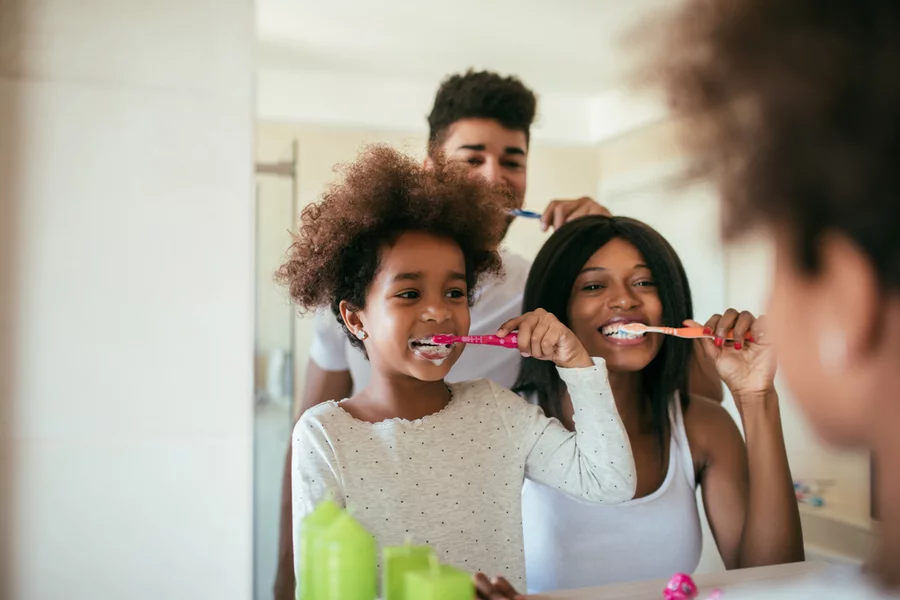
Happy African American family brushes their teeth together as part of a back to school dental health routine

Establish Healthy Habits: Back-to-School Health Tips for Parents

Creating healthy habits at home first is a super way to support your little one’s body, brain, and teeth, not to mention their mental health. So start the school year off strong with a focus on balanced nutrition.

Try to avoid packing lunches with heavily processed foods and excess sugary snacks. For example, instead of a corn-syrup-packed granola bar, try a moderate serving of fresh fruit with nut butter. Instead of juice boxes, pack a flavored water. Instead of candy, try yogurt, cheese sticks, or trail mix. Instead of chips, try crunchy veggies like carrots and cucumbers. If your little one isn’t used to eating this way, ease them into the transition! Aim for progress rather than immediate perfection.

While you’re at it, ensure to keep consistent bedtime and morning routines (which should always include oral care).

Specifically, when it comes to morning and evening dental health routines, be sure that your little one ticks every box in this back-to-school checklist that’s dentist-approved:

For more information on establishing a healthy daily dental routine, read our Parents’ Guide to Dental Hygiene for Kids.

Don’t Forget to Make a Dentist’s Appointment!

You’ve already factored annual mandatory doctor’s visits, vaccines, and school pictures into the pre-school-year rigamarole. Don’t forget to make a dentist’s appointment, too! Dental checkups can help:

  • Catch cavities and other concerns before they become problematic.
  • Provide an annual teeth cleaning that helps remove plaque that can turn into tartar and cause cavities.
  • Avoid missed school days from dental emergencies.
  • Get custom mouthguards made for athletics.
  • Ensure braces or orthodontic appliances are working well, or if your little one doesn’t yet have braces, see if they need them (that is, if your dentists’ office also has an onsite orthodontist).
  • Boost your kid’s confidence via a clean, healthy smile!

Beat the Back-to-School Rush: Schedule Your Visit Today!

Dental checkups are a vital but often overlooked part of your little one’s health, and a natural addition to their back-to-school routine.

Beat the back-to-school rush and make healthy smiles part of your checklist! Schedule your family’s dental appointments today at a Super Dentists location near you.

Why Do Kids Get Silver Teeth?

Silver teeth in childs mouth

Silver teeth may be recommended for kids who have certain dental issues. Silver teeth in kids may sound unusual, but they serve an important purpose.

In this article, we’ll explain why dentists give kids silver teeth, how they work, what they’re made of, safety considerations, and what alternatives are available for those looking for other options.

Why Do Dentists Put Silver Teeth in Kids?

Dentists may recommend silver teeth for kids who have teeth that are severely damaged, decayed, or prone to cavities. The silver material protects the tooth, restores strength and function, and prevents further decay.

What Do Silver Caps Do for Teeth

Silver crowns fully cover damaged teeth, while silver caps cover just the biting surface. We use them when a regular filling won’t be enough to repair the tooth damage. Conditions where silver teeth help include:

  • Large cavities
  • Cracks or chips
  • Discoloration that can’t be improved with whitening
  • Weak spots prone to decay

Silver teeth allow kids to chew properly, speak clearly, and maintain healthy teeth for years to come. The silver color matches more naturally with primary baby teeth as well.

Why Choose a Pediatric Dentist for Silver Teeth?

Getting silver teeth requires special consideration in children. Baby teeth are smaller, kids can’t sit still as long, and the procedure is understandably stressful for them. That’s why you should choose an expert pediatric dentist.

We cater specifically to children’s oral health needs. Our office provides a kid-friendly environment to make them feel relaxed. We have the latest small dental tools that fit little teeth precisely. Our dentists complete silver tooth procedures quickly and efficiently to minimize appointment times.

We always use sedation when appropriate so your child stays calm and comfortable. Pediatric specialists also understand proper tooth development. We time silver teeth right so they last until the tooth falls out on schedule, and we make the process as smooth as possible for you and your child. Our pediatric expertise makes sure silver teeth are a success.

How Silver Teeth Work

Silver teeth get their color from the metal materials they contain. Stainless steel crowns are a very common choice for children’s teeth. We also use metal alloys containing silver, nickel, chromium, and other materials.

How Are Silver Caps Put on Teeth

The silver material is molded precisely to fit over the tooth. We match the shape and contours of the original tooth as closely as possible. The crown fully surrounds the tooth, while a cap covers just the top chewing surface.

We use dental cement to hold the silver tooth securely in place. The cement forms a tight seal to prevent bacteria and food from getting under the silver cap or crown.

Over time, the cement may wear away. If a silver tooth becomes loose or falls out, call us. We can easily replace it with fresh cement or a new silver tooth.

Child with silver teeth in their mouth

Materials Used in Silver Caps and Crowns

As mentioned, stainless steel is a very common choice for kids with silver teeth. Stainless steel silver teeth don’t contain actual silver metal. They get their silver shine from the steel alloy.

Stainless steel crowns are prefabricated for different tooth sizes. We select the closest fit and adjust it to custom-fit the tooth precisely.

For front teeth, we also use tooth-colored crowns and veneers made of composite resin or porcelain. These maintain the natural tooth appearance while restoring strength.

Prefabricated stainless steel crowns cost less than custom-cast metal caps and crowns. Nickel chromium crowns are another affordable and durable option. They are silver-gray in color.

Higher grades of custom metal alloys are available for back molars, which handle the most chewing pressure. These contain some mixture of silver, gold, palladium, nickel, and chromium.

Common Dental Concerns That Silver Teeth in Kids Can Help

Here are some of the most common situations where silver teeth restore children’s oral health:

  • Tooth Decay – Silver caps and crowns prevent further tooth decay in badly damaged teeth. The metal is impervious to acid, and cavities can’t form under it.
  • Cracks and Fractures – Cracks weaken the tooth structure. Silver crowns encase the entire tooth to prevent cracks from spreading.
  • Discoloration – Silver color simply disguises inner discoloration better than white crowns. Whitening doesn’t help some stains.
  • Dental Injuries – Chipped or knocked-out teeth may not be repairable with only fillings. A silver crown holds all the pieces together.
  • Grinding Problems – Excessive grinding can wear down teeth. Silver crowns add protective thickness.
  • Hypoplasia Defects – Thin spots and grooves in tooth enamel allow quick decay. Silver caps shield weak areas.
  • Prior Fillings – Sometimes a tooth requires one filling after another, indicating an ongoing problem. A silver cap can fix it for good.

Final Thoughts

Silver teeth in kids fix a variety of problems that result from dental decay, injury, defects, and discoloration. They are an affordable solution that protects children’s teeth and saves teeth that might otherwise require extraction.

While silver teeth are more noticeable, they are an acceptable appearance solution for many pediatric dental issues, and they allow kids to fully use their teeth for healthy chewing and development.

We customize silver caps on kids’ teeth precisely for each tooth, cementing them securely in place. Made to last for years, silver teeth effectively shield teeth from further damage.

If your child has badly damaged molars, front teeth cracks, or other issues, silver teeth may be the best solution. Schedule an appointment with The Super Dentists today!

Silver Teeth in Kids: FAQs

Do silver teeth ruin kids’ smiles?

Not at all! We match silver teeth to baby teeth. Most kids have a mix of silver and white teeth. For front permanent teeth, we use tooth-colored crowns.

Does it hurt to get silver teeth?

The dental office numbs the tooth first, so your child shouldn’t feel pain. Some temperature and pressure sensations are normal. Ibuprofen helps relieve soreness afterward.

How long do silver teeth last?

It varies, but they typically last at least 5 years and some over 10 years until the tooth falls out. Permanent crowns can last decades.

Why do some kids have silver teeth?

There are a few key reasons why silver teeth are more common for children than adults:

  • Baby teeth are smaller and more prone to fractures and cracks that require capping.
  • Kids’ tooth enamel is thinner and decays faster, allowing more cavities that may require crowns.
  • Children produce more plaque naturally and can’t brush/floss as effectively, increasing decay risk.
  • Kids experience more mouth injuries from falls, sports, etc. That can lead to chipped or cracked teeth.
  • Some pediatric medications reduce saliva, allowing more tooth decay over time.
  • Developmental enamel defects like hypoplasia create weak spots in children’s teeth.
  • Bottle feeding at night and excess juice/sugar intake cause rampant decay in some kids.

Why do kids get silver teeth?

Silver crowns are typically used when a baby tooth has extensive decay or damage that can’t be repaired with a regular filling. They help preserve the tooth until it falls out naturally, which supports chewing, speaking, and proper oral development.

Do silver teeth come out?

Yes—silver crowns come out with the baby tooth when it naturally exfoliates. They are designed to last until that point and do not need to be removed manually unless there’s an issue.

How are silver caps put on teeth?

The dentist will:

  1. Numb the area to keep your child comfortable
  2. Remove decay and clean the tooth
  3. Shape the tooth to fit the cap
  4. Select and adjust a prefabricated stainless steel crown
  5. Use dental cement to hold the crown securely in place

This is usually completed in just one appointment!

Do silver fillings cause teeth to crack?

Silver (amalgam) fillings can expand and contract slightly with temperature changes, which may contribute to cracks over time—primarily in adult teeth. In kids, we often use full silver crowns, which protect against cracking by covering the whole tooth.

Do they put silver caps on adult teeth?

Not typically. Adults are more likely to receive tooth-colored crowns made of porcelain or zirconia. However, metal crowns (which can include silver alloys) are still used on back molars in some adults when durability is a priority.

Are silver teeth safe for kids?

Yes—stainless steel crowns have been safely used for decades in pediatric dentistry. However, some kids may be allergic to nickel, which is a component in many stainless steel crowns. If your child has a metal allergy or sensitivity, ask about nickel-free or ceramic options like zirconia crowns.

Can I choose white crowns instead of silver?

Absolutely! For front teeth or more visible areas, tooth-colored options like zirconia or resin crowns are available. They look more natural but may cost more and might not be as strong as stainless steel for back molars.

Are there any risks with silver crowns?

Very few. The most common are:

  • Nickel allergy (rare)
  • Cement loosening over time, which can be easily repaired
  • Minor irritation in the first few days after placement

Overall, silver crowns are a safe, durable, and cost-effective solution for protecting baby teeth.

Brushing Baby’s Teeth & Gums: When to Start and How to Do It

TL;DR:

  • Start early: Clean your baby’s gums soon after birth to reduce bacteria and build healthy habits.
  • First teeth: Begin brushing as soon as teeth appear (around 3–6 months) with gentle, circular motions.
  • Daily routine: Brush twice a day and start flossing once teeth touch.
  • Toothpaste use: Water or fluoride-free paste for infants, tiny smear of fluoride under age 3, pea-sized after 3.
  • Toothbrush choice: Use a small, soft-bristled, BPA-free brush; skip electric brushes until age 3.

Brushing your child’s baby teeth may seem like a waste of time since those teeth are not permanent. But do you brush infants’ gums? Yes, and we’ll tell you why!

The truth is that good oral hygiene habits must start young for a lifetime of good brushing habits. If you aren’t brushing your baby’s teeth, those teeth can quickly decay and interfere with your child’s nutrition, speech development, and social life.

Your child’s mouth is the gateway to their whole body! Because of this, oral care isn’t just a physical health issue. The mouth can impact everything from self-esteem to intellectual development to poor nutrition. Although baby teeth aren’t permanent, they serve multiple purposes:

  • Holding space for adult teeth
  • Developing speech and social skills
  • Promoting physical and psychological wellbeing
  • Providing confidence and cuteness!

We aren’t trying to scare you; after all, brushing newborn gums and baby teeth doesn’t have to be difficult! Keep reading for The Super Dentists’ best tips for how to brush baby teeth, when to brush infant teeth, and how to protect your little one’s SUPER smile right from the start!

When to Start Brushing Baby’s Gums and Teeth

Cleaning newborn gums is a crucial step in nurturing their dental wellbeing right from the start. A baby’s mouth contains a well-developed microbiome, and defending that microbiome from bad bacteria is very important.

As your little one’s first teeth begin to emerge, gentle and effective brushing techniques are essential! Good oral hygiene will prevent cavities, ensure proper growth, and establish positive oral hygiene habits. It is also important to remove bottles or nipples from baby’s mouths while they sleep to prevent the growth of bad bacteria.

Most babies don’t have any teeth erupting between zero to three months of age. Some infants don’t get their first tooth until around six months.

Still, it is essential to clean baby’s gums because babies produce less saliva than adults. This can ultimately lead to more bacteria. Washing your baby’s gums removes bacteria that clings to them and can leave behind a plaque that damages teeth as they come in. Also, wiping baby gums can get your baby prepared for future tooth brushing.

So, when do you brush infant teeth, exactly? The Super Dentists recommends that parents start brushing baby gums shortly after birth. This is a great time to establish an oral hygiene routine!

But when it comes to teeth, the rules are a little less hard and fast. When you see that first tooth emerging from your child’s gums, it’s time to start brushing your baby’s teeth.

This usually happens when babies are between three and six months old. Teeth brushing is so important that it is never too early to begin the process of maintaining your baby’s oral health. Baby teeth form underneath the gums when the baby is still in the womb.

Mother brushing baby teeth

How to Brush Your Baby’s Teeth

When equipped with some good tips and skills, brushing your baby’s teeth doesn’t have to feel like going into battle. Here are a few best practices about how to brush baby teeth and make it a fun experience.

  • Allow your baby to play with their toothbrush to make your child feel comfortable with brushing.
  • Use one hand to gently lift the infant’s lips so that the teeth are completely visible. Use the other hand to brush the infant’s teeth gently.
  • Enlist another adult to hold the infant’s hands to prevent them from grabbing at the toothbrush.
  • Place the brush at a 45-degree angle and gently brush in a circular motion for 2 minutes.
  • Wondering what to brush your baby’s gums with? Use a clean, soft baby gum brush or a soft damp washcloth wrapped around your finger to gently wipe rather than scrub their delicate gums.

How Often to Brush Your Baby’s Teeth and Gums

It is very important to brush your child’s teeth twice a day, once in the morning and once before bed, just like adults. We recommend that parents help their children brush their teeth until they are around 7 or 8.

We encourage you to brush your baby’s teeth after they have their milk, especially before bedtime. Even breast milk contains natural sugar that will promote the growth of bacteria.

Use a soft-bristled baby toothbrush or silicone finger brush with a grain of rice sized amount of fluoride-free toothpaste (or water for pre-teething infants) to gently clean their teeth and gums.

When to Start Flossing Your Baby’s Teeth

If your child has touching teeth, it’s time to help them floss in between their teeth at least once a day. Parents should continue to brush their children’s teeth, or assist with tooth brushing, until their children can brush thoroughly on their own.

How to Choose Toothpaste for Baby Teeth

Toothpaste is an essential part of brushing for children with teeth! Fluoride is also an important part of your child’s dental hygiene routine, but you don’t want to overuse it. You also don’t want to use fluoride toothpaste at all if your child is younger than three years old. Use a pea-sized amount of fluoride toothpaste for children over three years of age, or a rice-grain-sized amount if they’re younger, as mentioned earlier. Also, be sure to have your child spit out the toothpaste instead of swallowing it.

Our Mouthpaste line provides all the ingredients your children need for clean teeth, and none that they don’t! You should start brushing baby’s teeth with toothpaste once they pop through the gums.

How to Choose Toothbrushes for Baby Teeth

One of the most important factors in choosing the correct toothbrush for baby teeth is the size of the head. We’ve explained that babies should start using a toothbrush when their first tooth begins to erupt, but what kind of toothbrush should you buy? The right toothbrush can help your child get on the right path for a lifetime of good oral hygiene.

Small mouths require smaller brushes to reach around the entire front and both sides of the child’s teeth.

When choosing a toothbrush for baby teeth and gums, look for one that has nice soft bristles to protect their sensitive gums from being damaged. The soft bristles will also help make brushing a more comfortable exercise for babies who are teething.

It can be harder to find this than you might think! Iin fact, our pediatric dentists at The Super Dentists had such a hard time finding the right toothbrush to recommend to parents that we made our own!

Here are the qualities to look for when choosing a toothbrush for baby:

  • A small toothbrush head that fits comfortably in your baby’s mouth.
  • Soft bristles to aid in comfortable brushing on teething gums.
  • Large handle so children can grab it to assist in their brushing.
  • BPA-free material.
  • No electric toothbrushes until age 3.

Now that you know how and when to start brushing baby’s teeth, don’t forget we’re here for you and your entire family, from your children’s first dental visit and well beyond!

Teeth Whitening for Kids: How to Whiten Kids Teeth Safely

If you find yourself wondering, “Why are my kid’s teeth yellow?” and want to understand how to get your kid’s teeth white safely, The Super Dentists can help. Since so many teeth-whitening products are readily available these days, it’s essential to know which products are safe for your children and which are not. 

While it might be tempting to allow your child to use certain teeth whitening products, you should know which age is best to allow it.

Can I Whiten My Kids Teeth?

The American Association of Pediatric Dentists (AAPD) does not recommend whitening your child’s teeth until they have had all of their permanent teeth and they have entirely erupted. Most children lose all of their baby teeth and have all their adult teeth by the time they are 12 or 13 years old, and enamel calcification takes about two more years. 

Therefore, children should not bleach their teeth until about 14 or 15 years old. If you notice that your child has yellow teeth, there are more natural approaches that are safe to use that can help get rid of the discoloration.

How to Whiten My Child’s Yellow Teeth

You can choose many methods when it comes to whitening children’s teeth. While avoiding bleaching teeth until age 14 or 15 is best, other options exist for younger kids with yellow teeth. These are the best ways to get kid’s teeth white.

Whitening Toothpaste

Children’s natural whitening toothpaste is a great way to brighten your child’s smile. Whitening toothpaste removes stains on the surface of the teeth but will not alter your child’s teeth to make them look drastically whiter. This is a safe option for kids of all ages, but you should aim to use a kid’s whitening toothpaste rather than toothpaste meant for adult teeth whitening. A great example is SuperMouth’s toothpastes that use nano-hydroxyapatite (what 97% of enamel is made of) to naturally whiten teeth.

Avoid Sugary and Acidic Foods

Acidic and sugary foods can eat away at the enamel in your child’s teeth, causing the yellow-tinged dentin to be exposed over time. When sugary foods are consumed, they interact with the bacteria within the plaque, producing acid. Acid is typically responsible for tooth decay because it dissolves tooth enamel.

Childs clean teeth up close

Some examples of these types of foods include soda, juice, candy, tomatoes, berries, and pizza. To avoid the risk of developing cavities and yellow teeth, it is best to eat a healthy diet and do your best to avoid regularly eating sugary and acidic foods.

Teeth Whitening For Kids: FAQs

Why are my 9 year old’s teeth yellow?

A 9 year old may have yellow teeth due to family genetics, poor hygiene, or they eat a diet full of sugary and acidic foods. Most adult teeth have a yellow tint because they have more dentin. When your child starts getting more adult teeth, you might notice their smile is not as white as it once was.

Can I whiten my 13 year old’s teeth?

You can certainly use natural whitening agents, such as baking soda and whitening toothpaste, on your 13 year old’s teeth. Depending on if your child has all of their adult teeth and their enamel is calcified, you can also begin to use whitening strips or hydrogen peroxide.

How do I choose the best teeth whitening option for children?

To choose the best kids teeth whitening option, the best thing you can do if you are unsure is reach out to your pediatric dentist for help. Your child’s dentist can provide insight into which products are the best for your child.

What are the benefits of teeth whitening for kids?

Teeth whitening for kids can not only boost your child’s self-esteem and confidence, but it can remove stains and plaque from their teeth, which can help prevent cavities and contribute to an excellent oral health routine. Teeth whitening from a young age can help your child get into a routine of not only brushing and flossing regularly, but removing stains early on.

What are the risks of whitening children’s teeth?

Using teeth whitening strategies that do not contain natural agents, like teeth whitening strips, can injure tooth pulp or nerves in young children. Additionally, whitening teeth too soon can cause their tooth enamel to break down and damage their gum tissue.

Conclusion

Teeth whitening for kids is generally safe for children over 12 or 13, but you can use natural products to help whiten their teeth at a younger age. Additionally, having a good oral hygiene routine and avoiding sugary and acidic foods can do wonders in maintaining a healthy white smile. 

The Super Dentists is a top-awarded pediatric dentist in San Diego. Schedule an appointment to visit one of our six locations near you.

When Do Kids Get Braces and What’s the Best Age for Them?

Blog Summary: When do kids typically get braces? Between the ages of 9 and 14. In this guide, we’ll learn why early evaluation by age 7 is essential for identifying if your child may need braces, the benefits of treatment, and the orthodontic options available.

Key points:

  • First orthodontic check-up is recommended by age 7
  • Most kids get braces between the ages of 9-14
  • Early treatment can prevent many complex dental issues
  • Watch for signs like bite issues, jaw noises, and tooth crowding
  • Braces options include metal, ceramic, and clear aligners

When do kids get braces? It’s one of the most common questions we hear from parents at The Super Dentists, and we fully understand where this and other questions surrounding braces come from. You want your child to feel confident flashing their super-powered smile. But between wondering what age kids get braces, what types are available, and where they need them or not, you might feel quickly overwhelmed by wading through all the information out there.

This is where we put on our capes and come in with a four-point superhero landing. This guide will help you understand when to check, what signs to look for, and how to choose the best path forward, all with the fun, expert care The Super Dentists are renowned for.

This is where we put on our capes and come in with a four-point superhero landing. This guide will help you understand when to check, what signs to look for, and how to choose the best path forward, all with the fun, expert care The Super Dentists are renowned for.

Every Child’s Smile Is Unique

Like their favorite superheroes, no child’s dental journey will be the same. Genetics, oral habits, and growth patterns all play a role in when your child may need braces. While braces are typically placed after permanent teeth come in, there are many reasons to visit an orthodontist earlier.

Every visit can address jaw growth, airway development, and poor oral habits impacting your child’s smile. The sooner we spot potential problems, the sooner we can help.

And here’s the good news: there’s no such thing as too late for braces! Teens and adults can absolutely benefit from orthodontic treatment, often with clear or invisible options that fit any lifestyle.

Why Do Kids Need Braces?

Braces aren’t simply a means to achieve a picture-perfect smile. They can correct dental and structural issues that affect overall health. So, what happens if kids don’t get braces when they need them?

Problems can worsen over time, leading to pain, poor self-esteem, and even speech or eating difficulties. Some of the most common reasons kids need braces are:

  • Early or late loss of baby teeth
  • Trouble chewing or biting
  • Mouth breathing
  • Thumb or finger sucking
  • Crowded, misplaced, or blocked-out teeth
  • Jaws that make sounds or appear recessed or protruding
  • Difficulty speaking clearly
  • Cheek biting or biting the roof of the mouth
  • Protruding top or bottom teeth
  • Improper bite or teeth that do not meet
  • Facial imbalance or asymmetry
  • Teeth grinding or clenching

If you notice these signs or are unsure, please visit The Super Dentists for a complimentary consultation.

How Can You Tell If Your Child Needs Braces?

Thousands of parents just like you often wonder: How do I know if my child needs braces? Here’s what you should know: when first teeth fall out and permanent teeth erupt, it’s common for them to appear crooked at first. Often, they straighten naturally as your child’s mouth grows.

However, if crookedness persists or your child displays any signs we mentioned, it’s time to have them evaluated. Spotting issues early can reduce the need for complex treatment later.

Remember, understanding when a child’s best age is to get braces begins with you knowing what to look for and check, and when to consult an expert.

When Should My Child See an Orthodontist?

What’s the best age to get braces for a child? The American Association of Orthodontists recommends an initial orthodontic visit by age 7. At this age, an orthodontist can assess your child’s airway, bite, jaw growth, and oral habits.

Most children begin treatment between 9 and 14, but earlier evaluation can determine whether an easier or more complex treatment is needed. Just a few of the benefits are:

  • Addressing airway and bite issues before they become severe
  • Guiding proper jaw development
  • Preventing dental trauma or abnormal tooth wear
  • Reducing the need for extractions or surgery later

At the Super Dentists, our experts customize every treatment plan based on your child’s unique needs. We use advanced techniques to ensure the smoothest and most comfortable orthodontic experience possible.

Why Early Orthodontic Treatment Matters

If your child shows early signs of bite issues, facial asymmetry, or if their jaw is making noises (clicking or popping in the jaw, sometimes accompanied by pain), do not wait! An orthodontic check-up before the age of 7.

Early intervention provides benefits like:

  • Creating room for proper tooth eruption
  • Improving facial symmetry
  • Protecting protruding teeth from injury
  • Preserving space for unerupted teeth
  • Reducing the need for tooth extractions or possible surgery
  • Shortening future treatment time
  • Preventing issues like decay, gum disease, or speech complications

The Super Dentists have specialized their super-powers in early orthodontic treatment. We’re dedicated to helping children learn to enjoy going to the dentist and to developing their healthy, confident smiles.

What To Expect During an Orthodontic Check-Up?

An orthodontic check-up is a super-charged opportunity for parents, children, and our dental heroes to work together.

During your child’s visit, we will:

  • Thoroughly evaluate jaw growth and tooth eruption
  • Check for bite alignment and airway issues
  • Identify any habits that impact their oral health
  • Recommend the right time to begin treatment if needed

Some children may not need treatment right away. In these cases, we’ll monitor growth to make sure we act at the optimal time, because knowing when to fight the villains of dental health is all about timing it perfectly for success.

Common Questions About Braces for Kids

What types of braces are available?

We offer several options:

  • Traditional metal braces with colorful elastics (kids love personalizing these!)
  • Clear ceramic braces
  • Removable clear aligners for eligible patients
  • Specialty devices (if needed) or jaw or bite correction

We’ll help you choose the right option based on your child’s needs and lifestyle.

How much do children’s braces cost?

Costs vary depending on the treatment complexity and type of braces selected. Your treatment coordinator will explain every option and the financial details during your consultation.

The great news is that many dental insurance plans cover a portion of orthodontic care, plus, The Super Dentists offer flexible payment plans to fit your budget.

Will getting braces hurt my child?

Braces should not hurt, but it is natural for your child to feel temporary discomfort when they first get their braces or after an adjustment. This sensation usually fades within a few days as their mouth adapts.

We are adamant about using gentle techniques and advanced materials to make the entire experience as smooth as possible. We’ll also share tips to ease your child’s adjustment period.

Are clear aligners an option for kids?

Yes! In many cases, clear aligners can be a fantastic choice for kids. Aligners are often used for mild to moderate orthodontic corrections and especially appeal to older children and teens who want a more discreet option.

That said, not every child is a candidate. Traditional braces might be the best choice for younger kids or those who need more complicated corrections.

Can my child still play sports or instruments with braces?

Absolutely! Your child can continue playing their favorite sports and practicing with musical instruments while wearing braces. For athletes, we recommend a custom mouthguard to protect their smile during play.

Musicians may need a short adjustment period when playing wind or brass instruments, but most adapt very quickly and can continue playing beautifully.

How long do treatments take?

On average, kids wear braces for 18 to 36 months. The exact timeline always depends on individual factors, and regular check-ups make certain your child’s smile stays on track.

Are there side effects from having braces?

Our top priority is keeping your child’s dentistry and orthodontic experience as comfortable, positive, and amazing as possible. While mild discomfort is common when braces are first placed or adjusted, this discomfort rapidly passes in a few days. Rare side effects may happen, such as tooth decay or allergic reactions, but with expert care, these are minimized. We monitor your child’s progress closely at The Super Dentists.

Why Thousands of San Diego Families Trust the Super Dentists

No matter what question, we are happy to answer them for you, and an early expert evaluation can make the difference. Here’s why so many families trust the Super Dentists:

  • Board-certified orthodontists who follow the latest AAO guidelines
  • Fun, kid-friendly experience that reduces dental anxiety
  • Comprehensive early orthodontic treatments tailored for every child
  • Transparent pricing and flexible financing
  • Proven track record as San Diego’s top pediatric orthodontic practice

Our mission is to turn dental care from a chore into something magical, while ensuring every child (and parent!) feels empowered and supported on their brilliant smile adventure.

Confident Smiles Start Here

Braces are a powerful tool for helping children achieve healthy, beautiful smiles that last a lifetime. Whether your child is ready for treatment now, needs monitoring, or you are simply unsure, we’re here to guide you every step of the way.

Knowing when kids get braces and what the best age for them is helps you make better, more informed decisions, but you never have to try to figure out their best care.

Let’s talk if you’re still wondering if your child needs braces or when! Schedule your free orthodontic consultation with us today by calling 1 (885) GO SUPER (467-8737), texting us at 1 (844) 765 1234, or book directly from our website.

At Super Dentists, we believe every child deserves an experience and a smile they’re proud to show.

At Super Dentists, we believe every child deserves an experience and a smile they’re proud to show.

Teething 101: How to Help a Teething Baby

Watching your baby experience their first tooth breaking through can be both exciting and heartbreaking. The tears, sleepless nights, and constant fussiness leave many parents wondering if they’re doing enough to help. Understanding how to help a teething baby doesn’t have to feel overwhelming when you know what works and what to avoid.

Most babies begin teething around six months of age, though some start as early as three months while others don’t begin until after their first birthday. The process typically continues until around age two, when all 20 primary teeth have emerged.

Those first teeth, usually the bottom front incisors often cause the most discomfort as your baby adjusts to this new sensation.

TL;DR

Teething can be tough on babies — and their parents. This guide explains how to recognize symptoms, soothe sore gums, and know when to seek help. From cold washcloths to safe teethers, you’ll learn what works (and what to avoid) to comfort your baby through every new tooth.

Main Points:

  • Teething often begins around 6 months and lasts until age 3.
  • Signs include drooling, irritability, swollen gums, and sleep disruption.
  • Safe remedies include chilled teething rings, gum massage, and soft foods.
  • Avoid frozen objects, teething jewelry, and homeopathic tablets.
  • Acetaminophen or ibuprofen can help in severe cases when used properly.

Recognizing the Signs

Your baby can’t tell you their gums hurt, but they’ll show you through their behavior. Excessive drooling often signals the start of teething, though some babies drool even before their first tooth appears. You’ll notice increased irritability, difficulty sleeping, and a sudden desire to chew on everything within reach.

Red, swollen gums are another telltale sign. Your baby might refuse their usual foods or seem less interested in nursing or bottle feeding. A low-grade fever under 100.4°F can accompany teething, but higher temperatures usually indicate illness rather than teething pain.

Safe and Effective Baby Teething Remedies

Cold compression works wonders for inflamed gums. Place a clean, damp washcloth in the refrigerator for about 30 minutes, then let your baby chew on it. The cold temperature numbs the pain while the texture provides satisfying pressure against sore gums. You can tie a knot in one end to make it easier for small hands to grip.

Teething rings made of firm rubber offer another excellent option for teething baby relief. Chill them in the refrigerator and never the freezer, as frozen objects become too hard and can damage tender gums. Avoid liquid-filled rings that might break or gel-filled varieties that can leak harmful substances. Gentle massage provides immediate comfort for many babies. After thoroughly washing your hands, you can use a safe and effective finger brush to gently massage erupting teeth and sore gums. This not only helps soothe discomfort but also gets your baby accustomed to the act of brushing. If your baby wants to chew on the brush, that’s okay—this natural response helps relieve their discomfort.

Nighttime Comfort Strategies

Learning how to soothe a teething baby at night often requires extra patience and creativity. The horizontal position can increase blood flow to the head, intensifying gum pain when your baby lies down. Try elevating the head of their crib mattress slightly using a thin towel placed under the mattress — never place pillows or blankets directly in the crib.

A warm bath before bedtime can relax your baby’s entire body while providing a pleasant distraction from teething pain. Follow this with gentle cuddling and rocking, which releases calming hormones for both of you. Sometimes the comfort of being close to you is exactly what your teething baby needs most.

Consider offering a chilled teething toy right before bed. The cold sensation can provide enough relief to help your baby drift off to sleep more easily. Keep several teething rings in rotation so you always have a cold one ready.

Food-Based Solutions

Once your baby is around six months and starts eating solid foods, cool or soft foods can double as natural teething remedies. Chilled applesauce, mashed bananas, or small pieces of cold melon provide both nutrition and gum relief. Always supervise your baby while eating and ensure pieces are appropriately sized to prevent choking.

For babies over 12 months, you can offer frozen fruit in a mesh feeder. This allows them to gnaw on cold fruit safely while getting the pressure and temperature relief their gums crave. Avoid hard foods that could break off and become choking hazards.

When to Consider Medication

Sometimes natural remedies aren’t enough, and that’s when these tips for teething baby care include safe pain relief options.

Acetaminophen (Tylenol) is safe for babies over two months old, while ibuprofen can be used for babies six months and older. Always check with your pediatric dentist and/or your pediatrician and follow dosing instructions based on your baby’s weight and age, and don’t use these medications for more than a few days without consulting your pediatrician.

Your pediatric dentist can also provide additional guidance on safe pain management options during the teething process.

Never use aspirin for babies or toddlers, as it’s linked to a serious condition called Reye’s syndrome. Similarly, avoid topical gels containing benzocaine or lidocaine — these ingredients can be dangerous for young children and may cause serious breathing problems.

What to Avoid

Several popular teething remedies can actually harm your baby. Teething necklaces, bracelets, and anklets pose serious choking and strangulation risks. The beads can break off and become lodged in your baby’s throat, while the strings can wrap around their neck during sleep.

Skip homeopathic teething tablets, which may contain harmful levels of belladonna, which is a toxic substance that can cause seizures and breathing difficulties. The FDA has issued warnings about these products after reports of serious adverse reactions.

Frozen objects might seem like the best idea to numb pain, but they’re too cold and hard for delicate gums. This includes things like frozen teething rings, ice cubes, and frozen washcloths. It’s best to stick to refrigerated items that provide cooling relief without risking injury.

How to Help a Teething Baby: Frequently Asked Questions

How long are babies in pain from teething?

Teething pain typically lasts a few days before each tooth erupts, then subsides until the next tooth begins pushing through. The entire process spans about two to three years, but pain isn’t constant — it comes and goes with each new tooth.

How do I know if my baby is crying because of teething?

Teething crying often coincides with other symptoms like drooling, gum swelling, and the desire to chew. The crying may worsen at bedtime when lying down increases pressure in the head. If crying seems excessive or is accompanied by high fever, diarrhea, or other concerning symptoms, contact your pediatrician.

What is the best position for a teething baby to sleep?

Most teething babies sleep best on their backs with their head slightly elevated. This position reduces blood flow to the head and may decrease gum pressure. Always follow safe sleep guidelines and never place pillows or loose bedding in the crib.

Final Thoughts

Stock up on multiple teething toys so you can rotate them in and out of the refrigerator. Having options ready means you won’t scramble to find relief when your baby needs it most. Clean washcloths, rubber teething rings, and appropriate pain medications should all be easily accessible.

Remember that knowing how to soothe a teething baby is often about trial and error. What works perfectly for one baby might not help another, and what works one day might not work the next. Stay patient with yourself and your baby as you navigate this challenging but temporary phase.

The discomfort is real, but so is the relief that’s coming. Each tooth that breaks through brings your baby closer to a full, healthy smile and brings you both closer to better nights of sleep. With the right tools and techniques to soothe your teething baby, you’ll both get through this milestone together.

The Super Dentists offer pediatric, orthodontic, and parent dentistry in the San Diego area. Find a location near you and schedule an appointment for your family today.

How Many Dental X-Rays Are Safe in a Month?

Dental X-rays play a key role in oral health. They enable a dentist to review their patients’ oral health development and identify underlying problems related to the teeth, jaw, and soft tissues of the mouth. Plus, X-rays help a dentist provide an accurate diagnosis and determine the best course of action to treat oral health issues.

But one thing every patient wants to know is: are dental X-rays safe?

The Super Dentists are concerned about your family’s dental and orthodontic care. And we’re also concerned about your safety, too! Since many parents ask us all the time about x-rays and are dental x-rays safe, we thought it would be a great idea to address the question here.

But first, why are dental x-rays ordered in the first place? Which common (and not so common) dental or orthodontic conditions warrant dental X-rays?

Dental Assistant Reviewing 3D Dental X Ray - The Super Dentists

Which Conditions Require Dental X-Rays?

There are several other reasons why a dentist may recommend dental X-rays, too. These reasons include:

  • Monitor Oral Health Injury Healing and Recovery: If a child or adult suffers a mouth injury, a dentist may use an X-ray to track the patient’s healing progress and ensure that he or she can make a full recovery.
  • Identify Oral Infections: Dental cavities, gingivitis, and other oral infections are problematic. Thanks to an X-ray, a dentist is better equipped than ever before to identify an oral infection before it gets out of hand.
  • Determine If an Orthodontic Treatment Is Necessary: A dentist sometimes uses an X-ray to determine whether to recommend an orthodontic treatment.

Not all dental X-rays are created equal. In fact, a dentist may recommend one or more of the following types of dental x-rays:

  • Bitewing: Examine the crowns of the upper and lower teeth in one section of the mouth, identify cavities in tough-to-reach areas of the mouth and assess fillings.
  • Periapical: Display a tooth from the crown to the root in order to examine one or two teeth for root problems, cavities, and oral health issues that affect the surrounding jaw bone.
  • Panoramic: Show the entire mouth and is often used to track a child’s tooth development to determine if orthodontics is necessary.
    Occlusal: Illustrate the arch of the teeth from either the top or bottom jaw.
  • Orthodontic: Depict the side of a child’s head.
  • Cone Beam Computerized Tomography (CBCT): Provide a 3D view of the patient’s mouth to help a dentist assess the development and space of their teeth.

The best type of dental x-ray for identifying an issue depends on the unique situation. Different types of x-rays are used to diagnose different dental problems, and a combination of x-rays may be necessary to provide a comprehensive assessment.

In general, the two most common types of x-rays used in dentistry are bitewing and periapical x-rays. Bitewing x-rays are commonly used to diagnose cavities and evaluate the health of the teeth and gums.

They show the crown portions of the upper and lower teeth, and can detect decay between teeth, bone loss due to gum disease, and other dental problems.

Periapical x-rays are used to evaluate the entire tooth, from the crown to the root, and can diagnose issues such as abscesses, cysts, or impacted teeth. They are useful in assessing the overall health of the tooth structure and root, and can help dentists plan for treatment.

Are Dental X-Rays Safe?

X-rays emit some radiation, but according to the American Dental Association (ADA), radiation exposure due to dental X-rays is minimal in comparison to both human-made and natural radiation sources. Americans receive an average radiation dose of about 0.62 rem (620 mrem) annually, the U.S. Nuclear Regulatory Commission reports.

Meanwhile, the ADA notes that dental radiographs account for roughly 2.5% of the effective radiation dose received from all medical radiographs and fluoroscopies (medical X-ray imaging procedures).

Safety Guidelines & Precautions

X-ray technologies and methods vary in dental practices and medical offices across the United States. The Super Dentists use the latest technology at its six San Diego offices.

For example, the ADA promotes Image Gently, a national X-ray safety campaign that was launched in 2008. Image Gently encourages dentists and other medical professionals to limit radiation doses during pediatric medical imaging exams. It also offers the following X-ray safety guidelines for pediatric dental professionals:

  • Use X-rays based on a patient’s needs, not as a routine
  • Choose the fastest image receptor available
  • Select Cone Beam CT only when necessary
  • Focus the X-ray beam exclusively on the patient treatment area
  • Provide a patient with a thyroid collar or shield during an X-ray procedure
  • Limit X-ray exposure to a “child-size” dose

The ADA is one of more than 80 healthcare organizations to promote Image Gently. But as of today, there are no standard X-ray safety guidelines for all U.S. dental practices and medical offices.

This means the amount of radiation exposure from an X-ray may vary between dental and medical procedures. It also means the amount of radiation exposure from an X-ray may differ based on where a patient goes for dental or medical treatment.

According to the ADA’s own records, a person in good health with lowered risk of dental disease can have dental X-rays taken every 24 to 36 months. This figure varies with the patient’s age, and rest assured The Super Dentists take every precaution to promote a healthy smile for every patient. This includes optimal scheduling for all dental X-rays.

How Many Dental X-Rays Are Safe in a Month?

The amount of dental x-rays that are considered safe in a month depends on various factors, such as the age of the patient, their medical history, and the type of x-ray being taken.

In general, the amount of radiation exposure from dental x-rays is relatively low and considered safe for most people. The American Dental Association recommends that dentists use clinical judgment to determine the frequency of x-rays for each individual patient, taking into account their specific needs and risks.

For most adults, dental x-rays are typically recommended once every 24 to 36 months for routine check-ups. However, in certain cases, such as for patients with a history of dental problems or those undergoing orthodontic treatment, more frequent x-rays may be necessary.

Are X-Rays Used to Find Impacted Teeth?

An X-ray can help in identifying impacted teeth by producing an image of the teeth and jaws that can show the position, size, and shape of the impacted tooth.

When a tooth is impacted, it means that it is trapped below the gum line, and it has not emerged fully or at all. The impacted tooth can cause pain, swelling, and other dental problems, and it may require extraction or surgical intervention to resolve the issue.

To identify impacted teeth, dentists typically use panoramic X-rays or cone beam CT scans, which provide a complete view of the teeth and jaws. These images allow the dentist to visualize the impacted tooth and determine its position and orientation in relation to the other teeth and surrounding structures.

The X-ray can also reveal any potential complications that may arise due to the impacted tooth, such as infections or damage to adjacent teeth.

It’s important that you don’t wait on issues like this due to fears over the level of radiation. The amount of radiation you’ll undergo is not worse than leaving your oral health issues unanswered.

How Do Super Dentists Handle Patient X-Rays?

At The Super Dentists of San Diego, we strive to provide safe, effective dental care for both children and adults. As part of our commitment to our patients and their health and well-being, we use state-of-the-art X-ray technologies to help protect kids and adults from radiation exposure. Are dental X-rays safe?

They certainly are at The Super Dentists! At our offices, we think every dental visit should be as extraordinary as your child, and this includes sensible, as-needed dental X-rays.

Our zero- and no-radiation cavity detection technologies allow us to use autofluorescence to identify cavities and tissue damage in the mouth. They help us accurately detect dental issues and provide an instant diagnosis of cavities and cracks in the teeth. Then, if we identify an oral health problem, we can treat only the diseased area accordingly.

The Super Dentists provides digital, panoramic, and cephalometric X-rays as well. Our digital X-rays are instantaneous, and our X-ray results can be shared with medical caregivers worldwide. Whereas the average dental office’s bitewing or posterior-anterior (PA) X-rays emit 0.5 mrem of radiation, our digital X-rays emit approximately 0.08 mrem of radiation.

Comparatively, our panoramic and cephalometric X-rays are used for orthodontic treatments. They provide 2D images of a patient’s mouth and jaw, as well as help us diagnose a patient’s oral health problems and map out a personalized treatment plan. That way, we can best help a patient achieve a healthy, beautiful smile.

Why Does It Feel Like Dentists are Always Pushing X-rays?

The Super Dentists only perform dental X-rays when they are absolutely necessary and we protect our patients by having them wear a lead apron to protect their organs against the minimal radiation exposure during the X-ray.

We will quickly and safely perform the X-rays, review the results and offer a treatment recommendation based on our findings. If a patient has any concerns or questions before or after an X-ray procedure, just ask your dental technician.

The Bottom Line on Dental X-Ray Safety

A child’s safety is a parent’s top priority. However, dental practices use different X-ray technologies that emit varying amounts of radiation.

At The Super Dentists, the health and well-being of our patients guide our day-to-day efforts. We understand the radiation exposure dangers associated with X-rays, and to combat these risks, we deploy the latest X-ray technologies. Our team takes the maximum precautions to keep patients safe during X-ray procedures and performs X-rays on an as-needed basis.

We take into consideration X-ray frequency, family dental history, and other crucial factors to ensure each patient is comfortable with their treatment and we help our patients weigh the pros and cons of X-ray procedures so they can make an informed decision based on their personal needs.

The Super Dentists is all about safety – and giving each patient an extraordinary experience every time they visit our office. Come see why 1 in every 5 kids in San Diego is a Super Dentists kid!

Dental X-rays may seem complicated at first, but The Super Dentists is happy to help patients understand X-rays and X-ray safety. If you need more information related to the question, “are dental X-rays safe,” don’t hesitate to contact us.

To find out more about our dental X-rays or to schedule a consultation with one of our dentists, please contact us today at 1 (855) GO SUPER, or text The Super Dentists at 1 (844) 765-1234. You can also schedule your exam, including x-rays online.

If you’re ready to take positive steps toward ensuring your child has optimal dental health, you can schedule an appointment today!

Mouth Guards for Kids: Which Sports Require Extra Protection?

<

Blog Summary:

Keeping your child safe during sports goes beyond helmets and padding—mouth guards are a must-have for many athletic activities! In this blog, we explore which youth sports require or strongly recommend mouth guards, why they’re so important, and how to choose the right type for comfort and protection.

You’ll discover:

  • Which sports use mouth guards (like football, field hockey, basketball, softball, and flag football)
  • The difference between stock, boil-and-bite, and custom mouth guards
  • Why custom mouthguards from a dentist offer the best protection—especially for kids with braces
  • What to consider when selecting the best mouthguard for your active child

As a parent, it’s natural that your first instinct is to protect your child. That’s just as true off the field as it is on the field. But when it comes to sports, there are some that are riskier than others, requiring extra precautions like helmets and mouthguards.

Which specific sports use mouth guards for kids? In truth, just about any contact sport is one during which it’s useful to wear a mouthguard.

Let’s uncover more details so you can be sure your little one stays safe during their athletic adventures.

Why Mouth Guards for Kids Matter

Would you let your child ride a bike without a helmet? Would you let them go to the beach without wearing sunscreen? Would you let them ride in a car without wearing a seatbelt? Probably not.

When it comes to mouthguards and sports, should you let them play without one? That does depend to a degree on the sport in question, but often, the answer is “No”.

But why is that? After all, you’ve probably heard some parents scoff about mouthguard use or downplay the risks associated with youth sports.

Simply put, a 2019 systematic review and meta-analysis of several studies proved that people who wore mouthguards during sports were around twice as safe from orofacial injuries as people who did not.

Another meta-analysis showed that the prevalence of dental trauma was just 7.5% among mouth guard users versus a staggering 59.48% for non-users.

That means that your child is potentially around seven times safer while playing sports when wearing a mouthguard compared to not wearing one.

Which Kids’ Sports Use Mouth Guards?

Laws governing which sports require mouthguards do often vary in the U.S. state-by-state, but for sports that are extremely high-impact like football, ice hockey, field hockey, and men’s lacrosse, mouth guards are generally required by law.

Even if mouth guards aren’t mandated, from a safety point of view, it’s wise for children and adults alike to wear one for most contact sports, collision sports, and high-velocity sports, due to the associated risk of injury they present.

Specifically, Delta Dental recommends mouthguards for kids who play these sports:

  1. Baseball
  2. Basketball
  3. Softball
  4. Football
  5. Soccer
  6. Lacrosse
  7. Rugby
  8. Wrestling
  9. Martial arts
  10. Recreational sports such as skateboarding, bicycling, and in-line skating

You may be wondering why activities like skateboarding and bicycling benefit from mouthguards. Think about it: there’s always the risk of hitting a rock or bump when biking or skateboarding, causing you to fall headfirst onto the pavement. Even surfers can benefit from mouthguards if hit by a rogue wave. In short, if there’s a risk of facial or dental injury, a mouthguard is probably a good idea.

Mouthguard Use: Your Responsibility as a Parent

Many athletes simply don’t like the feeling of wearing a mouthguard, especially when they are young and don’t fully understand the risks associated with going guardless.

For this reason, it’s important to educate your little ones about the importance of wearing a mouth guard, especially if it’s required.

When required, you do have a responsibility as a parent of a minor to ensure that they wear a mouthguard.

Types of Mouthguards Available

As ANSI/ADA Standard No. 99:2001 mentions, there are three generally accepted types of mouthguards for sports.

Here are the main three types, along with some pros and cons of choosing each.

1. Stock Mouth Guards

These mouth guards are generally available over the counter in one-size-fits-all sizing. This means they’re inexpensive and readily available. It also means that they usually provide a poor fit and low level of protection relative to other mouthguard types.

2. Boil and Bite Mouth Guards

These types of mouth guards are fairly affordable and allow you to mold them to your child’s teeth at home, creating a snugger fit and more comfortable wearing experience. They are not usually ideal for kids or teens with braces, however.

3. Custom Mouth Guards

Custom mouth guards are created for each unique individual by a dentist, offering the best protection, the highest degree of comfort, and compatibility with braces. If your child is a serious or long-term athlete, this type of mouthguard is usually well worth the price.

How to Choose the Right Mouthguard

Whether you’re on the hunt for the best field hockey mouthguard for your teen or the most comfortable mouthguard for kids’ football, here’s what to consider when comparing mouthguards to be sure you choose the right one:

  • Appropriate Size: Whether choosing a one-size-fits-all mouthguard from the store or a custom one, you’ll want to ensure it is sized appropriately for your child.
  • Comfort Level: While closely related to size, comfort is something that’s a little harder to gauge. While mouthguards may never feel “natural”, they shouldn’t cause pain or irritation, so be sure to talk through mouthguard comfort with your child.
  • Kids’ Braces: If your kid or teen wears braces, then it’s probably in their best interest to wear a custom mouthguard fitted by a dentist. The last thing you want is to cause thousands in damage by trying to save a few hundred dollars.
  • ADA Recommendation: Look for a mouthguard that’s recommended by the American Dental Association (ADA).

Need a Custom Mouthguard? We Can Help!

Protect your child’s smile on the field and court! Schedule a visit with The Super Dentists to get a custom-fitted mouth guard designed for maximum comfort and protection during sports. Find a convenient office location near you and book your appointment now!

Best Dental Offices for Teen-Friendly Care: Our Top Locations

Summary: The Super Dentists highlight their top teen-friendly locations, offering expert care tailored to teenagers’ unique needs. This includes braces, wisdom teeth evaluations, specialized sports mouthguards, and flexible appointments. This blog will answer common questions like how often teens should visit the dentist and whether they can attend appointments alone.

Key takeaways include:

  • Teens should visit the dentist every six months for preventative care and early issue detection.
  • Many teens between the ages of 16-17 can attend appointments alone with prior parental consent, depending on local regulations.
  • The best Super Dentists locations for teen care include Carmel Valley, Chula Vista, Oceanside, and Escondido.
  • Services like customized orthodontics are explicitly designed for unique teen dental needs.

The teenage years can be rough. So many changes happen to our bodies and minds during these years that form who we become as adults; dental care is no exception. Teenagers require dental services that cater to their evolving needs, emphasizing convenience, modern treatments, and a comfortable environment.

Unfortunately, many dentists simply can’t or don’t think about creating the right environment in dentistry. At The Super Dentists, we understand the unique challenges and dental requirements for all stages of life. We tailor our services to provide exceptional teen-friendly care and experiences across various locations.

What Teenagers Seek in Dental Care

Teens today are seeking more than routine dental check-ups. They look to prioritize:

  • Time: Teens often have busy school schedules, extracurricular activities, and social commitments. It is essential to be able to provide flexible appointment times.
  • Modern Treatments: Access to the latest orthodontic solutions, cosmetic procedures, and preventative care helps them ensure optimal oral health and aesthetics.
  • Being Comfortable. A welcoming atmosphere that alleviates anxiety and makes dental visits a positive experience.

Top Super Dentists Locations for Teen-Friendly Care

Each location is designed with teenagers in mind, offering specialized care and services to meet their unique dental needs. Here are just a few of our top offices that are renowned for their teen-friendly care:

Carmel Valley

Located at 11943 El Camino Real #200, San Diego, CA 92130, our Carmel Valley office offers:

  • Comprehensive services from pediatric dentistry to orthodontics for all ages, helping to secure continuity of care.
  • Advanced technology that utilizes digital oral scanners and no-radiation cavity detection for precision diagnostics.
  • Flexible appointments to better fit into the dynamic schedules of teenagers, offering convenient booking options.

Want to know more about our options? Visit our Carmel Valley location page.

Chula Vista

Situated at 345 F Street, Suite 260, Chula Vista, CA 91910, this office provides teen-oriented orthodontics such as braces and Invisalign tailored for teen dental health and aesthetics. Our Dentists for teens also create an engaging environment, making it a fun and interactive setting to help foster more enjoyable dental visits and dental hygiene.

One of the best things about our Chula Vista office is getting involved in the community! We actively participate in local events, fostering a sense of belonging. You can learn more about our Chula Vista services here on the location page.

Oceanside

You’ll find our Oceanside office located at 3625 Vista Way, Oceanside, CA 92056. It’s known for:

  • State-of-the-art facilities are equipped with the latest and most innovative technologies so that we can provide nothing less than top-notch care.
  • Teen-focused treatments specializing in wisdom teeth evaluation and custom sports mouthguards.
  • Military discounts. We honor our service members with special offers.

Escondido

At 390 West Valley, Parkway, Escondido, CA, 92025, our Escondido office location can provide you with:

  • Holistic dental care that addresses teenagers’ preventative and corrective dental needs.
  • Educational outreach, providing fun, engaging dental educational presentations at local schools.
  • Bilingual services. We’ve ensured we can provide effective communications for our diverse communities.

Addressing Common Teen Dental Concerns

Teenagers often have specific questions and concerns regarding their dental health, like can I go to the dentist alone at 17? Some of the most common we receive at The Super Dentists are:

How often should a teenager go to the dentist?

We recommend that teenagers schedule dental check-ups every six months. Regular visits help detect potential issues early and maintain oral health and hygiene.

Can I go to the dentist by myself at 17 or 16?

Policies may vary, but in general, many dental practices allow teenagers aged 16 and above to attend their appointments alone, provided parental consent has been given. It’s critical to check in with your specific dental office to understand their guidelines and policies.

How old must you be to go to the dentist without parental consent?

Generally, patients aged 18 and above can attend dental appointments without parental accompaniment or consent. For those younger than 18, parental consent is usually required, though some offices may permit solo visits for minors with prior authorization.

At what age can you stop seeing a pediatric dentist?

Pediatric dentistry provides care for children up to 18 years of age. After that, transitioning to a regular dentist will depend on your needs and comfort levels. Continuity of care is crucial, and many find value in maintaining their pediatric dentist relationship through their teenage years.

Benefits of Continuity in Dental Care

Why do we encourage consistency in dental care? Maintaining a steady relationship with the same dental practice offers numerous advantages, including:

  • Familiarity. The dental team has a better, more profound understanding of the patient’s history, preferences, and specific needs.
  • Trust building. A longstanding relationship fosters trust, making dental visits less stressful.
  • Comprehensive monitoring. Continuous care allows for better tracking of dental development and timely interventions when necessary.

At The Super Dentists, we take pride in growing alongside our patients, offering seamless transitions from childhood through adolescence into adulthood.

See the Difference with Teen-Friendly Dental Care Today!

As a teen, dental health is pivotal during these formative years. The Super Dentists provide expert, teen-friendly care to support a child’s smile through every step of their life. From braces and wisdom teeth evaluations to routine check-ups and custom sports mouthguards, we delight in making every visit feel like a super-powered adventure.

By choosing a dentist for teenagers who truly understands what teenage dental health needs, such as flexibility, comfort, and advanced care, you’re setting them up for a lifetime of confident smiles. Schedule an appointment with us today and experience the difference The Super Dentists make, your new go-to destination for teenage dental health.

When Do Babies’ Teeth Come In & How Long Does Teething Last? Everything to Know About First Teeth

When your baby begins the process of teething, it can be difficult for both you and your baby. The symptoms of teething can be stressful for babies and parents, as it is often misunderstood how to help relieve pain due to teething.

While the average age for a baby to begin teething and getting their first tooth is around six months old, babies can get their first teeth as early as three months old and as late as one year old.

To recognize the signs of teething in babies and understand how to help relieve teething pain, it is essential to know as much as possible about when do babies start getting their teeth.

When Do Babies Start Getting Teeth?

Your baby’s first teeth usually come in when they are about six months old. However, some babies are born with their first teeth. Some babies begin getting their teeth around four months old, while others take longer, getting their first teeth around one year old.

What Teeth Do Babies Get First?

As a parent, you likely wonder when do babies start to get teeth as you want to prepare for teething.

The bottom incisors are the first teeth to come in, located in the bottom front. The incisors first come through typically when babies are between five and seven months of age. The next teeth to come in are the top incisors in the mouth’s top front.

They enter when babies are between six and eight months old. The top lateral incisors come through. The top lateral incisors are the teeth located on either side of the top front teeth. They will appear between nine and eleven months of age.

Baby with a teething ring

What Are The Signs of Teething in Babies?

The signs of teething can be different for every baby, but generally, they include the following symptoms:

  • A slight fever, but less than 101 degrees Fahrenheit
  • Coughing
  • Tender and swollen gums
  • Putting their hands near their mouth
  • Changes in sleeping or eating patterns
  • Crying and fussiness
  • Trying to chew or gnaw on hard items
  • Excessive drool
  • Rubbing their cheeks
  • Restlessness
  • Reduced interest in solid foods
  • Sensitive or swollen gums
  • Pulling their ears
  • Irritability
  • Increased sucking

These are the most typical signs of teething in babies. However, babies can develop other symptoms of teething that are not as usual. These symptoms include vomiting, rashes, diarrhea, a high fever, or congestion and are signs that should be discussed with your child’s pediatrician as soon as possible.

In addition, you should call your pediatric dentist if your baby has facial swelling, bleeding gums, or swelling.

How Long Does Teething Pain Last For?

Babies will experience the pain from teething when they get their new tooth to a few days after it cuts through their gums.

Generally, the pain from a new tooth erupting will last for about a week per new tooth. While a week may not sound like a long time, it can be incredibly long for your baby if they get multiple new teeth at once.

What Do Gums Look Like When Teething?

When babies experience teething, their gums often become swollen, red, or appear to be bulging. They may also have flushed cheeks or a facial rash due to the irritation. You can tell a new tooth is coming in by examining its gums.

After washing your hands, gently touch your baby’s gums to see if you can feel a tooth growing underneath. If you see a blister, you should avoid touching it. Blisters are typical and will go away without treatment. A new tooth underneath the gums appears pink and bulging.

When it breaks through, the baby will have a small white portion of the tooth showing through the gums.

How Many Teeth Should a 1-Year-Old Have?

Most one-year-olds have two to four teeth, but that number can vary depending on the baby. Some one-year-olds might have one or two teeth, while others may have multiple teeth. The delay of tooth eruption in babies can be due to genetics, as it tends to run in the family.

How Many Teeth Should a 3-Year-Old Have?

When a child reaches three years old, they should have about 20 primary teeth. A three-year-old child will have their central incisors, lateral incisors, canines, first molars, and second molars. The central incisors are the front teeth that help bite food and break it into chewable pieces.

The lateral incisors are the teeth between the two front teeth and the canines. They also are responsible for helping chew food. The canines are the pointy and sharp teeth on the top and bottom, which are responsible for tearing and gripping food to chew.

The first molars and second molars have flat surfaces and are rectangular teeth in the back of the mouth. They are used to help grind food.

Does Teething Pain Stop Once the Tooth Cuts?

Yes, the teething pain stops once the tooth cuts through the gums. Babies experience pain while the tooth is trying to break through the gums. Once it cuts, there is no more pain. To help relieve pain from teething, there are some things you can do.


  • Gently massage or rub the gums with clean fingers
  • Allow the baby to suck on or chew a firm rubber teether (you can refrigerate the teether)
  • Introduce some hard foods, such as a peeled and chilled cucumber or carrot
  • Gently rub their gums with a cool washcloth
  • Try an over-the-counter remedy, such as acetaminophen or ibuprofen, to help relieve pain
  • Dry the drool to prevent skin irritation

Final Thoughts

Understanding all you can about when do babies teeth come in is essential, as it is important to know everything you can do to help your baby throughout the teething process. Within the first six months of your baby getting their first tooth, it is a good idea to schedule your child’s first dental appointment with The Super Dentists.

We will fully examine your child’s teeth, bite, jaws, oral tissues, and gums to check that they are on track with their development. In addition, we will gently clean their teeth. Schedule an appointment with the Super Dentists today.

5 Kid-Friendly Activities in San Diego

Blog Summary:

Looking for smile-worthy activities in San Diego that your kids will love? Whether you’re a local parent or visiting our sunny city, this blog highlights family favorites that support active lifestyles and healthy habits. Here’s what you’ll discover:

  • The best parks and playgrounds in San Diego—perfect for climbing, running, and giggling
  • Must-visit spots like the San Diego Zoo and LEGOLAND, with tips on the best ages for each
  • Kid-friendly museums and educational spots like Balboa Park and the San Diego Public Library system
  • Free and low-cost activities happening now—perfect for spontaneous family fun
  • How each activity ties into your child’s oral health and development, with easy dental tips along the way

Whether it’s a beach day or a rainy afternoon indoors, you’ll find helpful ideas to keep your little ones active, learning, and smiling all year long.

America’s finest city is home to plenty of stunning natural landscapes to explore, a wide range of cultural attractions and educational opportunities, and a bustling downtown area with plenty of restaurants and stores.

But when you’ve got little ones, you might want to do different things than you would be yourself. So, skip the nightlife in the Gaslamp Quarter and hours-long hikes at Cowles Mountain in favor of more kid-friendly activities.

Where should you start? In this blog post, you’ll have the chance to read about some of the best paid and free kids’ activities in San Diego, ranging from museum and zoo visits to family-friendly natural enclaves and man-made attractions.

1. San Diego Zoo

It’s a classic spot for a reason. The San Diego Zoo is about as big as the fictional land of everyone’s favorite honey-loving bear, the Hundred Acre Wood. That’s right! Boasting over a hundred acres of grounds to explore, you and your little ones can unleash your inner Doctor Dolittle and talk to camels, mountain lions, penguins, giraffes, elephants, sloths, hippos, and so much more! Plus, with dining on site, there’s plenty to gnosh on when everyone starts to get a little hangry.

Purchase tickets here.

2. Balboa Park (Museums)

Where else can you hit multiple museums in one day but at Balboa Park? This massive nature park spans 1,200 acres, making it about twelve times as big as the zoo (which is actually inside it, by the way). How’s that for wide open space?! Named a 2024 Traveler’s Choice destination by TripAdvisor, this is by far one of the best parks in San Diego. In fact, it’s really more of a collection of different places to explore, boasting:

  • 17 museums, including an automotive museum, a Veteran’s museum, an air and space museum, and much more
  • A puppet theater
  • 19 gardens and nature trails for burning off the kids’ extra energy and keeping fit
  • Spreckels Organ Pavilion (home to many free concerts)
  • A dog park for Fido and friends
  • …And more!

There’s truly something to explore for everyone here, from history buffs and military families to drama club kids and dance enthusiasts to nature lovers and dog lovers. So next time you’re looking for something to do with your little ones, chances are you can find either free or paid activities in Balboa Park!

3. San Diego Public Library System

Have you heard the old adage “Knowledge is power?” It’s true! If you’re looking for an educational experience, there’s hardly a better place to explore than a library! And greater San Diego has well over thirty city libraries to explore, from the Central Library near Petco Park to the Mission Valley Branch Library.

Not only that, there are also a number of county libraries to visit.

So when those uncommon rainy days roll in, take your little ones to the library and share your favorite childhood books with them. Not only is doing so fun and engaging for their young imaginations in the moment, but it may have lasting positive consequences for their developing brains.

4. SDSU Mission Valley River Park

When it’s just too nice out to be bothered going inside, head out to San Diego State University’s River Park. This park boasts four fields for throwing frisbees or having picnics, not to mention some of the best playgrounds in San Diego for kids age 3 and up. There’s also a fairly short 2-mile walking and biking loop that’s ideal for taking an afternoon stroll.

5. Legoland California

Okay, okay…so it’s not exactly in San Diego, but as far as kid-friendly activities in the San Diego area go, it’s hard to beat Legoland. Highly stimulating, Legoland offers a theme park with rides and shows, a water park, an aquarium, and more. This one’s a little more of a commitment than many of the other activities, so it’s best to plan your visit here ahead of time. That said, this one’s sure to be a hit with our little ones!

Buy tickets here.

Keep Your Family Healthy in San Diego at The Super Dentists

There’s so much more to explore in the San Diego area, from watching a Padres game at Petco Park to exploring Old Town San Diego State Historic Park, which provides the opportunity to learn about San Diego’s rich history and First People, the Kumeyaay.

While enjoying all that San Diego offers for kids, don’t forget to schedule your routine dental cleanings! Better yet, why not reward your little ones for a dentist’s visit by taking them on an outing to one of these places after their next visit to a Super Dentists location near you?!

We’re here to help keep your family active and smiling, ready to explore all that San Diego has to offer for many years to come.

Managing Expectations & Learning How to Stop Braces Pain After Tightening

Managing Expectations & Learning How to Stop Braces Pain After Tightening

Blog Summary:

Wondering if your first braces tightening will hurt? You’re not alone—it’s one of the most common questions new orthodontic patients ask!

While braces tightening can cause temporary discomfort, it’s a completely normal part of the process as your teeth shift into their Super Smile positions. The good news? That soreness usually fades within a few days, and there are easy, effective ways to stop braces pain after tightening.

In this post, we break down:

  • Why braces cause pain (Hint: it’s all about bone remodeling and consistent pressure!).
  • How often do braces get tightened? (typically every 4–6 weeks, depending on your treatment).
  • What happens at your first tightening (spoiler alert: you get to pick new elastic colors!).
  • How to stop pain after braces are tightened using AAO-recommended strategies like over-the-counter medications, oral anesthetics, and soft foods.
  • You’ll also find helpful home remedies like cold compresses, saltwater rinses, and hydration tips to ease discomfort fast.

Will it hurt?

That’s the number one question that most people who’ve recently had braces put on and are due for their first tightening want to know.

The truth is that while braces tightening appointments can cause some temporary discomfort, as your teeth and jaw adjust to the added pressure that tightening causes, this discomfort usually goes away.

What’s more, there are tried and true methods you can use to help reduce or stop pain after a braces tightening appointment at your orthodontist’s office.

But before we get into all that, let’s take a step back and talk about why braces cause pain and what a braces tightening appointment at the orthodontist involves.

Why Do Braces Cause Pain & Is it Normal?

Braces slowly realign the teeth and jaw into a desired position over a period of many months to years. They do this by applying pressure to the teeth and jaw. This pressure is fairly gentle, yet consistent, and it gradually forces the teeth and jaw to move, bit by bit, to a healthy, optimal configuration under the supervision of an orthodontist.

This is made possible due to the principle of bone remodeling, which the American Association of Orthodontists defines as “a biological response to pressure that involves the breakdown and rebuilding of bone tissue around the teeth”.

Basically, each time pressure is applied, it creates an area of compression on one side of a tooth and tension on the other side. Teeth eventually settle into a “new normal” as the body removes bone in the area that’s compressed and forms new bone in the area of tension.

As the teeth move in the direction towards which pressure is applied, resistance changes, and, as a result, braces tightening is required. But when this happens, the “new normal” that had been established becomes disrupted, and new areas of compression and tension are established, which can cause discomfort or mild pain. This is normal and should go away as the body continually readjusts to the new pressure being applied. That usually takes a couple of days.

How Often Do Braces Get Tightened?

You might be wondering, “Just how often are braces tightened?”. In most cases, braces are tightened roughly every month to every six weeks, but this is an estimate, and your experience may vary.

What to Expect at Your First Braces Tightening

It’s normal to be a bit nervous before your first braces tightening appointment. You might even have questions! Luckily, any experienced orthodontist is more than prepared to answer them.

That said, here’s a rough overview of what normally happens at a braces tightening appointment:

  • Your orthodontist will examine your teeth and jaw to ascertain to what extent your treatment is progressing as expected and to what degree adjustments need to be made.
  • In most cases, your orthodontist will remove the current archwires and replace them while also replacing the elastic ligatures (this is when you get to pick new colors, which is just as fun for adults as it is for kids and teens!)
  • In many cases, you won’t feel pain during or immediately after your appointment, but rather, a few hours later, lasting for up to a few days after an adjustment.

How to Stop Pain After Your Braces are Tightened

The American Association of Orthodontists recommends three courses of action for stopping pain after a braces tightening appointment.

  1. Over-the-Counter Pain Medications: Such as ibuprofen or acetaminophen can help relieve pain temporarily.
  2. Oral anesthetics: Such as benzocaine-based gels, can be used to topically remove pain within the mouth by numbing affected areas.
  3. Soft foods: Such as yogurt, smoothies, mashed potatoes, scrambled eggs, and soups can prevent you from causing more pain or adding more pressure to the teeth and jaw.

Other common methods of relieving pain after having your braces adjusted include gargling with salt water to soothe irritated gums or mouth sores, applying a cold compress to the outside of the cheeks to reduce inflammation, and making sure to hydrate to encourage healing.

Rely On the Super Dentists for Your Orthodontic Needs

Learn more about braces with The Super Dentists. With several orthodontic offices around the greater San Diego area, we’re here to make the process of getting braces as easy and pain-free as possible.

Schedule an appointment now to start your or your child’s orthodontic journey!

How Many Teeth Do Kids Have?

You may wonder how many teeth kids have, especially when children begin losing their teeth. When comparing baby teeth vs adult teeth, kids have 20 baby teeth, and adults have 32 permanent teeth.

To ensure that the baby teeth are erupting and falling out as they are supposed to, it is necessary for children to begin seeing a pediatric dentist between six months of age until the final adult teeth have formed.

A pediatric dentist can help ensure a child’s teeth development is on track, identify cavities and tooth decay, and provide preventative treatments to help keep their teeth healthy.

Do Babies Have Teeth Under Their Gums When They Are Born?

Most babies are born with their primary teeth sitting underneath their gums. Rarely, babies might not have their primary teeth underneath their gums if they have hormonal irregularities, congenital disabilities, or specific bone or skin diseases.

If a baby is born without some of their teeth under their gums, it is called Hypodontia, a form of dental agenesis. To have Hypodontia, a baby must not develop one to six teeth. Typical treatment for this condition includes orthodontics, bridges, dental implants, or dentures.

The primary teeth will stay under their gums until they begin teething, usually around six months. Generally, children will have all of their primary teeth by age three.

How Many Baby Teeth Do Kids Have?

If you are unsure of how many primary teeth there are, kids have 20 primary teeth altogether. For each set of four teeth, two are in the lower arch, and two are in the upper arch on each side of the child’s mouth. This is the order in which baby teeth come in, usually beginning around six months of age.

Upper Teeth

  • Central Incisor – erupts between 8-12 months and falls out between 6-7 years
  • Lateral Incisor – erupts between 9-13 months and falls out between 7-8 years 
  • Canine – erupts between 16-22 months and falls out between 10-12 years
  • First Molar – erupts between 13 -19 months and falls out between 9-11 years
  • Second Molar – erupts between 25-33 months and falls out between 10-12 years

Lower Teeth

  • Central Incisor – erupts between 6-10 months and falls out between 6-7 years
  • Lateral Incisor – erupts between 10-16 months and falls out between 7-8 years
  • Canine – erupts between 17-23 months and falls out between 9-12 years
  • First Molar – erupts between 14-18 months and falls out between 9-11 years
  • Second Molar – erupts between 23-31 months and falls out between 10-12 years

When Do Kids Get Their Permanent Teeth?

Most kids begin to get their permanent teeth between the ages of 6 and 12. Most kids will have 28 permanent teeth by age 13, but developing their third set of molars will take longer.

The third set of molars is also known as wisdom teeth, typically appearing in the late teens to early twenties. By the time a child is 25 years old, they should have all 32 permanent teeth.

What Are Permanent Teeth?

Permanent teeth are the teeth that emerge through a child’s gums after their baby teeth fall out, taking the place of the baby teeth.

Little girl with adult teeth coming in

As a child’s bones and jaw grow, there is more room for permanent teeth to grow in. Permanent teeth are more tough and durable than baby teeth, mostly because they have a thick layer of enamel, so they are more resistant to cavities and decay.

Types of Permanent Teeth

These are the permanent teeth that adults have:

  • 8 incisors
  • 4 canines
  • 8 premolars
  • 12 molars

Functions of Teeth

Incisors

The incisors are the teeth that are the most visible in the mouth. They are the four front teeth in the upper and lower jaws. Their primary function is to cut food when you chew.

Canines

There are four canine teeth, two in the mandibular area and two in the maxillary arch. They are adjacent to and behind lateral incisors. The canines tear food when eating. They help tear food.

Premolars

The premolars, also known as bicuspids, are located adjacent to canines. Their purpose is to grind and crush food when chewing. They keep the shape of the face. If these teeth are absent, the face’s appearance may look different.

Molars

The molars are the teeth that are the furthest back in the mouth. They have a flat and broad surface with four to five cusps. The molars are designed to tear food when chewing.

How Many Teeth Do Kids Have? FAQs

How many baby teeth do you lose?

Kids should lose 20 baby teeth by the time they are 12 years old to make space for their permanent teeth. These teeth will gradually fall out between the ages of 6 and 13.

How many teeth does an 8 year old have?

An 8 year old should have about 16 teeth, but it depends on the child. Each child loses teeth at their own rate so this number can fluctuate by a few.

How many teeth do kids have vs adults?

Children have 20 baby teeth, whereas adults have 32 permanent teeth. Baby teeth include four central incisors, four canine teeth, four lateral incisors, and eight molars. An adult’s permanent teeth include eight incisors, four canines, eight premolars, and 12 molars.

Do children have 32 teeth?

Children do not have 32 teeth, but adults do. Children have 20 baby teeth, eventually growing all of their adult teeth by the time they are in their late teens to early twenties.

Do all 32 teeth fall out?

No, a child only loses 20 teeth, all baby teeth. However, many adults get their third molars (wisdom teeth) surgically removed due to impaction.

Conclusion

Knowing how many teeth kids have is essential so you can better understand when they are supposed to erupt, fall out, and when the permanent teeth come in.

A pediatric dentist has knowledge of how teeth develop from the earliest stages of life and when the permanent teeth come through. The Super Dentists can cater to the unique needs of every child, maintaining their smile and oral health throughout childhood into early adulthood.

Schedule your visit today with the Super Dentists!

7 At-Home Dental Care Products Your Kids Will Love

Blog Summary:

Learn about why everything you may know about brushing and flossing is wrong.

Then, discover how to choose kids’ at-home oral care products that are safe, effective, and science-backed while avoiding ineffective and unsafe products, including “natural” products and conventional ones that do more harm than good.

Finally, get 7 product recommendations for the best at-home dental care products, including:

  • The best toothbrushes for kids (from toddlers to teens!)
  • Fluoride & non-fluoride toothpaste options designed for kids’ unique needs
  • Mouthwashes that support strong, healthy teeth
  • Kid-friendly flossers that turn flossing into a fun daily habit

A recent survey conducted by The Super Dentists’ own Dr. Kami Hoss found that around 45% of kindergartners surveyed had more than 7 cavities. Yikes!

This underscores the importance of proper oral care. Going to the dentist at least one to two times a year for checkups and cleanings is, of course, important. But so is taking care of your teeth and entire mouth every other day of the year.

That’s where high-quality at-home dental care products come in. Always look for products that are proven to be both safe and effective, especially when shopping for your little ones.

Here are several suggestions for some of the best at-home dental care products on the market.

Finding Kid-Friendly Dental Products is Hard!

Think of the dental aisle at your local grocery store, drug store, or big box chain, and what words pop up in your mind’s eye? “Fun” or “Kid-friendly” are probably not among the first adjectives that come to mind.

Think of the dental aisle at your local grocery store, drug store, or big box chain, and what words pop up in your mind’s eye? “Fun” or “Kid-friendly” are probably not among the first adjectives that come to mind.

Most dental products are designed by and for adults. They’re boring. And in most cases, they’re not even as safe or effective as you’d think!

  • On the one hand, you have “conventional” products. These are often made with toxic ingredients. A common example is floss with PFAS. Sometimes, conventional products contain substances that may be harmful. For instance, mouthwash with alcohol is linked to cancer.
  • On the other hand, you have “natural” products – made with ingredients like essential oils, activated charcoal, and other ingredients. While these are sometimes safe, that isn’t always the case. For instance, harsh charcoal can contribute to premature enamel wear. Peppermint oil and eucalyptus oil, meanwhile, kill bad and good bacteria just like alcohol, decimating the oral microbiome and changing the mouth’s pH.

So where do you turn for science-backed products that are safe & effective? Here are 7 of the best oral care products for kids created and approved by dentists.

1. The Best Toothbrushes for Kids

Kids have different dental needs. Toddlers may require softer bristles. Young children might get distracted while brushing their teeth. Teens might need bristles for braces. Contrary to popular wisdom, there’s really no one-size-fits-all toothbrush.

Here are a few of the best kids’ toothbrushes for different needs:

2. The Best Non-Fluoride Mouthwash for Kids

Hydroxyapatite has been used since the 1970s to help remineralize teeth similar to fluoride. It’s safe and effective.

Nano hydroxyapatite in particular, binds to teeth more easily, which is why it’s included in Supermouth Hydroxamin non-Fluoride Mouthwash, one of the best mouthwashes for kids who can’t tolerate fluoride yet.

This mouthwash is alkaline for a healthy mouth pH and boasts fluoride and a proprietary blend of nano hydroxyapatite, and vitamin D3. These ingredients help support enamel health and improve tooth strength. It also contains xylitol to promote saliva production.

3. The Best Fluoride Mouthwash for Kids

Fluoride. Is it bad? Is it good? You’ve probably heard mixed things. Fluoride is a naturally occurring substance, and it is toxic, especially in large amounts, but that shouldn’t necessarily scare you away from using it.

The American Dental Association (ADA) “recognizes the use of fluoride and community water fluoridation as safe and effective in preventing tooth decay for both children and adults”.

While infants, toddlers, and some kids who have not yet learned safe swallowing skills should avoid fluoride, most other kids should be okay to use it in an effort to strengthen enamel and prevent cavities.

One of the best fluoride mouthwashes is SuperMouth Hydroxamin with Fluoride Mouthwash, which contains all the benefits of both nano hydroxyapatite and fluoride.

4. The Best Non-Fluoride Toothpaste for Kids

With a high concentration of nano hydroxyapatite and xylitol, SuperMouth non-fluoride toothpaste contains many of the same benefits as Supermouth non-fluoride mouthwash but in toothpaste form! It’s also filled with prebiotic support and free from essential oils commonly found in “natural” toothpastes that disrupt the oral microbiome. What’s more, it acts as both an anticavity toothpaste and a gentle whitening toothpaste.

5. The Best Fluoride Toothpaste for Kids

Supermouth Fluoride with Nano Hydroxyapatite toothpaste offers the same benefits and ingredients as Supermouth non-fluoride toothpaste with the addition of fluoride for extra anticavity properties.

6. The Best Floss Picks for Kids

While Supermouth sells non-fluoride and fluoride floss with no PFAS/PTFE, not to mention ortho floss for teens with braces, arguably their best floss products for kids are their flossers, which are designed like superheroes in a variety of colors corresponding to different flavors to make flossing easy, fun, and yummy!

7. Simplifying Pediatric Oral Care: The Best Mouth Care Systems for Kids

By far the easiest and best way to shop for at-home dental care products for your kids is to choose an entire mouth care system. After all, your mouth is a complex system. So is your body as a whole. Why take a piecemeal approach to dental care?

Supermouth makes mouth care systems tailored to different age groups and life stages including:

  • Teething to 24 months
  • 2-5 years
  • 6-12 years
  • Teens & adults
  • Pregnancy
  • Orthodontics

Make Kids’ Oral Care More Fun, Effective, & Safe with Supermouth

Make oral care fun for your child! Explore safe and effective kid-friendly toothbrushes, toothpaste, accessories mouthcare systems, and more at Supermouth.com.

Can Cavities Affect Speech?

Cavities are a fact of life. The CDC has said as much. Their reporting notes that nearly half of all children and adolescents aged 6-19 have experienced cavities.

But cavities are more than a mere inevitable visit to the dental chair. They can represent serious underlying conditions within our mouths. And they can mean trouble down the line, where your children’s dental health is concerned.

One of the more immediate areas of concern is the ability to form clearly pronounced words. This is doubly true with a developing mouth as that found in a young child.

Learning to talk hinges on proper mouth formations, after all, and cavities are anything but proper. Many of our patients’ parents ask can cavities affect speech. Well, The Super Dentists are here to answer the call and shine a light on this oft-asked query.

Read on to hear our super-powered answer to this age-old question!

The Connection Between Teeth and Speech

So, you’re likely wondering, which teeth affect speech? Well, let’s get into it!

Teeth play a complex and intrinsic part in our mouths’ ability to carry out their daily functions. And each tooth (or, really, set of teeth), offers a different set of sub-functions.

While our molars and canines are largely relegated to chewing duties, our front teeth wear far more hats. The truth is they have as much to do with speech as they do with mastication. These really are the workhorses of our mouths. And any little thing that nudges them out of the ordinary can cause speech issues.

It’s not often that we consciously think about our mouths as we speak. However, taking even a moment to consider the inner workings of the mouth as we communicate is jarring. It’s a lot like breathing in this regard: a completely subconscious act that is, somehow, far more complex than we give it credit.

So, indulge us as we call attention to your teeth and tongue for a moment…

Think of all the sounds you may form with your mouth. Now think about the harder consonant sounds like TH or L among others. Each of these sounds and so many more require an intricate dance between your upper and lower front teeth and your tongue. They are known as “dental consonants” and are critical in spoken English, as well as dozens of languages across the globe.

Now imagine a misalignment in a young person’s front teeth. Or, even more pointedly, imagine some of those teeth missing. Is the child able to pronounce things properly, or might they find a clever workaround to form what they think is the correct sound?

We’ve all heard those adorable mispronunciations when our children have lost a baby tooth or two. But while these misfires are cute in short bursts, they become a much larger issue if the issue goes untreated for too long. Gaps, misalignments, and chronically missing teeth are a real headache, where child speech and development therapy is concerned.

Space maintainers can help in some cases like this, as they prevent the teeth surrounding a lost tooth from shifting into the empty space. But further-reaching dental interventions like dental implants may be required if the issue stems from a health issue.

Can Cavities Affect Speech?

We’ve come roundabout to the topic at hand. We hope you didn’t mind our flex when it comes to oral speech and development issues, as they’re just so fascinating!

As we’ve covered up to this point, dental issues should never be ignored. Even the smallest bit of abnormality in the mouth can affect the way we form certain words. Of course, by an abnormality, we mean an issue with tooth placement, fillage, and more. Cavities are likely too small to truly throw off how our sounds are formed.

But while a cavity unto itself may not cause a mispronounced TH of F, it can lead to larger dental issues that can. Here’s how:

Talking Through Pain

Anyone with oral pain can tell you even the act of talking can fire up our pain receptors.

For a child, the discordance between wanting to talk and wanting to avoid pain becomes more than a minor inconvenience. They may actually unconsciously learn to avoid using words or sounds that trigger the pain sensation. And for the developing mind, this is a major issue. An over-reliance on certain words and sounds and an avoidance of others can be detrimental to development.

Can Cavities in Baby Teeth Affect Permanent Teeth?

On this point, there’s some good news and some bad news. A cavity in a child’s baby tooth won’t hereditarily carry over to the adult tooth that takes its place. That’s the good news. The bad news is caution is still needed in these cases.

Cavities in baby teeth can still affect mature tooth health. Everything from delayed dental maturation to adult tooth misalignment is possible. Each of these issues may require professional intervention if proper oral health is desired.

Remember, our developing mouths require healthy, full-toothed layouts to learn and master all of our consonant sounds. Anything less and your child may struggle to speak properly.

Speech Problems with Missing Teeth

If tooth issues are left untreated, they may later lead to adult teeth needing to be pulled. Remember, even the smallest cavity can eventually lead to root issues, infections, and worse. But, you may be saying, one missing tooth can’t cause issues, can it?

We’ll answer that question with another question. Can you talk without teeth? Sure, but it’s rarely easy. Our speech sounds and teeth are highly correlated.

The Importance of Early Dental Care

For parents of children growing their first teeth, good habits are key. And good habits can start with modest, daily habits that your child can be proud to take part in. This includes:

  • Drinking plenty of water (for children ages 6 months and up)
  • Brushing all teeth thoroughly after every meal with fluoride toothpaste
  • Flossing when two or more adjacent teeth have grown in
  • Rinsing with a pro-enamel mouth rinse
  • And more.

The link between pronunciation and teeth couldn’t be clearer. And avoiding dental issues should be at the top of every parent’s list.

For children who have a cavity, dental intervention from a trusted pediatric dentist should be undertaken quickly. This is where The Super Dentists can help.

When Cavities Lurk, Call Upon the Super Dentists to Save the Day!

Your child’s dental health starts early. And though it may feel like a superhuman task, reminding them to brush and floss constantly, support is here for you.

Patients trust The Super Dentists in San Diego for comprehensive oral care for children and adults of all ages. Our state-of-the-art practice is here to offer everything from everyday checkups to advanced dental interventions. And our commitment to high-quality dentistry is what makes us unlike any other dental practice in the galaxy!

Are you concerned about your child’s cavities? Bring the whole family to The Super Dentists for cavity fillings, general checkups, cleanings, and more! Schedule an appointment today.

Baby’s First Tooth: What Parents Should Know

Blog Summary: Is your little one suddenly chewing on everything in sight and drooling more than usual? Teething might be the culprit! This guide provides everything you need to know about your baby’s first tooth, including when it’s likely to appear and how to recognize the common signs of teething. We’ll also cover when to seek professional advice. Get ready to navigate this exciting milestone with confidence!

Is your little one crying all the time or putting everything in their mouth? Their first tooth might be on the way. Teething can be a painful process for little ones, but like all periods of intense growth, it eventually results in something good in the end.

That being said, the time period around when your baby’s first tooth comes in isn’t always a cakewalk. Here’s what you need to know.

When Do Babies Get Their First Tooth?

Baby teeth “come in” or erupt at different stages, but as the American Dental Association notes, the first baby teeth to come in are the lower central incisors, and that generally happens around 6-10 months of age.

As the UK’s National Health System notes, however, teething, which is the process of a baby tooth pushing through the gums, can happen anytime between 4-12 months of age.

That being said, it’s possible that the first tooth for your baby could come in well before or after the 6-month mark. That’s why it can be helpful to understand common signs of teething.

5 Signs Your Baby’s First Tooth Might Be on the Way

According to Colgate, here are five of the most common signs that your little one might be teething and their first tooth might be ready to crop up at any moment:

  1. Gumming and Gnawing: It’s normal for babies to put things in their mouths while exploring the world around them, but if you see them doing this more often than usual along with an increased appetite for chewing, gnawing, and rubbing on their gums it could be that all of this is happening less due to a drive to explore and more due to a drive to soothe tooth and gum pain due to teething.
  2. Rivers of Drool: Teething can trigger excessive drooling ─ sometimes enough to soak through their clothes. In these instances, moisture-related rashes can develop on the cheeks and chin. So try to keep your little one dry by cleaning up excess drool when you notice it and changing outfits as needed.
  3. Cranky and Tired: Teething can be extremely uncomfortable, so it’s natural for your baby to be a bit fussier or more irritable than usual. Extra cuddles and comfort can go a long way during this time.
  4. Sleepless Nights: If your baby, who once slept like a champ, is suddenly waking up more frequently or resisting naps, teething might be the reason. After all, who likes sore gums?
  5. Eating Less: If your little one seems less interested in nursing or eating solids lately, it could be a sign that their gums are bothering them. If you’re worried about their food intake and growth, reach out to your pediatrician.

How to Soothe a Teething Baby

Teething babies might seem inconsolable, but there are a number of things you can do to help placate them, according to the ADA, including:

  • Rubbing their gums with a clean finger
  • Rubbing their gums with a cool spoon
  • Rubbing their gums with a moist gauze pad
  • Using teethers made with solid rubber (not ones that are liquid-filled or easily breakable)

If your baby is older than 1, the May Clinic recommends rubbing their gums with an ice cube wrapped in gauze.

The FDA also cautions against using benzocaine products, saying “Benzocaine oral drug products should only be used in adults and children 2 years and older if they contain certain warnings on the drug label. These products carry serious risks and provide little to no benefits for treating oral pain, including sore gums in infants due to teething.”

When to See a Dentist for Teething Issues

Call a trusted pediatric dentist if your little one:

  • Seems abnormally cranky or cries a lot
  • Seems to have trouble sleeping
  • Seems to have trouble eating or drinking
  • Gets diarrhea
  • Has a fever

Let The Super Dentists Help with Your Baby

Most dentists recommend that you schedule your little one’s first dental appointment as soon as the first baby teeth erupt or no later than their first birthday. In most cases, these visits involve a brief dental exam but for children around 1 year old, a dental cleaning may also be performed.

Ready to start your child’s journey to a lifetime of healthy smiles? Schedule their first dental visit with The Super Dentists today and get expert guidance every step of the way.

Do Baby Teeth Have Roots? Understanding Baby Teeth

Imagine beginning the day with a priceless smile from your baby. While it melts your heart, it might also draw your attention towards their growing teeth. In the first 2 decades of a child’s life, there will be significant changes in their oral anatomy.

Once your child reaches ages 5 and 7, baby teeth will start to fall out. As adult teeth replace these little chompers, you might wonder, do baby teeth have roots?

To answer this common question, we must dig deeper into the concept of primary dentition.

Do Baby Teeth Have Roots?

Yes, they do. No matter whether a tooth is primary or permanent, it always has two sections, the crown and the root. The upper visible part that you see in the primary teeth of your baby is the crown, whereas the elongated root is embedded inside the gum.

However, the primary teeth are smaller and their roots are relatively shorter and weaker. They get replaced as the baby gets older. The smaller jaw of a baby cannot accommodate the larger permanent teeth.

In each tooth, the crown is covered by a protective layer called enamel composed of an inorganic mineral called hydroxyapatite. It is composed mainly of calcium and phosphorus. The enamel has no blood vessels or nerves.

Likewise, the root is covered by another protective layer called cementum. This is formed of a bone-like tissue and forms a junction with the enamel. The root is connected to the alveolar bone on the jaw through the periodontal ligament.

What Does a Baby Tooth Root Look Like?

When compared to permanent teeth, the structures of both the crown and the root are different. In primary teeth, the roots are more flared. They are shortest in the anterior teeth and longest in the molars.

Note that tooth root structure differs in various types of teeth. For example, the incisors only have a single root, while the molars are multi-rooted. In the case of primary molars, the roots are slender and they project beyond the outline of the crown.

This arrangement provides more space between the roots to allow permanent tooth crowns to emerge. In anterior teeth, the roots are slightly longer but narrower.

What is the Function of a Tooth Root?

The connection of the root and the jawbone through a connective tissue structure acts as the foundation for the teeth. Moreover, the root helps the teeth withstand the masticatory forces every time you chew your food.

The root also serves as a passageway for the nerves and blood vessels extending into the teeth. The root framework of the connecting ligament, cementum, and bone also assists in the sensory mechanism of the teeth. This allows us to feel the things that contact the teeth. 

If the roots are not healthy, the teeth can become wobbly. This can lead to chewing problems and cause pain. An infection in the root can even spread into the other areas of the gum if left untreated.

The Difference Between Adult and Baby Teeth Roots

The most obvious difference between adult and baby teeth is in their size and shape. Besides, the primary teeth have lesser pigments and appear whiter.

Compared to baby teeth, the adult teeth roots are larger, stronger and penetrate deeper into the jaw. Studies indicate that root length can be between 0.5 to 0.7 inches in permanent teeth. In comparison, the length of the roots can be around 0.3 inches in the case of primary molars.

The coronal part of a tooth has a cavity called the pulp chamber. Adult teeth also have a more complex root canal system that originates from the pulp chamber. The structure of the system varies depending on the tooth type.

What Happens to Your Baby Teeth Roots?

The reason you find your baby’s teeth shedding so easily is not because they do not have roots (even baby teeth have roots!) On the contrary, baby teeth shed as part of the physiological process of root resorption, during which time permanent teeth reabsorb the root of the baby teeth as they erupt and elongate. 

Resorption occurs not only in the soft elements of the root but also in the harder dentin and cementum layers. It involves the interaction of various tissues, inflammatory cells, and enzymes. The exact mechanism of the process is still under investigation.

As your baby’s face grows, the stresses acting on the primary teeth increase. This plays a role in signaling the process of physiological root resorption.

One hypothesis suggests that calcium hydroxide generates an inflammatory reaction in the pulp. This activates special cells called odontoclasts that help with the process of resorption. The overall process also causes changes in the blood vessels, nerves, and other tissue structures below the teeth.

Understanding the ins and outs of your child’s oral anatomy is essential for proper tooth maintenance and cavity prevention.

What if the Root of a Baby Tooth That Fell Out is Still In?

A broken baby tooth with the root still in the gum can be a problem if the area is swollen and your child finds it painful. It is best to consult a dentist in such cases. However, in most cases, the root will get dissolved as the permanent tooth appears.

It may not be easy to point out if the baby tooth fell out but the root is still in. Check if the size of the tooth that fell out is smaller, or if the pointed end is missing. Keep a close eye on the area and observe if your child is feeling any discomfort.

Kids generally start shedding teeth from the age of six. A common cause for a delay in shedding is the absence of a permanent tooth below the baby tooth. This condition is called hypodontia where one or more teeth may be absent. A delay in shedding can also cause the permanent teeth to come out crooked.

If your child is not shedding their baby teeth normally, or you suspect an abnormal growth, consult a dentist without delay. Once the condition gets confirmed through dental X-rays, space maintainers or artificial dentures can be used as a standard therapy.

Conclusion

Hope that answers the question do baby teeth have roots? 

Keep your child healthy, teeth, mouth, and all, with these “8 Ways to Encourage Great Oral Hygiene Habits for Your Child”. 

Looking for a better way to keep your little one’s mouth, teeth, tongue, and gums healthy? SuperMouth’s MouthCare systems for kiddos who are teething to 24 months old are the perfect solution!

Keep in mind that a broken baby tooth with the root still in the gum is not a medical emergency. So, there is no need to panic. 

If something about your baby’s teeth does not feel right, though book a Pediatric Dental appointment with The Super Dentists today!

When Do Molars Come In? The Arrival of Your Child’s Chewing Champions

Here at The Super Dentists’, we refer to molars as the “chewing champions” of the mouth because they have the largest surface area of any tooth with prominent raised bumps called cusps that interlock with the opposing molars to make grinding food easier.

Molars also have the thickest enamel of any tooth in the human mouth, not to mention multiple long roots and a position in the back of the mouth where jaw muscles are strongest.

Needless to say, eating without molars is not an easy task. But with molars? Piece of cake!

So when do molars come in, exactly? To better understand the answer to that question, we’re going to take you on a quick journey through how and when human baby molars fall out and adult molars appear.

Molar Types: Primary vs. Permanent

Molars, like all human teeth, come in two types: primary and permanent (also called “baby teeth” and “adult teeth” respectively). Baby molars erupt (“come in” at different times relative to one another and then shed (“fall out”) at other times, making way for adult molars to “come in”, or erupt.

Oral Development 101: A Crash Course in Odontogenesis

Before we talk molars, only, let’s talk teeth, generally. There are two types of teeth, each of which develops in stages. The process of formation, eruption, and integration with surrounding tissues is what’s known as Odontogenesis. 

There are also four unique categories of teeth, of which molars are one. These are: 

  • Molars 
  • Premolars 
  • Incicors 
  • Canines 

On top of that, molars specifically (not to be confused with premolars) are broken into three subcategories: 

  • First molar 
  • Second molar 
  • Third molar (otherwise known as “wisdom tooth” 

The reason we mention this is because both baby and adult molars “come in”, or erupt, in different stages as a child grows & develops, therefore the answer to the question “When do molars come in?” isn’t as simple as it may at first appear.  

A Note On Upper vs. Lower Molars

The lower jaw is referred to technically as the mandible. The upper jaw is referred to technically as the maxilla. Therefore lower molars are technically referred to as mandibular molars, whereas upper molars are technically referred to as maxillary molars.  

When Do Baby Molars Come In or Erupt?

Here’s what you need to know, according to the ADA’s Mouthhealthy website: 

Upper or Maxillary Baby Molars on Either Side of the Mouth

  • First Molar: 13-19 months of age 
  • Second Molar: 25-33 months of age 

Lower or Mandibular Baby Molars on Either Side of the Mouth

  • First Molar: 14-18 months of age 
  • Second Molar: 23-31 months of age 

Do Kids Lose Molars?

Yes. Primary molars, or baby molars shed at different times, making way for adult molars (and the tooth fairy!)

When Do Adult Molars Come In, or Erupt?

Upper or Maxillary Adult Molars on Either Side of the Mouth

  • First Molar: 6-7 years of age 
  • Second Molar: 12-13 years of age 
  • Third Molar (Wisdom Tooth): 17-21 years of age 

Lower or Mandibular Adult Molars on Either Side of the Mouth

  • First Molar: 6-7 years of age 
  • Second Molar: 11-13 years of age 
  • Third Molar (Wisdom Tooth): 17-21 years of age 

Note: not everyone develops third molars, or wisdom teeth. It’s also not unheard of for individuals to have less than four wisdom teeth.


Do Adults Lose Molars?

Sometimes. If left unchecked, tooth decay resulting from periodontal disease or bad oral health can lead to the loss of adult teeth. 

Tooth loss isn’t the only thing to worry about though. Poor oral health can also result in or contribute to: 

  • Oral infections 
  • Cardiovascular disease 
  • Respiratory infections 
  • Diabetes 
  • Pregnancy complications 
  • …And more! 

 Is Molar Eruption Painful?

The short answer is yes. Molar eruption/tooth development can be uncomfortable or even painful. The development of baby teeth in particular is also commonly referred to as “teething” (sound familiar?) This notorious stage of oral development is often marked by: 

  • Fussiness and crying 
  • Changes in sleep patterns 
  • Increased drooling 
  • Chewing on objects 
  • Red/swollen gums 

Learn More: Contact The Super Dentists Today

The human mouth develops based on age and stage of life. So why don’t we treat oral health with an age and stage-based approach? Well, you can with SuperMouth! 

Is your child having issues with their baby teeth or abnormal pain due to adult teeth coming in? Schedule an appointment for your child at The Super Dentists! We demystify dentistry for parents while providing a comfortable, fun, and interactive experience for kids.  


TLDR: This blog discusses the importance of molars, detailing their types (primary and permanent), development process (odontogenesis), and the stages at which they erupt and shed. It covers the differences between upper (maxillary) and lower (mandibular) molars, the ages at which baby and adult molars come in, the possibility of losing molars due to poor oral health, and the discomfort associated with molar eruption. The Super Dentists emphasize a stage-based approach to oral health and invite readers to learn more about managing dental health for children. 

When Do Kids Start Losing Teeth: Everything You Need to Know

When our children start losing teeth, it’s an exciting time for us but especially for them. Next thing you know they’ll be packing up and heading off to college.

Okay, we’ll slow down a bit.

Either way, it’s important that you care for your child’s oral health. But, when do kids start losing teeth and what types of signs should I look for when their teeth start falling out?

In this guide, we’re going to address subjects revolving around natural tooth loss in children and what you can do to make the process run as smoothly as possible.

At What Age Do Kids Lose Teeth?

When do kids lose baby teeth and start growing their adult teeth? They will generally start losing teeth around 6 years old and can expect to have the last of their baby teeth gone by 12 years old.

Keep in mind that this is a general estimate. Some children will start losing teeth as early as 4 years old while others may not lose their first tooth until they’re as old as 7.

How Many Baby Teeth Do Kids Lose?

A child starts with 20 primary teeth and they will lose all of these to make room for permanent teeth. These teeth begin to erupt around the age of six months and will continue until about age three.

By the time your child loses all of their primary teeth during their early teen years, they’ll be replaced by 32 permanent teeth.

Which Teeth Fall Out First?

Use this table to identify which teeth will fall out first based on the average age of your child:

Teeth Age
Central incisors (front teeth) 6-8 years old
Lateral incisors 7-9 years old
Canines 8-12 years old
First premolars 9-11 years old
Second premolars 10-12 years old

Can You Lose Teeth Early? Or Late?

It’s important to note that there isn’t necessarily a “problem” with early or late tooth loss unless it becomes painful or irritating to the child. In some cases, baby teeth will stick around longer than they should as permanent teeth erupt.

Happy young girl who lost her first tooth

This can throw off the directional growth of the permanent tooth causing long-term dental issues that require braces.

Some children may start losing their baby teeth as early as age 4 or 5, while others may lose them a bit later. Early loss of baby teeth can occur due to factors such as trauma, dental diseases, or genetics. When a baby tooth is lost prematurely, it’s usually not a problem unless it becomes difficult for the child to eat because they’ve lost more teeth than they’re growing.

Preparing Yourself (and Your Child) For Their First Loose Tooth

When do kids lose their teeth is important, but what do you do when you know a trip from the tooth fairy is inevitable?

While we don’t recommend the old doorknob trick, there are ways to encourage your child to help remove their baby tooth in a safe and effective way.

It’s perfectly okay to allow your child to wiggle the tooth around with their tongue and play with it as long as the gums are not inflamed and it’s not causing them any pain.

Remember that this can be a weird sensation for your child, especially if it’s their first tooth. They might be scared so be sure to comfort them and help them feel excited about growing up and getting bigger!

When Do Adult Teeth Come In?

Adult teeth, also known as permanent teeth, begin to come in after the baby teeth start to fall out. The eruption of permanent teeth typically follows a sequential pattern, but individual variations are common. Here is a general timeline for the eruption of permanent teeth.

Here’s a table that breaks down the growth of adult teeth:

Tooth Type Typical Age Range (Years)
First molars 6
Central incisors 6-8
Lateral incisors 7-9
First premolars 9-11
Canines 9-12
Second premolars 10-12
Second molars 11-13
Third molars 17-25

What Are Some Signs of Losing Teeth?

If you’re unsure if your child has a loose tooth, don’t be afraid to ask or dive in and see for yourself. Here are some signs that your child is losing their baby teeth:

Loose teeth – The most obvious sign is when the baby tooth becomes loose. You or your child may notice slight movement or wiggling when touching or brushing the tooth.

Gaps in teeth – As baby teeth are lost, gaps or spaces may appear between the teeth. This occurs when a baby tooth falls out before the permanent tooth erupts.

Shifting of teeth – The movement of one tooth can affect the positioning of neighboring teeth. You may notice a slight shift in the alignment of teeth as the permanent tooth starts to take its place.

When Do Kids Lose Teeth? Frequently Asked Questions

Here are some of the most frequently asked questions about baby teeth loss:

Is age 5 too early to lose teeth?

No, age 5 is not too early to lose teeth but if your child is losing a lot of teeth and they are not being replaced, this could become a problem. You’ll want to contact us for an appointment if you’re concerned.

Do five-year-olds lose all their teeth?

No, your child should not lose all their teeth at five years old and if you’re worried that they’re losing too many teeth too fast, feel free to contact us.

Is it okay to pull out a loose tooth? 

You shouldn’t pull out a loose tooth unless it is almost completely free from the gums. Allow the child to wiggle the tooth on their own so they can feel if there is any discomfort or pain. There isn’t really any reason why you would have to pull the tooth out yourself. It should come out on its own and if it doesn’t, the tooth should be removed in a dental office.

Final Thoughts

When do kids start losing teeth and when is too early or too late? No need to worry anymore because you have answers to all of your questions.

We specialize in Pediatric Dentistry and if you have any concerns, we would be more than happy to take you and your child as a patient. Contact us today!

Are Cavities Genetic? Here’s Everything to Know

The risk of developing cavities and tooth decay is genetic. Your genes can affect how your teeth develop, meaning that the development of your teeth can be why you are susceptible to dental issues.

While genetics are sometimes the cause of cavities, cavities can also develop due to the lack of poor oral hygiene, smoking, lack of saliva, or not flossing your teeth. To understand if cavities can be hereditary, it is essential to understand how genetics can affect oral health.

What Percent of Cavities are Genetic?

Many people wonder, “Are cavities hereditary?”. While cavities alone are not genetically passed down, the risk of dental susceptibility can be passed down. Genetics account for up to 65 percent of tooth decay or other dental predispositions.

Are cavities genetic? Some factors make the susceptibility to cavities or other dental issues genetic.

Enamel

Your genes strongly determine the enamel of your teeth. People with strong enamel teeth more easily absorb vital minerals, such as fluoride and calcium.

These essential minerals help to keep the teeth strong and resistant to bacteria and plaque, which can be the reason for cavities.

Saliva

Saliva can help prevent cavities and tooth decay by efficiently metabolizing vitamins and minerals. Therefore, your saliva can either hinder or aid the bacteria that cause cavities in your mouth.

Tasting Ability

While some people have a strong ability to taste, others do not, meaning that some people have a wider variety of tastes than others.

People with a stronger ability to taste are less likely to develop cavities or tooth decay, likely because their broader taste palate may help them consume fewer sweets.

Shape of Teeth

Is tooth decay hereditary? Sometimes, even the shape of your teeth due to genetics can contribute to cavities.

Everyone has the same shape of teeth. However, each person’s teeth vary by size and shape. If a person has teeth that are tight and crowded, it makes flossing difficult.

Without flossing regularly, there is a higher risk of developing a cavity due to the extra plaque buildup. Some people have teeth with more grooves in between their teeth, which gives the bacteria more space to gather.

Immune System

Every person has a lot of bacteria in their mouth, which is normal, but some bacteria are more harmful than others. If your immune system is compromised or does not work efficiently, it may not adequately protect your teeth from harmful bacteria.

Are Cavities Genetic: Can Parents Pass Down Cavities to Kids?

Parents can pass down the risk of developing cavities to their kids, especially mothers when pregnant with their children. Since tooth decay is a transmissible disease, the cavity-causing bacteria in the mother’s mouth can be passed down to a child in utero.

Mothers must visit their dentist regularly before and during pregnancy to ensure their mouths do not have cavity-causing bacteria.

In addition, sharing the same drink, or even a spoon or fork, with your child can contribute to them developing cavities through the transfer of saliva.

If a parent passes down the gene G20A, a child can be five times more likely to develop cavities throughout their lifetime than those who do not have this specific gene.

Are Some People More Prone to Cavities? Are Their Teeth?

Yes, certain teeth are more prone to cavities than others. For example, teeth with deep grooves are more likely to trap foods and develop cavities. Also, misaligned teeth can collect food or food particles between them, causing cavities.

If your teeth have thin enamel, you can also be more prone to developing cavities because you do not have the extra layer of protection.

When Genetics Do Not Contribute to Cavities

While the cause of cavities can be due to your genetics, often, it does not have to do with your genes. If you lack proper oral hygiene and have bad oral habits, you increase your likelihood of developing a cavity.

Smoking cigarettes also increases the risk of tooth decay because smoking decreases saliva production in your mouth. Since saliva is essential to help keep your teeth clean and wash away food particles throughout the day, insufficient saliva will leave the food particles stuck between your teeth.

Also, those with a diet high in starches or sugar are more likely to develop cavities. These are some other common causes of cavities that are not as well known:

Frequent Snacking

Snacking regularly brings a lot of sugar into contact with your teeth throughout the day. Limiting the number of snacks you consume throughout your day can help prevent cavities.

You should focus on consuming well-balanced meals instead of snacks, so you do not feel the need to eat between meals.

Snoring

Snoring can decrease the health of your teeth over time because it causes your mouth to dry. A dry mouth makes it easier for harmful bacteria to spread throughout your mouth, potentially causing cavities.

Not Going to the Dentist

One of the best preventative measures to help prevent cavities in a child is regularly going to dental exams with the pediatric dentist.

While flossing and brushing your teeth are helpful in tooth decay prevention, they are not enough to keep cavities away altogether. Getting your teeth cleaned and checked twice yearly is the best way to prevent tooth decay and cavities.

Child with cavities

What Are the Symptoms of Cavities?

There are many symptoms of cavities to be aware of, as these signs and symptoms should not be ignored. If these symptoms occur, it is vital to visit the dentist to ensure the tooth decay does not become worse. Symptoms of a cavity include:

Final Thoughts

While genetics can be the cause of cavities in children, it is crucial to remember how good oral hygiene can help prevent the development of tooth decay.

Regular visits to the pediatric dentist can help prevent cavities and promote good oral health. Make an appointment with The Super Dentists today!

Benefits of Breastfeeding For Your Baby’s Oral Health | TSD

Benefits of Breastfeeding For Your Baby’s Oral Health

The American Academy of Pediatrics recommends moms breastfeed babies for the first year of life. The benefits of breastfeeding are plentiful, including helping babies fight infections and reducing illnesses and the risk of SIDS and obesity. 

But did you know breastfeeding can positively impact the dental health of the baby and mom? A study published in Pediatrics and another in the Journal of the American Dental Association found that babies who were exclusively breastfed for the first six months were less likely to have teeth alignment issues such as open bites, crossbites, and overbites. 

“Breastfeeding plays an important role: the infant not only gets additional microbes from breastfeeding, but breast milk contains prebiotics for certain microorganisms and antibodies for others,” said Dr. Kami Hoss, DDS and author of If Your Mouth Could Talk.

Breastfeeding may actually be better for your child’s mouth than formula or bottle-feeding. Studies in both Pediatrics and the Journal of the American Dental Association found that infants who were exclusively breastfed for the first six months of their lives were much less likely to suffer from bite issues such as open bites, overbites, and cross-bites later on in life.

There are many oral health benefits to breastfeeding your baby, if even for just a few months. This article explores the long-term benefits of breastfeeding on your baby’s teeth and mouth. 

Why Is Breastfeeding Beneficial to Oral Health? 

Some of the benefits of breastfeeding are well known, and other benefits may be surprising. What many of us know is that breast milk contains nutrients and antibodies that protect babies from infections, promote brain development, and improve the function of the infant’s digestive system. 

A perhaps lesser-known fact about breastfeeding is that the shape of a breast as it flattens against the baby’s palate helps the palate develop into the proper shape. Let’s explore more benefits!

Build a Better Bite: In a recent study, researchers discovered that babies who were breastfed exclusively for the first six months of their life were 72 percent less likely to develop crooked teeth. 

Reduced Risk of Tooth Decay: Since the baby is not put to bed with a bottle of sugar-filled liquid, breastfed babies tend to be less likely to get cavities.

The Suck: The sucking motion babies make when breastfeeding strengthens a baby’s cheeks and jaw. It also tones the tongue to properly rest on the palate, teaching the baby to breathe through his or her nose. 

Deliver Nutrients: Breast milk provides children with the essential nutrients they need to grow and thrive. Breast milk contains fatty acids which reduce inflammation, proteins which help build strong jaw muscles and vitamins needed for good overall oral health.

Antibodies in Breast Milk: Breast milk helps fight back against bacteria in the mouth, and this is why it can counteract the effects of tooth decay.

How Long Do You Need to Breastfeed to Get Oral Benefits?

Dental practitioners have an important role in encouraging breastfeeding as healthy behavior. They will typically encourage exclusive breastfeeding during the first six months and continued breastfeeding combined with solid foods for 12–24 months.

Research shows that the long-term benefits of breastfeeding include helping prevent malocclusions. These findings were reached from 32 studies comprising 23,450 participants. Participants who were breastfed after a year were 60 percent less likely to develop malocclusions compared to those who were breastfed for a shorter period.

For any further questions about the benefits of breastfeeding for babies, contact The Super Dentists and their top-rated pediatric dental care. Come and see for yourself why 1 in every 5 kids in the greater San Diego area is a Super Dentists kid!

To learn more about The Super Dentists, please contact us today at 1 (855) GO SUPER or text us at 619-DENTIST (619-336-8478) 

Importance of Oral Health During Pregnancy – News Interview

What to Expect at a Kid’s First Dental Appointment

Like their first haircut, a kid’s first dental appointment is cause for excitement and, for many parents, a little anxiety as well!

The Super Dentists, San Diego’s most trusted pediatric dentistry, is here to help answer some questions about your kid’s first dental visit, including: 

We’ve helped hundreds of families get through their kids’ first dental experience, and our highly trained pediatric dental experts are here to ease anxiety, build confidence and help establish lifelong, positive dental care habits.


When Should a Baby Have Their First Dental Appointment?

One of the most common questions we receive is: when should a baby have a first dentist appointment?

It’s a great question, with a simple answer. The Super Dentists recommends that a kid’s first dental appointment should occur as soon as the first baby teeth erupt or no later than their first birthday. During this visit, we’ll review important aspects of children’s dental health, including issues like teething and thumb sucking, along with helpful tips on locking in healthful dietary habits and other important behaviors to focus on.

Looking ahead, you should also take your child to the dentist before age 4 if there are any poor oral habits such as thumb-sucking and no later than age 7 to see the orthodontist to check the bite, space for permanent teeth, airway, and so on. If you wait too long for your kid’s first dental visit, existing problems can hinder early childhood dental habits, so it’s best to address them quickly by scheduling an appointment. You can also give us a call at 1 (855) GO SUPER.


Benefits of Taking Your Kids to the Dentist When They Are Young

We highly recommend making sure that your kid’s first dental visit occurs at an early age. There are many benefits to this:

Early Detection – If your child has any type of dental issue including cavities, gum disease, or misaligned teeth, we’ll be able to identify and treat it before it becomes a problem.

Establishing a Routine – Your kid’s first dental visit is important for getting them into the routine of going to the dentist. This is something that will benefit them for many years.

Preventing Anxiety – Taking your children to the dentist when they are young will help them to understand what to expect. They’ll become comfortable at the dentist which will reduce their anxiety moving forward.

Your kid’s first dental experience is so important for their oral health so be sure to visit the dentist with your child at a young age and get them started off on the right foot!


What to Expect at Toddler’s First Dentist Appointment


So you’ve scheduled your kid’s first dental appointment – now what? As the anticipation builds, you might wonder “What do they do at baby’s first appointment?”

Most of your baby’s first dentist appointment is a simple information-gathering exercise. It’s also an informal meet and greet between the pediatric dentist and your child. Many parents expect a flurry of dental activity during the first visit only to find out there was no reason to worry.

Here’s what you can expect at your child’s first dental appointment: 

Common treatments may include methods to reduce finger sucking, how to properly manage teething, and other issues related to baby/toddler dental care. While these treatments aren’t required for every patient, they might be administered to your child.

Plus, we’ll also schedule your child’s second dental appointment.


How to Prepare for a Baby’s First Dental Appointment?

Keep your child in a positive frame of mind prior to their first dental visit. You should also encourage your child to brush prior to the initial appointment, as this gives them a point of reference and some familiarity in advance of the big day.

For parents, here are some ways to prepare:


Establish a Dental Routine

Now that you know when a baby should have their first dentist appointment, how to prepare for the visit, and what happens during, it’s time to extend the knowledge you’ll learn in-office to the home, and that means establishing a sustainable, easy to follow dental care routine for your child.

After your kid’s first dentist visit, make sure they brush at least twice per day (younger children will need assistance), and, once their teeth fully come in, incorporate flossing as well. Doing this will help prevent tooth decay and ensure your children have healthy smiles for years to come! The Super Dentists has a great article on this very subject – check it out today!

Remember that your kids’ 1st dental experience can help shape how they look at going to the dentist for many years. Make it a memorable experience!

We’re here for you and your entire family, from your children’s first dental visit and well beyond! Book an appointment with The Super Dentists today, and if you have any questions about your upcoming visit or anything else, call us at 1 (855) GO SUPER. You can also shoot us a text message at 1 (844) 765-1234.

Visit us today and see why 1 in every 5 San Diego children is a Super Dentists kid!

What is the Best Age for Kids to Get Braces?


Some of the most common questions about dental care we offer at The Super Dentists are regarding braces. We get it, you want your kids to have the best smile possible. But it’s hard to understand some things such as how old you have to be to get braces, what types of braces are available, and the right choice for your child (or you!) Then there are the other questions like how long will it take and how do you even know if you need to get braces for children.

Like many other dental-related questions, the issue of braces is subjective. Some kids require braces earlier than others and some are lucky enough to never need braces. Genetics and oral healthcare also play a role. Even though braces are typically placed on permanent teeth, there are many reasons why you may need to visit an orthodontist much sooner. For example, a skilled orthodontist can help your child with airway, jaw-growth issues, and poor oral habits from a very young age.  

As for what age is too late for braces, there is really no upper limit for getting braces. Adults get braces all the time, and thanks to less-visible and invisible braces, no one ever can tell. 

Why Do Kids Need Braces?

Many people erroneously assume braces are simply vanity or can only fix crooked teeth. What happens if kids don’t get braces? Braces are not only important for dental health but for overall well-being. Aside from crooked teeth or gaps, braces may be necessary if your child experiences or exhibits any of the following:

This list is not exhaustive, however. If you have questions about your own bite or your child’s potential need for braces, come see The Super Dentists.

How to Tell if Your Kid Needs Braces

How do I know if my child needs braces? Keep in mind that, as first teeth are falling out and adult teeth are erupting, those new teeth don’t always grow straight into their assigned spots. Often, they come in at an angle and straighten into position as they move and your child (and their mouth) grow. So please don’t panic or assume your child will definitely need braces based on the early appearance of adult teeth.

But if you notice the teeth are remaining crooked or out of position or your child exhibits other signs previously mentioned, it’s a great idea to have your child evaluated by an orthodontist.

When Should My Child See an Orthodontist?

While there is no exact age for braces, the American Academy of Orthodontists (AAO) recommends children visit an orthodontist for the first time no later than age 7. At this point, an orthodontist can evaluate a child’s airway, bite, and oral habits. The orthodontist can then determine if braces or other orthodontic treatments are necessary, and when.

So, 7 years old answers the question of what age can kids get braces. But at what age do kids get braces, at least most of the time? Most kids get braces when they are between 9 and 14 years old.

Regarding the side effects of braces, every patient is different. Some children require a different treatment protocol than others. Rest assured, The Super Dentists’ orthodontic care experts always put the patient’s needs first. We do everything in our power to lessen any side effects of braces!

The Super Dentists is San Diego’s largest, most trusted & top awarded pediatric dentistry, orthodontics, and teen and adult dentistry practice and has six locations to serve your family. We’re here to clear up any questions you have about what age your child should see the orthodontist, how long braces stay on, the side effects of braces, orthodontic accessories, and more.

What is a Good Age for Braces?

At what age can you get braces? For children, most get braces between 9 and 14 years old. But adults can benefit from orthodontia as well, and there’s no right or wrong age for adults to get braces. As a general rule, once the adult teeth are in, braces are possible. 

There are, however, some rare instances in which orthodontics are appropriate earlier, such as before all the baby teeth have fallen out. It’s also important to know your child and if they will understand how to take care of braces.

Early Orthodontic Treatment

If you identify an issue such as the misalignment of your child’s bite, facial asymmetry, or sounds in the jaw before your child turns 7, you don’t have to wait to schedule an orthodontic check-up. The sooner the child sees an orthodontist, the sooner they can receive orthodontic treatment.

Early intervention helps prevent a minor airway, bite, or oral problem from becoming a serious, long-term issue. It also allows an orthodontist to correct an issue that cannot be addressed once a child’s face and jaw stop growing. The Super Dentists provides comprehensive early orthodontic treatment for children of all ages. There are many reasons why an orthodontist recommends early orthodontic treatment, including to:

Ultimately, an early orthodontic evaluation is exceedingly valuable. It enables an orthodontist to help a child identify oral health problems at a young age, so they can be addressed. At the same time, the evaluation ensures a parent can put the child on the right track toward a healthy, beautiful smile.

What to Expect During an Orthodontic Check-Up

An orthodontic check-up is a learning opportunity for the orthodontist, parent, and child. During the check-up, an orthodontist can identify subtle problems with jaw growth and emerging teeth while baby teeth are still present in a child’s mouth.

In some cases, an orthodontist finds that a child’s teeth appear straight, and his or her bite is fine. Conversely, an orthodontist might recommend monitoring a child’s growth and development and beginning orthodontic treatment at a later date. In other instances, an orthodontist identifies a tooth problem that requires early treatment.

The Super Dentists create orthodontic treatment plans that take into account the age, medical history, and unique teeth straightening requirements of each patient.

Common Questions About Children’s Orthodontic Treatments

For a parent, helping a child achieve a terrific smile is a top priority. Yet determining the best course of action relative to a child’s orthodontic treatment is sometimes difficult.

A parent who asks questions during an orthodontic evaluation can take the guesswork out of their child’s orthodontic treatment. Perhaps most importantly, the parent can determine if they need braces for children or other orthodontic treatments.

Now, let’s take a look at some other common orthodontic treatment questions.

What exactly are braces?

Braces are orthodontic brackets that guide a child’s teeth and bite into the optimal position. They are constructed from a variety of materials and may be used by both children and adults.

What types of braces are available?

Oftentimes, kids require braces with brackets, wires, and rubber bands. With these braces, the brackets attach to the teeth and are connected via a wire and rubber bands. In other cases, kids may qualify for clear removable braces. And some children will require headgear, mouthguards, or other orthodontic devices in addition to their braces.

How much do children’s braces cost?

The cost of children’s braces varies based on the type of braces a parent selects and other factors. Your treatment coordinator will explain the different options and costs to you, and answer any questions you have before scheduling orthodontic treatment for your child. Additionally, dental insurance will sometimes cover some of the cost.

How long do braces take?

The length of time a person needs to wear braces varies, but most children wear braces between 18 and 36 months. The adult average is 2 to 3 years. An orthodontist will see you or your child regularly to ensure the treatment stays on track. Plus, these check-ups enable an orthodontist to quickly address any problems that could otherwise slow down orthodontic treatment.

Are there any side effects of braces?

The Super Dentists make every effort to lessen and eliminate any side effects of braces. We provide regular checkups and consultations to ensure side effects are taken care of as soon as they surface, as well as minimize pain or discomfort. While rare, potential side effects of braces may include: tooth decay, relapse (teeth reverting back to their original position), allergic reactions, and other issues. There may be some pain or discomfort when braces are first put on or after adjustments, but it usually resolves in a few days.

The Bottom Line on Braces for Kids

Braces are usually the last step to addressing a child’s dental issues. They allow a child to simultaneously straighten his or her teeth and minimize the risk of long-lasting orthodontic issues. 

And if a talented and experienced orthodontist, such as The Super Dentists, administers a braces treatment, you can rest assured they will do everything possible to ensure a child achieves the best possible results, as quickly as possible. Our revolutionary care techniques ensure every child who visits our San Diego orthodontists enjoys an out-of-this-world experience!

For parents who are considering braces for their kids or themselves, The Super Dentists is happy to answer any questions about braces to help you make informed orthodontic treatment decisions. To schedule an orthodontic treatment consultation with The Super Dentists, call us today at 1 (855) GO SUPER, (467-8737), or text 1 (844) 765-1234.

At Super Dentists, we are board certified by the American Association of Orthodontists are follow all of the latest guidelines and techniques.

Can Oral Health Affect Your Pregnancy and Fertility?

Importance of Dental Health While Pregnant

The importance of dental health on pregnancy and even fertility cannot be overstated. Ultimately, a mother-to-be cannot have a healthy body without a healthy mouth. It’s a pretty remarkable cycle of cause-and-effect. Pregnancy affects your dental health and your dental health affects the pregnancy and your unborn baby. So how does oral health affect pregnancy and why is it even more important while pregnant or trying to conceive? The Super Dentists answer all of these questions and concerns below.

How Does Pregnancy Affect Oral Health?

Everything that happens in the mouth can affect a pregnant mother and her baby. There are a few main ways in which pregnancy affects the mother’s oral health. First, the influx and change of hormones in a pregnant woman can make gums more inflamed and subject to bleeding or infections. If left unchecked, the bacteria and infection can enter the bloodstream and ultimately reach the baby.

Secondly, those same hormones can contribute to morning (or afternoon or middle-of-the-night) sickness. The stomach acid from vomiting can weaken and erode the tooth enamel. This weakened state makes pregnant women more prone to cavities and other dental problems. 

In addition, during pregnancy, your eating habits will probably change. And those changes may not necessarily be healthy choices, but rather sugary snacks (if that’s what you’re craving). Finally, those inflamed gums may increase tooth sensitivity or pain and discomfort. And let’s be honest, when you’re pregnant and something hurts, you’re less likely to do it…like brushing and flossing.

Can Gum Disease Harm My Unborn Baby?

It seems like pregnancy and oral health changes go hand in hand. But what do gum disease, pregnancy gingivitis or other dental problems mean for the baby? Poor pregnancy outcomes such as low birth weight or preterm (before 37 weeks) birth have been reported. And while these might not seem like a big deal, they can lead to complications either at birth, in infancy or even poor health later in life.  Bacteria can also increase the risk of preeclampsia, diabetes and other medical conditions during pregnancy. 

The good news is that maintaining good oral health while pregnant can be done pretty easily by following a few basic tips.

Tips to Maintain Oral Health During Pregnancy

Women have a lot they can do to maintain healthy teeth and gums during pregnancy, and most of it is pretty basic stuff.

Dental Hygiene and Fertility

There is a direct correlation between oral health and pregnancy, as well as fertility in both males and females. For men, poor oral health can reduce their sperm count and the sperm’s ability to swim. In women, bacteria triples the risk of infertility before pregnancy. The direct association between dental hygiene and fertility is just another way teeth & gum health is tied to overall wellbeing. From tooth infection and infertility to excessive bacteria in the mouth and other issues, The Super Dentists is here to answer all your questions about the connection between oral health, pregnancy and fertility.

The bottom line for men and women: take care of your oral health, and you’ll have a better chance to transition from a couple to a family! Questions About Tooth Infections and Infertility or Pregnancy and Oral Health? The Super Dentists is Here to Help!

Dental Care for the Whole Family

At The Super Dentists, we now see the parents of our patients. Moms- and dads-to-be – and current moms and dads – can be seen at the same time as their children to eliminate extra trips to the dentists. We provide standard dental check-ups, adult braces and other dental and orthodontic services to help parents address cavities, gingivitis and other oral health issues – all at our award-winning teen and adult dentistry practice.

Plus, we can help women learn how to take care of their teeth and gums before and during pregnancy. And when it’s time for your baby to go to the dentist, we can help moms and dads develop and maintain good oral health habits for their children to start them on the path to healthy, beautiful smiles.

Getting your oral health in order is beneficial for your entire family – including, of course, your chances to have future family members!

Ready to set up a teen and adult dentistry appointment with The Super Dentists? To find out more, please contact us today at 1 (855) GO SUPER, or text 1 (844) 765-1234. To discuss dental hygiene and fertility or other issues related to pregnancy, schedule an appointment.

How Long Do Braces Take for Kids & Adults

You’ve got a stellar smile. And your kids light up the room. But even those fantastic smiles could be taken to the next level by straightening and correcting common dental issues. And you’re totally on board. But you have one major question… how long do braces take?

How Long Do You Have to Wear Braces?

Some things in life have easy answers: How long should you brush your teeth? Two minutes. How much water should you drink? At least 64 oz a day. Unfortunately, answering “How long do you have to wear braces,” is not quite as easy. While the average is 1-3 years, orthodontia is tailored specifically to each individual person. So the most honest answer is…it depends.

How Long Do Braces Take for Kids?

Children are often in braces for shorter periods of time than adults. But how long do braces last? It all depends on their specific dental problems, including the current positioning of their teeth and jaw, as well as the overall severity of dental issues. 

Because your kid’s jaw is still growing and developing, the teeth do tend to reposition more quickly than an adult’s. Nevertheless, the average length of braces treatment for kids tends to be 15-18 months.

How Long Do Braces Take for Adults?

Adults often wear braces longer than children for the simple fact that major misalignments or other pre-existing dental issues (often from childhood) can make treatment a little more intensive. However, adults are usually better at following the dentist’s instructions. (This helps a lot!) The average length of time for grown-ups to wear braces is 2-3 years. 

What Factors Can Shorten or Lengthen How Long Do I Have to Wear Braces?

For great orthodontia results, it simply takes time. Your teeth are anchored in your bones and must be safely and gently moved into their new positions. But as you may have guessed, there are many factors that play into how long you’ll have to wear braces. The good news is that some of these factors are even in your control!

Crooked Teeth

Perhaps the most common reason people choose braces for their children is crooked teeth. But just how crooked are those teeth? Is there enough space to straighten the crooked teeth or is there crowding? If the teeth are a little crooked, it won’t take too long. But if it looks more like a crossword puzzle, it’s going to take a little longer. But have no fear, The Super Dentists will get your kids there!

Bite (Over or Under)

Another factor for the length of time you’ll be in braces factors in your bite. That’s how your lower and upper teeth (and jaw) are positioned in relation to each other. And yes, braces are impressive enough they can even correct bites. But again, the length of time it takes just depends on how severe the misaligned bite is.

Lifestyle

Now for the best news…the factors you can control. If you’re looking to shorten the length of time you or your children have to wear braces (and who isn’t?) a few lifestyle choices to take care of your braces will make a HUGE impact.

Still, have questions? Contact The Super Dentists at 619-DENTIST (619-336-8478) and find out why The Super Dentists is the most trusted and most fun experience in dental or orthodontic care in Southern California.

Don’t Fear the Dentist – How to Overcome Dental Anxiety

Dental anxiety is experienced by people of all ages, from kids to adults. Public speaking, extreme water depths, the dark, spiders and other phobias are nothing compared to the dental chair for some people.

More than 1 in 10 Americans cancel appointments or delay oral health care due to dental phobias. It’s a much more common fear than most people realize – up to 25% of people worldwide experience mild to severe dental anxiety. Children are especially vulnerable to dental chair phobia.

The Super Dentists is at the forefront of the fight against dental anxiety. With a kid-friendly environment, caring staff and state-of-the-art services designed to put any child at ease, our area dental offices have one goal: to give kids stress-free, educational and fun dental care. No other pediatric dentistry helps children (and even adults) overcome dental anxiety like The Super Dentists.

Let’s take a deep-dive into dental anxiety – don’t worry, it’s not as scary as you think!

What Is A Family Dentist? And How Are The Super Dentists Different?Dental Anxiety Basics

Like every other fear, a host of factors can trigger dental anxiety. For many children, simply sitting back in the dental chair automatically triggers a perceived lack of control. That’s a primary reason why our dentists and staff provide personalized, attentive care. Each patient is different – and no two patients experience dental anxiety in the same way.

Pain is another major reason for dental anxiety. Both actual and perceived pain keeps more people away from the dental chair than you’d think. And it’s not just pain from the actual procedure that causes fear – needles to administer anesthesia are as much to blame for dental anxiety as anything else.

Sensory stress also plays a major part. From sharp needles to loud noises to weird smells and more, the mere act of getting a dental procedure can be enough to instantly trigger dental anxiety. In some ways, dental anxiety is a natural response to perceived fear. But with The Super Dentists’ modern and innovative treatments, it doesn’t have to be this way!

How The Super Dentists Help Children Overcome Dental Anxiety

We know that fear of the dentist is a common problem with some children, especially for new patients. Every child deserves exceptional dental care – especially those facing dental anxiety. That’s why all of our San Diego area offices employ specialists who can help your child manage and overcome dental anxiety.

Sometimes, special accessories are required to help alleviate dental anxiety. Enter The Wand®. Known as the “Magic Wand” at our offices, this innovative computerized device delivers anesthesia in steady doses to specific areas in the mouth. As a result, needles aren’t required to administer painkillers for regular dental procedures. The Wand can even treat a single tooth, if required. Both adults and children appreciate the added control – and more importantly, less stress! We implement the latest dental accessories to reduce stress in the dental chair. The Wand is just another method to help our patients get the care they deserve.

A major source of dental anxiety involves the amount of time spent in the dental chair. Thanks to our innovative, time-saving approach to pediatric dentistry and orthodontic services, The Super Dentists can offer optimal care in minimal time. For example, our Clear Aligners® braces, Acceledontics™ orthodontic procedures and other cutting-edge practices ensure your child spends less time in our office, and more time enjoying what they love to do! But even while they’re here, rest assured our that patient, responsive staff will tend to their every need.

For new patients, our welcome is like none other. Our friendly staff, colorful characters, augmented reality experiences and more helps any child to forget about dental anxiety, and focus on fun instead. The Super Dentists makes going to the dentist fun! There’s something to be said for avoiding dental anxiety in the office, and no other dental network works harder to put your child at ease.

What’s more, we have a ton of educational resources on our website to increase patient knowledge. Since dental anxiety often involves ignorance about treatment, our video library and other tools help patients conquer their fears before ever stepping foot in our office.

Carmel Valley Pediatric Dentist LocationVisit The Super Dentists Today!
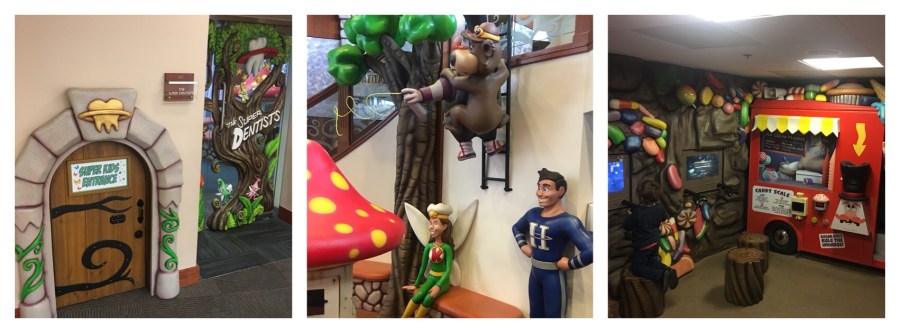
The Super Dentists have a handful of San Diego-area offices to serve you and your family. Discover why one in five San Diego children is a Super Dentists kid – schedule an appointment and see how we can help anyone overcome dental anxiety. Going to the dentists shouldn’t invoke fear…it should be fun! That’s the thinking behind The Super Dentists experience. Stop in and visit us today.

How Often Should Kids Go to the Dentist?

How often should a child see a dentist and how do you know if your pediatric dentist is looking out for you and your child? Believe us, we understand where you’re coming from.

One thing’s for sure, though: you should never wait until it’s too late for preventative dental care. If your child’s first trip to the dentist office is to take care of a dental emergency, you definitely waited too long!

To determine the best course of action for your child’s dental care, the better question is: how often should I take my child to the dentist? There are no rock-solid benchmarks for recommended dentist visit frequencies, but it’s always best to err on the side of better dental health – in other words, when in doubt, go ahead and schedule an appointment.

The Super Dentists, San Diego’s premier pediatric dentistry, always puts your child’s dental health first, all while making each visit totally fun and memorable. One in every five San Diego children is a Super Dentists kid – and thanks to our unique, patient-first approach, children can’t wait to visit our dental offices!

The Importance of Regular Dental Care for Children

Given the current state of pediatric dental health [CB1] in California and across the United States, it’s normal to think about when to take your child to the dentist. Consider these sobering statistics:

Clearly, there’s work to do in improving pediatric oral health in the U.S. What’s truly alarming is that bad dental habits as children are the primary reason for cavities, tooth decay, gingivitis, and other dental health problems in adults. According to the U.S. Centers for Disease Control and Prevention (CDC), almost one-third of adults have untreated cavities – in other words, they’re not even aware they have cavities in the first place. Just like children, adults need to visit the dentist on a regular schedule.

How Often Should a Child Go to the Dentist? – First Visits, Frequency & More

Your child’s first dental visit should occur when their first baby teeth  come in. If no teeth appear within your child’s first 12 months, schedule an appointment shortly after their first birthday. Please note that this is the latest you should visit the pediatric dentist; if other problems occur (such as tongue-ties, poor oral habits, etc), take your child to the dentist earlier.

As far as frequency, most dental professionals – including The Super Dentists – recommend children should visit the dentist at least twice per year.

But, don’t take it just from us. The American Academy of Pediatric Dentistry recommends that your child see a dentist every six months as well.

Two trips to the dentist on an annual basis help ensure:

Signs of Early Tooth Decay in Children

Oral hygiene is so important from a young age. It teaches your children how to properly take care of their teeth. Here are some things to look out for when your child’s teeth are just starting to come in:

White Spots: The appearance of chalky white spots on the teeth may indicate the beginning of tooth decay.

Tooth Sensitivity: Children experiencing pain or sensitivity when consuming hot, cold, or sugary foods and beverages may have tooth decay.

Tooth Discoloration: Discoloration or darkening of the tooth enamel could be a sign of decay.

Bad Breath: Persistent bad breath, even after brushing, can be an early indication of tooth decay.

Toothache: Unexplained toothaches or spontaneous pain in the teeth could indicate decay or cavities.

Difficulty Chewing: If your child shows signs of discomfort or difficulty while eating, it could be due to tooth decay.

Swollen Gums: Swelling or redness in the gums around a particular tooth may suggest decay or infection.

Visit The Super Dentists Today – We’re the #1 Pediatric Dental Network in San Diego!

The Super Dentists continue to reinvent and transform pediatric dental care. Rethink “traditional” trips to the dentists with our completely unique dental experiences!

Pop quiz! How often should kids go to the dentist? Has it been over six months since your child’s last appointment? If that’s the case then you’ll want to schedule a dental visit right away!

With a handful of offices in and around San Diego, we’ve made it easy to connect with our team of pediatric dental consultants. Thanks for visiting the Super Dentists – we look forward to seeing you and your child soon!

What Is A Family Dentist? And How Are The Super Dentists Different?

Do you see a family dentist? Are you even sure what a family dentist is?

Those are two essential questions for your family’s overall dental health. Since the link between teeth and gum health is directly tied to your physical well-being, it’s important to know where your family is getting treated and who is treating them. It helps to know the services and procedures a family dentist offers – and how they are different from other dentists. 

The Super Dentists, San Diego’s largest, most trusted and top awarded Pediatric Dentistry, Teen and Adult Dentistry and Orthodontics Practice, is sometimes referred to as a family dentistry. While we offer many of the same services as a family dentist, we go way beyond traditional family oral healthcare by providing a wide range of services for the whole family, from toddlers and children and teens to parents.

Let’s examine some of the typical services you’ll receive at a family dentist practice, along with all the “extras” available at The Super Dentists.

What to Expect at a Family Dentist

A family dentist offers general dental care for patients of all ages. These services include:

The Super Dentists will gladly see your whole family. But we’re not a family dentist in the traditional sense. Sure, we provide the same patient-friendly care, but that’s where the similarities end. The Super Dentists is unlike anything your family has experienced within the field of dentistry and orthodontic care. So how do The Super Dentists differ from family dentist practices?

Stop By The Super Dentists for “Above and Beyond” Dental and Orthodontic Services

The Super Dentists is committed to providing the best dental and orthodontic care in the greater San Diego region. With five area offices (soon to be six!), a fully accredited staff, cutting-edge treatments and an understanding of how to best serve kids and adults of all ages, we’re here for you and your entire family.

If your family dentistry has left you wanting more, or if you’re ready to experience fun, full-service dental services you can’t get anywhere else in Southern California, visit The Super Dentists today. Our award-winning dental practice focuses on complete, comprehensive care.

Come and see why one in every five San Diego children is a Super Dentists kid! Our philosophy is simple and straightforward: every child deserves a smile that reflects their unique character and personality. To that end, we’ve reinvented and transformed the dental experience in a way that’s fun, informative and entertaining for every patient. We create dental visits that are as extraordinary as your child. 

Schedule an appointment today, or give us a call at 1 (855) GO SUPER. For added convenience, you can also text our dental care consultants directly at 1 (844) 765-1234. We look forward to seeing you soon.

How to Get Kids to Brush Their Teeth – Teaching Dental Hygiene

Understanding how to get kids to brush their teeth as part of good dental hygiene is no small feat. Dental hygiene is not just a good idea for children; it’s crucial for their overall health. In fact, according to the American Academy of Pediatric Dentistry, tooth decay is the single most prevalent chronic disease in childhood, and rates of pediatric cavities are on the rise. As a parent, you’re correct to ask not only “how long should kids brush their teeth for” but also “how can I help my child develop lifelong good oral habits?” At The Super Dentists, our team is committed to providing top-notch “super dentistry” services for the whole family at our offices serving the greater San Diego area. Check out answers to common questions about teaching dental hygiene to children, and contact us to schedule a consultation.

How to Get Kids to Brush Their Teeth – Frequently Asked Questions

At The Super Dentists, parents frequently ask us how to keep their children’s dental health on track. Below are some of the most common questions we hear, plus some kid-centered answers to questions like how to get kids to brush their teeth and how long should kids brush their teeth for.

What age should I start teaching my kids to brush their teeth?

It is never too early to start teaching your children to brush their teeth. In fact, the National Institute of Health reports that a whopping 42 percent of youth age 2 to 11 years old have dental caries (cavities) in their primary (“baby”) teeth. To take preventative measures, get a jump start on your kids’ learning by introducing the concept of regular brushing as soon as their first tooth emerges.

How do I get kids to brush their teeth?

Children are naturally curious, so understanding how to get kids to brush their teeth means knowing how to get them asking questions. Starting from a young age, you can brush your teeth around your kids and explain to them what you’re doing, and why it’s important.

Education paired with engagement and consistency will get your kids excited to brush their teeth. You can also explain the mechanics of tooth decay in an age-appropriate manner. Try this: food gets stuck in our teeth when we eat, which will grow bacteria if you don’t remove it with proper brushing and flossing – this bacteria leads to cavities, gum disease, and bad breath! Then, explain that proper dental hygiene (brushing and flossing) helps our smiles stay healthy, which in turn helps us feel happy and confident.

How should I introduce tooth brushing to my kids?

Setting a good example is your first line of defense in learning how to get kids to brush their teeth. Brush and floss in front of your child twice daily so that dental hygiene is the norm in your household. When your child is old enough to begin brushing his or her own teeth (around two years old), supervise your child so that he or she brushes and flosses completely (don’t forget along the gum line, gums, all tooth surfaces, and tongue!). Make tooth brushing fun for kids. Let them select their own toothbrush, select a two-minute-long song for them to brush to when the song ends, that’s when they’re done brushing.

Include them in your own dental health and bring them along to your dental appointments. The Super Dentists provides comprehensive dental services for parents in addition to pediatric dentistry, for a whole-family care experience.

What does “proper dental hygiene” look like for babies and small children?

As soon as babies cut their first tooth, their teeth need the same daily care we give adult teeth. Use a washcloth or a soft-bristled (infant) toothbrush to gently clean the teeth and gums for two minutes at least twice a day, including before bedtime. For kids under two years of age, use a tiny “smear” of toothpaste, and for kids older than two years of age, use a pea-sized amount. Once a child has two teeth that touch each other, the time is also ripe for beginning twice-daily flossing. Ask your pediatric dentist for additional, customized strategies to maintain your kids’ dental health.

How long should kids brush their teeth for?

“How long should kids brush their teeth for” is one of the most common questions we hear at The Super Dentists. Your child should brush his or her teeth for about two minutes twice a day, including before bedtime. If your child will not or cannot brush for the full two minutes, brush his or her teeth yourself to make sure you hit the two-minute mark. Using songs during brush-time or toothbrushes with a timer built-in can be helpful reminders while building this routine. Teach your child to brush the surface of the teeth, including the chewing surfaces, front, and back of the teeth, as well as the gum line, gums, and tongue. Use floss to clean between each tooth and floss gently under the gumline.

When do kids need to see a dentist?

In addition to daily at-home preventative care, take your child to the dentist when his or first tooth comes in, and no later than the child’s first birthday. Twice-yearly dental visits are recommended to prevent cavities and other dental problems.

How to Get Kids to Brush Their Teeth – More Information

For more information on how to get kids to brush their teeth or to schedule an appointment, contact the Super Dentists, welcoming patients throughout San Diego County. We also invite you to visit The Super Dentists’ blog, which contains articles and videos for parents and kids alike. Whether you need pediatric dentistry, orthodontics, Teen and Adult Dentistry or other services, our friendly, experienced team is here to help. We look forward to providing outstanding child-centered care for which The Super Dentists is known.

Introducing The Super Dentists Super Toothbrushes!

From poor brushing techniques to using the wrong toothbrush to not brushing long enough, there are plenty of things that can go wrong with kids’ dental care. Many children find taking care of their teeth a chore, with some bore thrown in for good measure. But there’s hope – The Super Dentists is putting the “fun” back in toothbrushing for children – by introducing The Super Toothbrush by The Super Dentists.

With four designs featuring The Super Dentists superhero and villain characters, our toothbrushes help encourage good oral health for all children.

The Super Dentists Super Toothbrushes include:

Kids will enjoy the fun, colorful characters and look forward to their daily dental care. Plus, The Super Toothbrush comes with a magic sticker! When paired with the Vivarra Dental app, The Tooth Keri comes to life in 3D right in your home to teach the kids the correct brushing and flossing techniques using augmented reality! Parents will love the high-quality design, not to mention the good dental care habits that result. The Super Toothbrush helps ensure your children stay on top of their tooth brushing.

The Super Toothbrush is just one more way we’re reinventing and transforming dental care in the greater San Diego area. With our augmented reality experiences, kid-friendly atmosphere and caring staff, The Super Dentists is simply the best option for your child’s dental care needs!

Establishing solid dental care practices early in life will benefit children for years to come, positively impacting everything from their overall physical health to their confidence, and even their longevity!

The Importance of Learning Positive Oral Health Habits at a Young Age

Good dental habits start early. Unfortunately, poor oral health as a child can lead to long-term, chronic dental and health issues. Did you know the following facts about dental care in California?

When it comes to pediatric dental care, the state doesn’t exactly represent the gold standard for kids’ teeth & gum health! But The Super Dentists is helping turn things around, thanks to our innovative dental accessories, including The Super Toothbrush, our brand new singing toothbrush for kids

The above statistics certainly paint a grim picture of pediatric dental care in California. Sounds like a problem for The Super Dentists. It’s The Super Toothbrush to the rescue!

It’s The Super Toothbrush to the Rescue!  Teaching your children proper brushing and flossing habits isn’t easy. That’s why the dental care professionals at The Super Dentists – always innovating new ways to improve oral health – came up with The Super Toothbrush. Along with regular visits to our area offices and common sense care, your children can buck the trend in California by taking care of their teeth & gums. And The Super Toothbrush helps children have fun while they brush which means they’re more likely to want to brush their teeth.

The Super Toothbrush features:

With outstanding value, innovative features and colorful Super Dentists characters, The Super Toothbrush represents the best pediatric oral health care instrument you’ll find. Start teaching your kids positive oral health habits today.

The Super Toothbrush is available at all six Super Dentists’ locations: Carmel Valley, Chula Vista, East Lake, Kearny Mesa, Oceanside, and Escondido at a special discounted price for when purchased in the office. The Super Toothbrush is the only augmented reality toothbrush currently available on Amazon!

The Super Dentists, an experience as extraordinary as your child.  Come see why 1 out of every 5 children in San Diego is a Super Dentists kid and stop by any of our area pediatric dental offices today!

Infographic: Childhood Tooth Decay Statistics

Is Your Child Suffering from the Most Chronic Disease in Children Right Now?

No, not childhood obesity, not asthma and not diabetes.

Childhood Dental Tooth Decay

The Rotten State of Toothbrushing

It’s The Super Toothbrush to the Rescue

One of the best ways to prevent dental decay is for your children to develop good oral habits early in life.

How The Super Toothbrush can help:

How to Get Kids to Brush Their Teeth

Understanding how to get kids to brush their teeth as part of good dental hygiene is no small feat. Dental hygiene is not just a good idea for children; it’s crucial for their overall health. In fact, according to the American Academy of Pediatric Dentistry, tooth decay is the single most prevalent chronic disease in childhood, and rates of pediatric cavities are on the rise. As a parent, you’re correct to ask not only “how long should kids brush their teeth for” but also “how can I help my child develop lifelong good oral habits?” At The Super Dentists, our team is committed to providing top-notch “super dentistry” services for the whole family at our offices serving the greater San Diego area. Check out answers to common questions about teaching dental hygiene to children, and contact us to schedule a consultation.

How to Get Kids to Brush Their Teeth – Frequently Asked Questions

At The Super Dentists, parents frequently ask us how to keep their children’s dental health on track. Below are some of the most common questions we hear, plus some kid-centered answers to questions like how to get kids to brush their teeth and how long should kids brush their teeth for.

What age should I start teaching my kids to brush their teeth?

It is never too early to start teaching your children to brush their teeth. In fact, the National Institute of Health reports  that a whopping 42 percent of youth age 2 to 11 years old have dental caries (cavities) in their primary (“baby”) teeth. To take preventative measures, get a jump start on your kids’ learning by introducing the concept of regular brushing as soon as their first tooth emerges.

How do I get kids to brush their teeth?

Children are naturally curious, so understanding how to get kids to brush their teeth means knowing how to get them asking questions. Starting from a young age, you can brush your teeth around your kids and explain to them what you’re doing, and why it’s important.

Education paired with engagement and consistency will get your kids excited to brush their teeth. You can also explain the mechanics of tooth decay in an age-appropriate manner. Try this: food gets stuck in our teeth when we eat, which will grow bacteria if you don’t remove it with proper brushing and flossing – this bacteria leads to cavities, gum disease and bad breath! Then, explain that proper dental hygiene (brushing and flossing) helps our smiles stay healthy, which in turn helps us feel happy and confident.

When Should Kids Brush Their Own Teeth?

Setting a good example is your first line of defense in learning how to get kids to brush their teeth. Brush and floss in front of your child twice daily so that dental hygiene is the norm in your household. When your child is old enough to begin brushing his or her own teeth (around two years old), supervise your child so that he or she brushes and flosses completely (don’t forget along the gumline, gums, all tooth surfaces and tongue!). Make tooth brushing fun for kids. Let them select their own toothbrush, select a two-minute long song for them to brush to, when the song ends, that’s when they’re done brushing.

Include them in your own dental health and bring them along to your dental appointments. The Super Dentists provides comprehensive dental services for parents in addition to pediatric dentistry, for a whole-family care experience.

What does “proper dental hygiene” look like for babies and small children?

As soon as babies cut their first tooth, their teeth need the same daily care we give adult teeth. Use a washcloth or a soft-bristled (infant) toothbrush to gently clean the teeth and gums for two minutes at least twice a day, including before bedtime. For kids under two years of age, use a tiny “smear” of toothpaste, and for kids older than two years of age, use a pea-sized amount. Once a child has two teeth that touch each other, the time is also ripe for beginning twice-daily flossing. Ask your pediatric dentist for additional, customized strategies to maintain your kids’ dental health.

How Long Should Kids Brush Their Teeth?

“How long should kids brush their teeth for” is one of the most common questions we hear at The Super Dentists. Your child should brush his or her teeth for about two minutes twice a day, including before bedtime. If your child will not or cannot brush for the full two minutes, brush his or her teeth yourself to make sure you hit the two-minute mark. Using songs during brush-time or toothbrushes with a timer built in can be helpful reminders while building this routine. Teach your child to brush the surface of the teeth, including the chewing surfaces, front and back of the teeth, as well as the gumline, gums and tongue. Use floss to clean between each tooth and floss gently under the gumline.

When do kids need to see a dentist?

In addition to daily at-home preventative care, take your child to the dentist when his or first tooth comes in, and no later than the child’s first birthday. Twice-yearly dental visits are recommended to prevent cavities and other dental problems.

How to Get Kids to Brush Their Teeth – More Information

For more information on how to get kids to brush their teeth or to schedule an appointment, contact the Super Dentists, welcoming patients throughout San Diego County. We also invite you to visit The Super Dentists’ blog, which contains articles and videos for parents and kids alike. Whether you need pediatric dentistry, orthodontics, Teen and Adult Dentistry or other services, our friendly, experienced team is here to help. We look forward to providing outstanding child-centered care for which The Super Dentists is known.

5 Ways To Make Your Child’s Dentist Visit A Good One

Taking children to the dentist is necessary to keep their teeth healthy and promote excellent oral hygiene habits. But from a child’s point of view, a trip to the dentist can be a frightening event: sitting in a chair in a room filled with unknown elements while a stranger introduces unusual instruments into their mouth. Take a look at the following tips on what you can do for a painless dentist visit.

Tell your child in advance that they have an appointment
Have a conversation with your child days before the visit and explain to them the purpose of the appointment to help reduce fears. Tell them the dentist will look at their mouth and check if their teeth and gums are strong and healthy. Also explain to them the importance of visiting the dentist to keep cavities at bay and ensure a beautiful smile for a lifetime.

Don’t set false expectations
As in all life experiences, you shouldn’t lie to your child with false ideas like, “it won’t hurt” or “nothing happens” because they might reject future appointments if they experience discomfort or something happens during their visit.

Find a practice with a more relaxing ambiance to put your kids at ease
A great way to alleviate tensions associated with dental visits is to take your child to a dental practice that specializes in pediatric dentistry and provides a fun environment, according to Dr. Kami Hoss, co-founder of The Super Dentists. A comfortable waiting room filled with games and activities will make kids feel at ease and keep them distracted from the fact that they are at a dentist office.

Don’t try to convince them with rewards
Don’t promise your child something special in exchange for behaving well in the dentist’s office lest you feed their apprehension. For example, by offering a lollipop in exchange for not crying, your child may think,, “what’s wrong with the dentist and why will I cry? Praise good behavior and attitudes and reward them with healthier incentives or something that motivates dental hygiene. They will feel a sense of accomplishment – and you will too!

Visit a practice that treats adults so you can lead by the example
When children see their parents visiting the dentist as just another part of their routine, they will be more apt to accept it as part of their own. Choose a dental practice that provides dental care for both children and adult patients and schedule your appointments on the same day as your kids’ visits.

Ready to keep your child’s teeth healthy and yours too? With more than 20 years serving the San Diego community, The Super Dentists treats children and parents in a fun and positive environment, where families can feel relaxed and safe, and be confident they are getting the best dental care with state-of-the-art equipment and procedures managed by a friendly group of pediatric dentists. For more information and to schedule an appointment, visit TheSuperDentists.com.

Original Post: https://www.nbcsandiego.com/news/health/5-Ways-to-Make-Your-Childs-Dentist-Visit-a-Good-One-509263271.html

First Trip to the Dentist, The Super Dentists

Child Being Comforted by Dental Assistants
http://familyentourage.com/first-trip-to-the-dentist/

The are so many firsts as a new parent. Some are welcomed and exciting and others can be daunting.

Taking your toddler to his first dental visit can often fall in the latter category. You may have questions and concerns about when to take your child to the dentist and what can be expected for a solid prevention plan and proper hygiene. That being said, if you are like most American households, then your child didn’t see a dentist until they were well over 2 years old, far later than is recommended by the American Academy of Pediatric Dentistry (AAPD). The AAPD recommends, “in order to prevent dental problems, your child should see a pediatric dentist when the first tooth appears, or no later than his/her first birthday.”

In a survey on children’s oral health, conducted by Morpace, Inc., on behalf of Delta Dental Plans Association, it revealed the average age for a toddler’s first trip to the dentist was 2.6 years old. Among children who have never visited the dentist or who have not seen a dentist in the last 12 months, the most frequently mentioned reason (62%) was that “the child is too young” or “doesn’t have enough teeth yet.”

We definitely fell in this category as we brush regularly and haven’t had any issues however we know it is important to start regular dental check-ups and just wanted to make sure our son felt comfortable and was aware of what was going on. We knew we wanted a pediatric dentist and the environment needed to be fun and inviting without compromising on actual dental care.

This led us to The Super Dentists — a company that has been a leader in kid’s dental care for the past 20 years and now has six locations in San Diego.

Decor of facilities. Shows
http://familyentourage.com/first-trip-to-the-dentist/

I really liked the story behind the business and the story created of super dental heroes. There is a whole cast of characters ranging from Cavitar to Molar bear and the dentists and hygienists reinforce the theme. Husband and wife founders, The Tooth Keri (Dr. Nazli Keri) and Dr. HaveOneSuperSmile (Dr. Kami Hoss) gathered this super crew of pediatric dentists and orthodontists to fight cavities and crooked teeth.

My son immediately took to the creative atmosphere from the moment you enter the office complete with life-size characters, a video game section, and friendly staff. I kept encouraging him that this was fun and needed while reminding him of the steps that were going to take place so that he had an idea of what was coming up.

Dental Staff, providing care to child.
http://familyentourage.com/first-trip-to-the-dentist/

I was very impressed with the patience of the entire staff from receptionist to hygienist to doctor. They were great with verbally walking my son through the steps that were about to take place and then going at a speed that he was okay with.

I was genuinely impressed when they got him to actually put the glasses on, lay back and engage in the full cleaning of his teeth. The dentist had a stuffed tiger with a full set of teeth and used her mirror to show my son what she was looking at and doing with his teeth in his mouth. He was a little apprehensive about the X-Ray portion but with some explaining he finally conceded and we were successful in getting all the needed pictures of his teeth which helped us learn that we are cavity free!

We got to leave the office with a prize — you earn points during the visit and those can accumulate over several visits or you can spend at once in their prize closet on items ranging in point totals — and a bag full of goodies ranging from the standard toothbrush and floss, to a DVD of all the characters for us to watch at home to keep up the excitement for future visits. Another great benefit is that they accept our insurance plan as well.

We would highly recommend The Super Dentists if you are in the San Diego area, and if you aren’t then to find a pediatric dentist in your area that values great care as much as the overall experience for toddlers.

Shows child fantasy themed decor dental office.
The Super Dentists office in Carmel Valley. www.thesuperdentists.com

Original Article Posted On: http://familyentourage.com/first-trip-to-the-dentist/

KUSI News: How To Get Your Kids To Brush Their Teeth

Original Post found: https://www.kusi.com/february-is-national-childrens-dental-health-month-2/

SAN DIEGO (KUSI) – February is National Children’s Dental Health Month and each year the American Dental Association (ADA) sponsors National Children’s Dental Health Month to raise awareness about the importance of oral health.

Dr. Kami Hoss from The Super Dentists visited Good Morning San Diego to discuss some challenges parents might have with their children’s dental health.

View the video by following the link to the original post: https://www.kusi.com/february-is-national-childrens-dental-health-month-2/

Super Dentists Looking for Super Parents!

I am so excited to tell you that The Super Dentists are now accepting adult patients! That includes cosmetic dentistry, braces and Clear Aligners, teeth whitening, veneers, cleanings, sedation dentistry and more. 

I went in for my own appointment to see if the standard of care my children are already receiving at The Super Dentists is being extended to their moms and dads. I was pretty amazed at what I found out!


 

Cleaning and Whitening at The Super Dentists

I was scheduled (on Halloween, as it turns out) for a regular cleaning and teeth whitening at The Super Dentists Eastlake location. This is extremely convenient for me–it’s literally around the corner from our house. Although this time the appointment was mine, I brought along my 4-year-old son. One of the primary advantages offered by The Super Dentists for teen and adult dentistry is that your child will be cared for during your appointment. Wow!

The clean and tidy appointment room. Check out the diffuser!

Within minutes, my son was playing a video game with Melody (the helpful Super Dentists mascot in full costume) by his side. He was given a smartwatch that connected to a phone I took into the room with me, and he called me several times to check in and let me know he was OK.

full menu of free amenities at the super dentistsIn the meantime, I was being presented with this: A menu of FREE amenities to enjoy during my visit! Here is what was listed:



I opted for the shoulder massage, a vibrating blanket that is placed across your back and around your upper arms. Heavenly. I switched the TV to Property Brothers, and I was ready for my cleaning and whitening session with this amazing team.

Carlo, my hygienist (and, as it turns out, my neighbor!)

Carlo, my hygienist, came in dressed as a very funky Bruno Mars. He introduced me to their featured line of whitening teeth products, Opalescence. I’d be leaving with one of their sets of trays on my teeth after my cleaning was done.

The cleaning was easy breezy, and I was rinsed and ready to depart in under half an hour. One of the ladies at the front desk was kind enough to pop her head in (twice!) and let me know that my son was doing great.

I couldn’t believe how simple the whitening task was! Carlo explained that the Opalescence brand is good for sensitive teeth (like mine,) and a custom fit happens within seconds. I was then instructed to wear the trays out the door and keep them on for half an hour. Did they work? You be the judge!

Altogether, it was lovely to be able to take an appointment at the same place my children already have their teeth checked and cleaned every 6 months. If you would like to read more about children’s dental care and how The Super Dentists work to keep kids healthy, read my previous post here.

8 Tips to Make Brushing Fun for Kids

Brushing a child’s teeth doesn’t need to be a long and stressful process. With the right approach, any parent can transform a daily teeth-brushing routine into an enjoyable experience for his or her child.

There are many things you can incorporate into your routine to help your child achieve and maintain a super smile. Let’s take a look at eight tips to help you make teeth brushing fun for your child.

Start Early

Incorporate brushing your child’s teeth into his or her morning and evening routines and start their oral hygiene routine at a young age. During infancy, wipe down your child’s gums with a soft, damp cloth. Meanwhile, once your child’s teeth start to develop – something that usually begins between the ages of 6 months and 1 year – you can gently brush his or her teeth in the morning and before bedtime with a soft-bristled toothbrush. Once your child’s teeth start touching, you can show your son or daughter how to properly floss, too.

Brush Your Teeth with Your Kids

Setting a positive example for your son or daughter can make a world of difference, especially when it comes to your child’s oral hygiene. If you brush your teeth at the same time as your child, you can instill good oral health habits in your son or daughter. Also, don’t be afraid to think outside the box when you brush your teeth with your child. For example, dentist Dr. Vidya Varathan notes that letting your child hold your toothbrush while you brush his or her teeth with another can be valuable. This will allow your child to see exactly how brushing the teeth can be used to eliminate plaque. Of course, when you are done brushing your teeth with your child, don’t forget to smile. “If you’re smiling and relaxed – your toddler will imitate you in no time,” Varathan says.

Use The Super Dentists’ Musical Toothbrushes

Songs often provide great learning tools that both parents and kids can appreciate. If you incorporate songs into your child’s oral health routine, you could help him or her learn how to brush and floss correctly. For instance, thanks to The Super Dentists’ Musical Toothbrushes your child can sing, dance and brush his or her teeth to achieve a beautiful, healthy smile. Studies show children brush their teeth 73% longer with musical toothbrushes. The Brush song lasts two minutes, exactly the amount of time your child should be brushing.

Pick Up Children’s Oral Hygiene Essentials

Aurora Satler, the author of “The Ultimate New Mom’s Cookbook,” notes there are several must-have oral hygiene products that parents should pick up for their kids. These products include:

Talk to your child’s pediatric dentist so they can recommend oral hygiene products that are just right for your child’s individual needs.

Use Games

Dentists often recommend brushing the teeth at least twice a day, for two minutes at a time, according to the American Dental Association. If you use games as part of your child’s oral health routine, you could help your son or daughter build a successful oral health routine and achieve an amazing smile.  The Super Dentists musical toothbrushes also provide augmented reality experiences right in the convenience of your own home to educate your child about the right brushing techniques in a unique, out-of-this-world way.

Tell a Story

If you want to get your son or daughter to brush his or her teeth, build a story around this activity. In fact, you can create your own books and characters to inspire your child to improve his or her oral hygiene. “I suggest that parents and caregivers use entertaining books and fun characters to make brushing fun for kids,” says family and parenting blogger Tangela Walker-Craft. “I created cartoon characters for my daughter when I wanted her to learn and practice good hygiene habits.”

Offer Incentives

Caleb Backe, a health and wellness expert at organic and natural beauty product company Maple Holistics, says incentives may be exceedingly valuable to teach children about good oral hygiene. For example, you can offer rewards like a trip to a zoo or playground if your child brushes and flosses his or her teeth properly. With an incentive-based approach to oral hygiene, your child may eventually start looking forward to brushing and flossing his or her teeth day after day. “By associating brushing with this special reward, your child will begin to build positive mental energy towards brushing, and they can begin to learn to think of it as fun,” Backe says.

Choose the Right Pediatric Dental Practice for Your Child

Not all pediatric dental practices are created equal. Fortunately, if you spend some time reviewing your options, you are sure to find a pediatric dental practice that helps both you and your child feel comfortable.

The Super Dentists is proud to serve as a leading San Diego pediatric dental practice. Some of the reasons we stand out from other San Diego pediatric dental practices include:

Put your son or daughter on the path to a super smile – contact The Super Dentists today at 1 (855) GO SUPER to schedule a consultation with one of our pediatric dentists.

SuperDentists to the Rescue: Kids Dental Care

How much do you know about children’s dental health? Do you think you could pass a quick quiz on the topic from The SuperDentists?

We put together the quiz below after attending another awesome Mommy & Me Series seminar at The SuperDentists in Eastlake. Since the presentation was being put together by my children’s dentist, I was especially interested, but I didn’t think I would be surprised. I was! And I think you will be, too.
Here are the questions, along with the answers and a quick explanation below.

The SuperDentists Quiz: How Much Do You Know?

Question 1: What are the most important ages for children and dental health checkups?

A) 6 months, 5, 10

B) 1, 4, 8

C) 6 months, 4, 7

D) 1, 4, 7

Question 2: Which is more important, flossing or brushing?

A) Flossing

B) Brushing

C) The two are equally important

Question 3: All toothbrushes and toothpaste brands work the same for everyone. True or false?

A) True

B) False

Question 4: Cavities can be passed on to your children. True or false?

A) True

B) False

Question 5: Oral health can affect your fertility, pregnancy, and your child’s future oral health. True or false?

A) True

B) False

All right, think you got most of them right? Let’s begin with Question 1.

The answer to Question 1: Option “D,” ages 1, 4, and 7. Your child should have an appointment to see a pediatric dentist before they turn one year old–ideally, when their teeth are first starting to come in. Up until then, you can use a damp cloth to clean their gums after meals. This will get them accustomed to cleaning their teeth.

4 is another big age–that is when all bad oral habits should be stopped. These include bringing a bottle to bed, thumbsucking, and pacifier use.

Finally, age 7 is when you should take your child to their first consultation at the orthodontist.

The answer to Question 2: Option “A,” flossing! Your saliva and the movement of your mouth keeps food and other gunk flowing around your teeth relatively well, but nothing does the job that flossing does–removing the trapped debris locked in between each tooth. Our kids love the scented colored floss picks!

The answer to Question 3: Option “B,” False! Dr. Nazli Keri with The SuperDentists cautions that your toothbrush and toothpaste selections should NOT be made based on what is on sale, or brightly colored, or has the best superheroes on the label. Consult your dentist before buying these items, because they may recommend a cleaner product, a toothpaste for healthy teeth as opposed to problem teeth, or they may want to alter the brush your child is using because it is not gentle or firm enough. Always ask first!

The answer to Question 4: Option “A,” True! The bacteria in our mouths is a custom cocktail of good and bad stuff. Children passing through the vaginal canal, children who are nursed, etc., all get an infusion of those bacteria–and bacteria is what causes cavities. And that brings us to Question 5!

The answer to Question 5: Option “A,” True! Your oral health can be connected to everything from the health of your heart to the health of your unborn baby. Keeping your teeth clean and visiting your dentist regularly can affect your fertility (or a man’s sperm count,) and the teeth of your child! Dr. Keri says pregnant women should be seen at their dentist during the second trimester and during the first half of the third trimester.

For more information or if you have further questions on these tips, feel free to reach out to the staff at The Super Dentists.

https://sandiego.citymomsblog.com/health-and-fitness/superdentists-dental-care/