
How Many Cavities is Considered Normal for Kids?
TL;DR:
How many cavities is normal for kids? On average, children ages 2–5 have about 2 decayed teeth, but that number is only part of the story. Cavities in toddlers and preschoolers are common, yet many are preventable with the right strategies and early awareness.
- Kids ages 2–5 average about 2 decayed teeth, but risk varies widely
- Cavities are influenced by bacteria, diet, habits, and biology, not just brushing
- Even cavity-prone kids can significantly reduce future decay with the right approach
- Small changes in routines, diet, and product choices can have a big impact
- While the goal is not perfection, as a parent, you should aim to actively lower cavity risk and protect your little one’s growing smile, wherever possible, for their long-term health and well-being
If you have a child with lots of cavities and you find yourself here, you’re probably wondering if it’s normal.
The truth is that yes, cavities are a normal occurrence in both children and adults. That is, cavities are quite commonplace. But just because they are common or normalized doesn’t necessarily mean that they have to be, or that we have to resign ourselves to cavities just being a “normal fact of life”. There are many factors that cause cavities, and if your kid gets them you should not beat yourself up because in all likelihood, your kid’s cavities aren’t your fault.
But did you know that tooth decay is one of the most preventable medical conditions and that oral health is linked to overall health? All in all, while there’s no need to obsess over a few cavities, you also shouldn’t treat them glibly and ignore the oral health of either yourself or your little ones. In other words, you should feel empowered that as a parent, you do have the chance to foster optimal oral (and, by extension, overall) health on the part of your child.
But how?! Luckily, if you’re scratching your head asking yourself “Why do I keep getting cavities?” or “Why does my kid keep getting cavities?”, the answer (and solution to prevent future cavities) might be simpler than you think. With a few simple preventative measures, you can greatly reduce the risk of your child developing future cavities.
What is the Average Amount of Cavities in Preschoolers vs. School Aged Kids vs. Adults?
Around 20% of children under five and 50% of children aged 6-11 are affected by tooth decay, according to the American Academy of Pediatric Dentists.
Specifically, children from around age 2 to 5 years old had three primary teeth that had fillings and two that were decayed in 2011–2016.
Adults from around age 20 to 64 years, on the other hand, had an average of 9.3 decayed, missing, or filled teeth in 2011–2016, according to the National Institute of Dental and Craniofacial Research.
Clearly, cavities are a common occurrence. But is there a “normal” amount of cavities? Truthfully, no. Every individual is different.
What’s more, while your genetics play a small role in whether you get cavities or not, 90% of all cavities are related to the environment or are associated with oral care. In other words, whether we get cavities or not is, for the most part, something we have control over.

Why Do Kids Get Cavities So Easily?
Cavities aren’t caused only by indulging in sweets and neglecting to brush your teeth, though these things can certainly contribute to getting them.
The real cause of cavities, though, is bacteria in your mouth that produce enamel-eroding acids when they feast on sugary and starchy foods.
So why do kids get cavities so easily? Kids’ teeth are still developing and have thinner enamel than adult teeth, which makes them more vulnerable to acid attacks. Add in frequent snacking, growing independence with brushing, and a still-developing oral microbiome, and it creates the perfect environment for cavity-causing bacteria to thrive.
Factors like dry mouth (which in turn can be caused by alcohol consumption and mouth breathing), frequent snacking, and snoring can all increase your risk of getting cavities.
While cavities themselves aren’t an inherited trait, factors such as enamel strength, saliva production, and tooth shape can increase the risk of cavities. And these traits are passed down from family.
The encouraging news? Once you understand these risk factors, there’s a lot you can do to tip the balance in your child’s favor and reduce the chances of future cavities.
How to Prevent Cavities in Toddlers & Kids: 5 Helpful Tips
Here are 5 action items you can use to help stop cavities from developing in your little ones’ mouths – or prevent them from worsening in severity, even if they have.
1. Limit Sugary Treats
Limit sugary foods and drinks like candy and soda because these feed the bacteria that cause cavities. Instead, opt for healthy snacks.
When your kids do eat sweets, encourage them to rinse their mouths with water afterward.
2. Maintain Good Oral Hygiene
Your little ones should brush their teeth twice a day with anticavity toothpaste, floss once a day, and see a pediatric dentist regularly.
Oral hygiene is about more than just avoiding sugar – it’s also about maintaining a healthy pH balance, promoting saliva production, and caring for the oral microbiome.
3. Watch for Signs and Symptoms
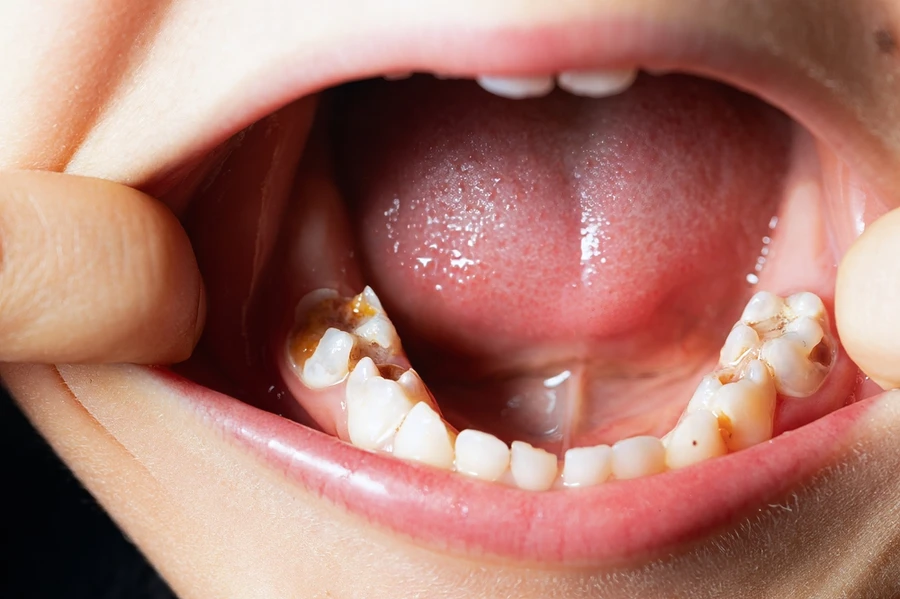
Pay attention to any pain, sensitivity, or visible signs of decay. In the early stages, cavities look like chalky white spots. When left untreated for a long period of time, they begin to present as brown or black spots.
Early detection increases the chances of simpler treatment and prevents cavities from getting worse.
4. Choose Anticavity Products Carefully
Only use oral care products that are appropriate for your child’s age and cavity risk. For instance, fluoride toothpaste may be beneficial for children with a history of cavities, while hydroxyapatite is a good alternative for younger children.
5. Consider Tooth Sealants
Dental sealants are a proven way to prevent cavities in children.
Specifically, the CDC has found that two years after placement, dental sealants prevent over 80% of cavities in the permanent molars, where nine out of ten cavities in children tend to occur.
Need Help with Cavities? Let The Super Dentists Help!
At the Super Dentists, we offer a different kind of family and pediatric dentistry experience marked by a focus on fun, education, and age-and-stage-based care.
We can help you and your family prevent future cavities from occurring and stall the further development of existing cavities with actionable tips, educational resources, and immediate care.
Schedule an appointment at a location near you now for an experience that’s nothing short of super!