
Category: Patient Education
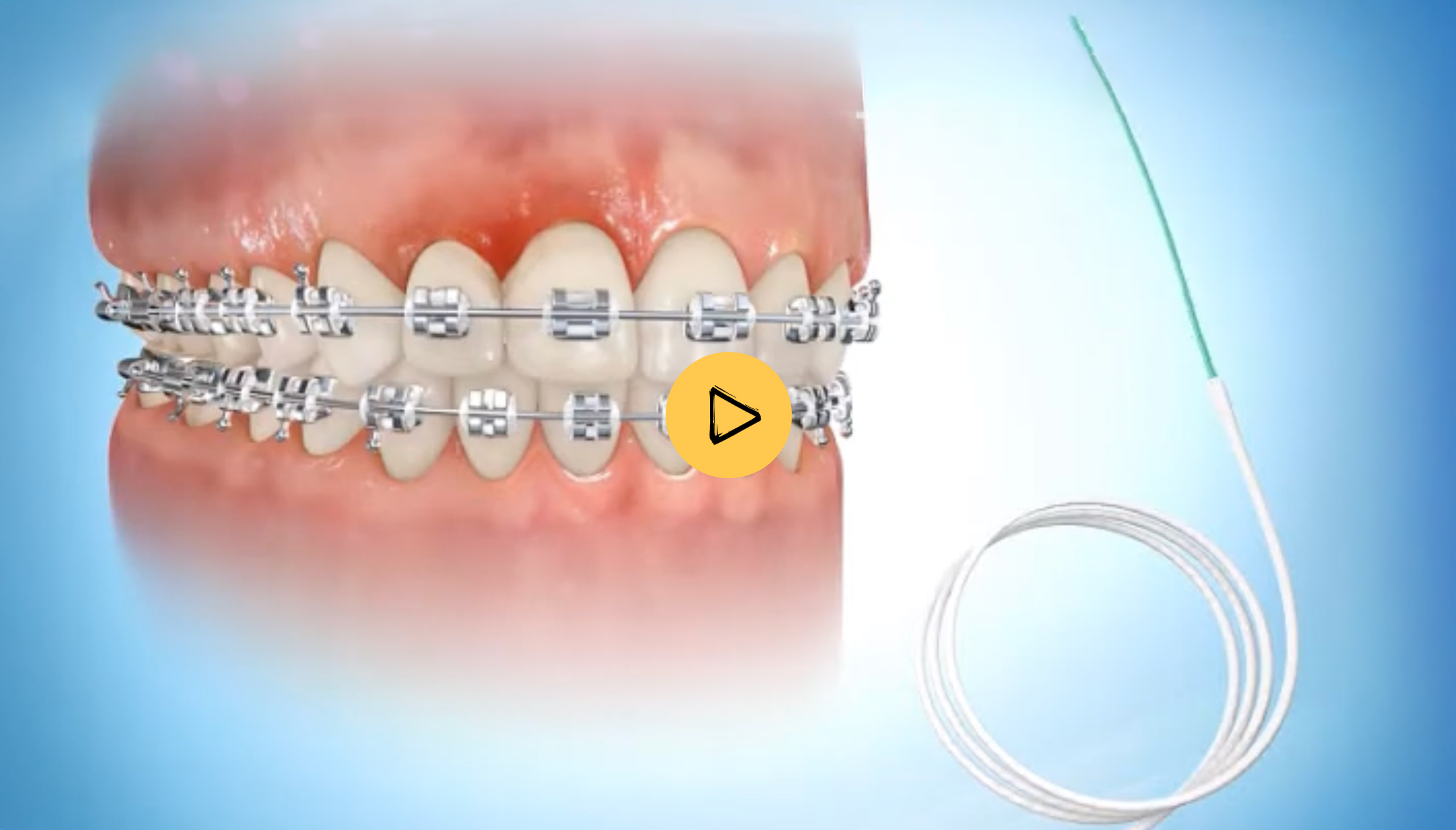
When Should Kids Get Braces? Look for These 7 Telltale Signs
TL;DR:
Wondering if your little one’s smile is on the right track? In this guide, we cover the most common signs your child may need braces and when to schedule an orthodontic evaluation.
You’ll learn what to watch for, the best timing for treatment, and how braces support long-term oral health. Here are some specific highlights:
- Why early or late loss of baby teeth could signal orthodontic issues
- How habits like thumb sucking and mouth breathing impact jaw development
- The difference between cosmetic concerns and medically necessary braces
- When to schedule your child’s first orthodontic evaluation (hint: age 7)
- Treatment options and what to expect at the first ortho visit
Why Braces Matter More Than You Might Think
Think braces are all about creating a picture-perfect smile? Think again!
While getting braces does, of course, straighten your teeth, the benefits of orthodontic care extend far beyond simple appearances. As Delta Dental notes, braces can also correct bite issues, support jaw growth and ensure that it happens normally, improve speech, and even decrease the risk of developing tooth decay or gum disease.
But how do you know it’s time to schedule an orthodontic evaluation for your kid? In other words, how do you know that the signs point to your little one needing braces? Let’s explore the signs. We’ll also discuss the right age for orthodontic treatment and touch upon what to expect at your child’s first orthodontic appointment.
When Should Kids Get Braces?
Truthfully, there’s no one-size-fits-all answer to this question. Every child is unique. That being said, the American Association of Orthodontists (AAO) recommends that every child get their first orthodontic evaluation done by age 7.
This age is ideal because orthodontists can check for subtle or developing issues with everything from tooth eruption to bite alignment and jaw growth. That said, most children will begin orthodontic treatment somewhere between the ages of 9 and 14, depending on their needs.
Read more about why that is in our related blog post “When Do Kids Get Braces and What’s the Best Age for Them?”
NOTE: Your child might need braces even before the age of 9 or even the age of 7. Getting braces before all baby teeth are out is what’s commonly referred to as two-phase orthodontic treatment, a practice that has been growing in popularity in recent years.
7 Top Signs Your Child May Need Braces
Now that you have a general idea of the age range that kids normally get braces and why they’re important, you’re ready to learn seven common signs of needing braces in kids:
- Early, Late, or Irregular Loss of Baby Teeth: Baby teeth help guide permanent teeth into place. But if they fall out too early, too late, or out of order, then permanent teeth may not have the space they require to grow in properly.
- Thumb-Sucking or Tongue Thrusting: Prolonged thumb-sucking and finger-thrusting can lead to bite issues or adversely affect jaw development.
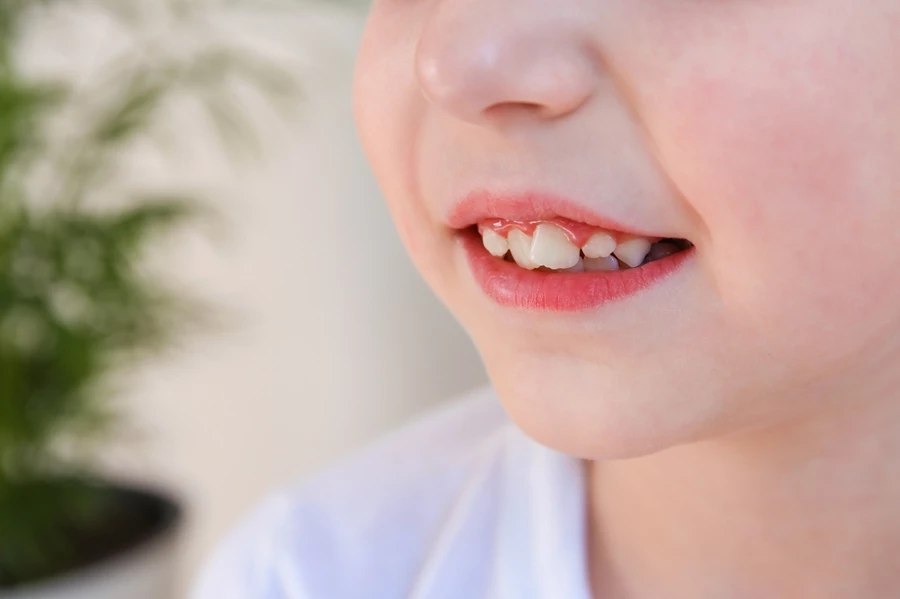
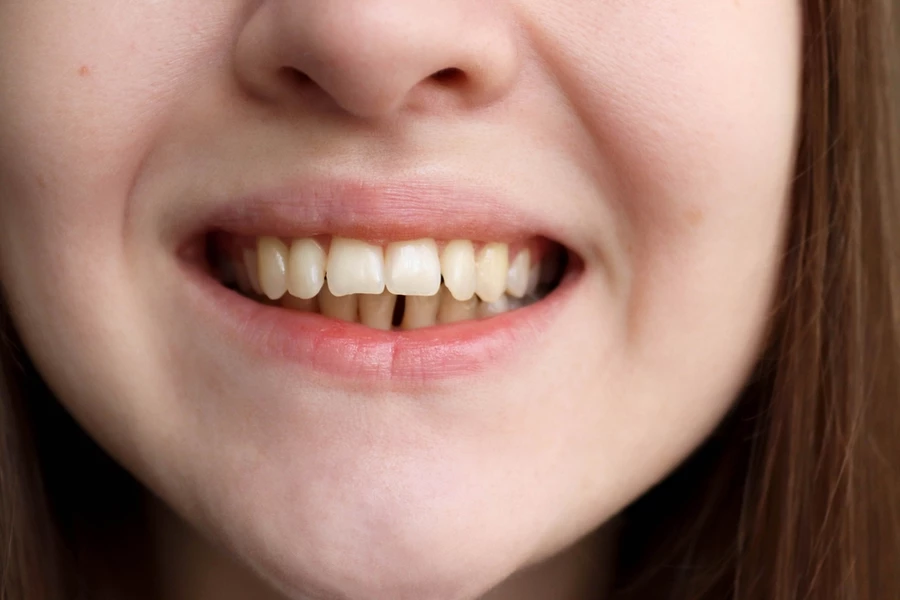
- Crowded Teeth: Crowded teeth in children commonly require braces. So if your child’s teeth overlap, twist, or erupt out of place, these are all clear signs that braces will likely be in their future.
- Difficulty Chewing or Biting: Does your child struggle to eat certain foods? Misaligned bites can cause issues with chewing and can even affect digestion or nutrition over time. For these reasons, getting braces might be in their best interest, if so.
- Overbites, Underbites, Crossbites, or Open Bites: All of these bite problems, which are, as a group, called malocclusions, affect how the teeth and jaws align. The good news? Correcting underbites, crossbites, open bites, or overbites in kids with braces helps to decrease the risk of long-term speech, jaw, and tooth wear problems.
- Mouth Breathing & Jaw Sounds: Mouth breathing, which is especially common during sleep, can impact both overall oral health and facial structure. Meanwhile, clicking, popping, or shifting jaws are other signs that your child may require an orthodontic evaluation.
- Facial Imbalance or Protruding Teeth: Does your child’s jaw appear too far forward or backward? Braces can help balance their facial structure.
What Happens During an Orthodontic Evaluation?
When you visit The Super Dentists for an orthodontic evaluation, our team will:
- Assess your child’s jaw development, facial balance, and emerging teeth.
- Identify and check for specific concerns like tooth crowding, bite irregularities, or excessive spacing.
- Discuss important oral habits, such as grinding or thumb-sucking, that could affect treatment.
- Establish whether this is the ideal moment to begin treatment or if a ‘watch and wait’ approach is best.
The Bottom Line
Braces are about far more than simply straight teeth. They can:
- Improve your child’s ability to chew, bite, and speak
- Lower their risk of cavities and gum disease
- Prevent enamel wear, jaw pain, and injury
- Build confidence in their smile and themselves
- Set the stage for a lifetime of healthy oral habits
What’s more, orthodontic treatment has evolved over the years. Traditional braces, while still one of the most effective options, are hardly the only ones. Kids can now choose from such choices as:
- Traditional metal braces with colorful bands
- Ceramic braces that blend with tooth color
- Clear aligners for older kids and teens
Ready to see if your child could benefit from braces? Take our free Super Smile Personality quiz now or book an appointment online. Healthier smiles are just around the corner!
Research & Compare the Top Invisible Braces

TL;DR:
Choosing the best invisible braces means balancing cost, convenience, and clinical supervision. This guide compares Invisalign, hybrid, and at-home aligners to help you decide what’s safest and most effective for your smile.
- Invisible braces cost typically ranges from around $1,100 to $7,000 + depending on complexity and oversight.
- Invisalign is the most established, doctor-supervised option for mild to complex cases.
- At-home aligners may work for minor relapse cases but lack in-person exams and attachments.
- A professional consultation and X-rays are strongly recommended before starting treatment.
- Retainers and addressing root causes are essential to maintain long-term results.
Straightening your teeth has always been associated with metal braces, but advancements in dental technology and health care have given people a new option: “invisible braces” or clear aligners. Today, people have more choices than ever in deciding what company to choose and which direction to take their teeth-alignment journey.
Invisible Braces & Clear Aligners Vary Drastically
Clear aligners or invisible braces vary drastically in price, medical oversight, and treatment plans. They do have a few big caveats to be aware of also. Namely, there’s a difference between companies like Invisalign, which require some in-office appointments with a dental professional, and direct-to-consumer sites that take molds remotely and ship aligners to your house without any check-ups. Mostly, direct-to-consumer sites are more affordable, but they are generally not recommended by many dental and orthodontic professionals, including the American Dental Association.
What Are the Best Clear Braces: Compare Direct to Consumer & Orthodontist-Prescribed Options
After SmileDirectClub shut down, leaving many customers in the middle of their treatment, the ADA issued a general statement (which did not name any particular company) about the potential dangers of straightening your teeth at home without medical oversight. In some cases, moving teeth without knowing the full picture of someone’s oral health can cause bone loss, teeth loss, gum issues, bite problems, pain in the jaw and permanent issues, the ADA asserted.
This isn’t meant to scare you out of a treatment you want, but it’s an important reminder that our teeth are an important part of our body — the head — and safely straightening your teeth needs to be considered in the context of your gum health, bone health, the roots of your teeth, your jaw and more. That’s according to our very own Dr. Kami Hoss, orthodontist and founder of SuperMouth, an oral care company. The bottom line? You really can’t understand that context without an examination by a doctor and some X-rays.
Dr. Hoss doesn’t recommend direct-to-consumer aligners for the majority of people (more on that below), but people who are interested in straightening their teeth solely at home should be sure to get an exam of their oral health before they go ahead. It’s important to understand that most orthodontists already offer free consultations, so there’s a chance you’ll be able to finesse a no-cost dental exam before you make your decision. (Here’s a provider-finder link from the American Association of Orthodontists, or you can call your local dentist.)
“If you are gonna be in that group where you absolutely want to do this at home, at least get the orthodontic consultation,” Hoss said. “Get a feel for how complex your case is.”
‘Appointment-Required’ Aligners vs. ‘At-Home Only’ Aligners: Here’s What to Know
In-office aligners route
An exam of your mouth and X-rays of your teeth should be included by the company’s care plan and whichever doctor’s office you’re working with. Dentists and orthodontists can become providers with different aligner companies, including the likes of Invisalign, Spark, Reveal, and Candid. You’ll have appointments along the way to check your progress, but the frequency of your appointments and what your care plan will look like depends.
In addition to having oversight by a doctor who can adjust treatment if something isn’t working, Hoss said another plus of these clear aligner companies is that they offer attachments in many cases. Attachments are small, often unnoticeable little nubs attached to some teeth that hook to the aligner and help them move. He compared attachments to handles on furniture.
“If you want to open a cabinet or move it around, it’s a lot easier to have a handle on that cabinet,” he explains.
Clear Aligner treatment from home (direct-to-consumer)
You’ll normally sign up through the company’s website and wait for your shipment of an at-home mold to provide an impression of your teeth. Then, the company’s medical network will review the results of your mold to determine whether you can go forward with treatment. You’ll be shipped new aligners every couple weeks or so, depending on the company and your individual plan. Because at-home only companies are just that — at home — you won’t get attachments.
According to Hoss, people who could benefit from a direct-to-consumer alignment option include what he calls “minor relapse cases.” These are people who may’ve already had braces, but their bottom teeth have moved a little, and they need some minor aligner treatment in straightening them back up again.
Different Invisible Braces for different needs
Again, he stressed the importance of having confirmation that your teeth and everything else is healthy. In some cases, evidence of damage caused by unsafe teeth alignment may show up years later when someone goes to the dentist for another problem, according to Hoss. Also, he said, straightening your teeth with aligners — even if effective at first — may miss the root of the issue, and ignoring the cause of the problem may cause problems or cause teeth to revert back after initial treatment.
Wherever you get your clear aligners, they’ll typically need to be worn throughout the day, unless you’re eating. Some people may also choose a “night-time only” plan.
While what’s best for you will depend on your needs, here are some companies to consider.

What Are the Best Invisible Braces?
Invisalign
Invisalign is the name that kicked the whole idea of invisible braces into the mainstream. It works similarly to “traditional” braces in that you’ll need to find a doctor to start your treatment and work alongside for your entire treatment plan. You’ll find a provider in your area, come up with your treatment plan, get fitted for attachments or whatever you need, and then be on your way to straighter teeth.
The cost is comparable to regular braces, Invisalign says, though how much you’ll end up paying will depend on your specific needs. Depending on your plan, dental insurance may cover up to $3,000 of the cost, according to Invisalign, and you can use your FSA/HSA dollars. Because you’ll be working with a doctor, you may also be able to work out some sort of payment or installment plan.
After treatment, your doctor may recommend you use a retainer to keep your teeth in place. How that looks will depend on your treatment plan.
Reveal
Reveal is similar to companies like Invisalign and Spark because it requires check-ups and appointments with a dentist or orthodontist to keep you on track throughout your treatment.
We’re including it on this list because the claims the company makes on its website may make it a good aesthetic option for people more concerned about the clarity of their aligner. Reveal says that its aligners are guaranteed to maintain their clarity after two weeks of wear and drinking things like coffee. The company also says it’ll minimize its use of attachments, which are typically used for clear aligners since they help teeth move, but some people may want to minimize them.
To get started, find a provider in your area by searching your ZIP code. Reveal says its prices are between $2,000 and $5,000, and the company has a monthly payment option.
AlignerCo
AlignerCo is a direct-to-consumer company, so it’s best to get a clean bill of oral health from your dentist — and ideally a consultation with an orthodontist — before going this route so you can make sure you’re the right candidate for this treatment.
If you get the all-clear for at-home aligners, AlignerCo seems to be one of the most affordable options out there. The company offers a flat rate of $1,095 (or a discounted price) for a one-time payment, which includes the cost of the impression kit and retainers. AlignerCo also offers the option to divide the cost into 12 monthly payments with Affirm. There’s also a six-month plan.
The company isn’t working with any insurance providers, but you can use your FSA/HSA. You can always try to submit a claim after the fact to your insurance company.
If you have concerns about your treatment along the way, AlignerCo says you can contact your “Smile Crew Member,” which is a designated person who will pass along your requests to a dentist. If you want direct contact with a health care provider leading your treatment plan, this may not be ideal.
On its refund and return policy page, AlignerCo says you need to go through your entire treatment and follow your treatment plan’s rules in order to be eligible for “additional aligners.” While it doesn’t appear to give refunds for its treatment once you’re approved and started on your plan, you’ll get a refund for your impression kit if it turns out you’re not a candidate.
Candid
Candid started out as a strictly direct-to-consumer company but made the switch to requiring some doctor involvement. The result is a pretty cool model which may help chip at some doctors’ fears of unmonitored or hands-off teeth alignment while blending in the benefits of telehealth, like virtual check-ins and a majority at-home approach.
To start, you’ll need to find a provider to meet with you to start your treatment. Then, you’ll share updates on your progress through an app, and your provider may have you come in again if they sense something is going off track.
For information on price, ask your provider, but Candid’s hybrid model is meant to make the aligners cheaper than traditional braces. Candid also sells retainers in a similarly hybrid model, for which you can use your HSA/FSA dollars.
How We Chose the Best Invisible Braces
We selected clear aligner companies with different models by taking into account concerns people may have over medical oversight, affordability, type of care needed, and how well-known the brand of aligners is. When applicable, we also took into account what makes a company different.
FAQs
Are Invisible Braces Worth It?
Yes, invisible braces are worth it for many teens and adults who want a discreet, comfortable way to straighten their teeth. They’re removable, easier to clean than traditional braces, and often more convenient. However, results depend on wearing them consistently and being a good candidate for treatment.
What is the best brand of invisible aligners?
The best brand of invisible aligners depends on your individual needs. Invisalign is often considered the gold standard because it’s doctor-supervised and capable of treating mild to complex cases. Other strong options include Reveal, Spark, and Candid. For minor relapse cases, some at-home brands may work — but a professional exam is always recommended first.
What is the best invisible braces company?
The best invisible braces company is one that matches your oral health condition, budget, and treatment goals.
Invisible Braces vs Invisalign: What’s the Difference?
The main difference between invisible braces vs Invisalign is that Invisalign is a specific brand of clear aligners, while “invisible braces” is a general term that includes many companies. Invisalign treatment is doctor-supervised and can address more complex bite issues, while some at-home invisible braces are best suited for mild alignment cases.
Is $6,000 normal for Invisalign?
Yes, $6,000 is within the normal range for Invisalign treatment. The average invisible braces cost for Invisalign typically ranges from $3,000 to $7,000, depending on case complexity, length of treatment, and location. Many dental insurance plans contribute toward orthodontic treatment, and HSA/FSA funds can often be used.
What are the best discreet braces?
The best discreet braces include clear aligners like Invisalign and Reveal, as well as clear ceramic braces. Clear aligners are removable and nearly invisible, making them popular for teens and adults. Ceramic braces are less noticeable than traditional metal braces but remain fixed to the teeth.
Why Does Teeth Whitening Hurt, and What Should You Do if Your Teeth Are Sensitive After Whitening?

Blog Summary:
- Teeth whitening can cause temporary sensitivity due to peroxide penetrating the enamel and irritating the dentin and pulp, often resulting in quick, sharp pains known as “zingers.”
- Most sensitivity goes away within 24–72 hours, and is more likely with high-peroxide products, prolonged treatments, or whitening that contacts the gums.
- Prevent and manage discomfort with desensitizing toothpaste (potassium nitrate or nano-hydroxyapatite), NSAIDs like ibuprofen, and by avoiding hot/cold foods, brushing gently, and spacing out treatments.
- Choose your whitening products wisely: Lower-peroxide or peroxide-free options, custom trays, and proper use timing can reduce your risk of pain.
- Talk to a dentist before whitening—especially if you have receding gums, sensitive teeth, or previous dental work—to build a personalized, pain-free whitening plan.
Thinking about whitening your teeth or wondering if it’s safe to whiten your kids’ teeth? Worried about the pain associated with doing that? You’re not alone!
Some of the most common questions we get about teeth whitening here at The Super Dentists are “Is teeth whitening safe?” and “Does teeth whitening hurt?”. Truthfully, it’s normal for teeth to hurt a bit after both professional and at-home whitening, and there’s a science behind why it happens!
Thankfully, a little sensitivity doesn’t necessarily mean that it’s unsafe to whiten your teeth or get them professionally whitened. What’s more, there are some easy ways to help combat this sensitivity that we’re going to share with you. So let’s dive right in!
The Science Behind Why Teeth Hurt After Whitening Strips or Professional Whitening
Sensitivity experienced after teeth whitening, whether done at home or by a dentist, is usually caused by peroxide penetrating the enamel of the teeth, reaching the inner layer (or dentin), which houses many small nerve endings. When this happens, the nerves (or pulp) of the affected teeth can become irritated, causing sharp bouts of pain that happen quickly and then fade away. These bouts of pain are often called “zingers”.
Should you be concerned? No, not usually. Zingers are very common. In fact, a study published in the Journal of the American Dental Association revealed that a majority (54%) of participants using a 15% carbamide peroxide whitening gel experienced mild sensitivity.
The most common causes of tooth sensitivity after whitening are:
- Whitening solutions with high concentrations of hydrogen peroxide or carbamide peroxide
- Whitening strips or trays that touch the gums
- Whitening treatments used more frequently or longer than recommended
Thankfully, reducing pain is fairly easy to achieve with painkillers. But what’s the best painkiller for sensitive teeth after whitening? According to research, pain relief analgesics have been shown to combat very little sensitivity after whitening; on the other hand, NSAIDs like Advil or Ibuprofen proved quite effective at providing relief.

How Long Does Teeth Sensitivity Last After Whitening?
For most people, sensitivity and pain after whitening go away after about 24-72 hours.
How to Manage or Prevent Sensitivity
Other than popping a couple of Advil pills, what other solutions exist to help you out when feeling tooth sensitivity after a whitening treatment? Here are some other steps to take:
- Use desensitizing toothpaste with potassium nitrate or nano-hydroxyapatite to both calm the nerves (literally) and rebuild enamel.
- Stay hydrated. Did you know that whitening temporarily dehydrates teeth? This can increase discomfort.
- Avoid extreme temperatures. Skip that hot coffee or frozen margarita.
- Use only a soft-bristle toothbrush. Anything else can cause further sensitivity.
- Take breaks between whitening sessions. Space out treatments so your enamel has time to heal.
- Use oral care products with fluoride or other remineralizing agents like nano-hydroxyapatite.
Did You Know: A 2022 systematic review published in Cureus concluded that applying desensitizing agents like 5% potassium nitrate or 2% sodium fluoride before in-office bleaching was shown to significantly reduce post-operative sensitivity, especially within the first 24 hours!
How to Choose the Right Whitening Products
From strips to blue-light trays; peroxide-based leave-on gels to abrasive-based whitening toothpastes, there are so many whitening products on the market. So it’s essential to pick one that matches your needs, especially if you’re naturally prone to sensitive teeth.
Here’s what to consider when comparing your options:
- Strength of Peroxide: Most whitening solutions use a form of peroxide bleach. For in-office treatments, the concentration can be as high as 25% or even 40%. This can increase the risk of sensitivity. OTC options are usually less effective, but also less strong. But beware: they can still cause sensitivity when not used as directed.
- Application Method: Custom trays designed by a dentist can help you keep whitening solution off your gums, reducing a ton of irritation in the process.
- Product Duration: Do not exceed the recommended usage for any whitening product. Most products are designed to be used for a maximum of 10-14 days. Furthermore, in addition to the use cap, most products recommend taking breaks (often around 6 months or more) before using the same or any other whitening solution. Avoid these at your own risk; doing so will almost certainly cause unnecessary sensitivity and potentially damage to the teeth and enamel.
Are you someone with sensitive teeth who still wants whiter teeth? We get it! Ask us about low-peroxide and peroxide-free whitening solutions, or consider a gentler whitening product like Supermouth toothpaste with Hydroxamin.
Get a Brighter Smile Without the Pain
Hopefully, you now know that experiencing a little sensitivity after having your teeth whitened or using whitening products at home is normal and should usually go away after about 3 days, max. During that period of time, you can avoid trigger foods, temperatures, and take NSAIDs to manage pain. If it doesn’t? Then it’s probably time to schedule a dentist appointment!
If you’re still torn between different whitening options, it may be wise to talk to a dentist about your options – especially if you have receding gums, existing dental work, or naturally sensitive teeth, as these things can substantially increase the level and potentially duration of pain and sensitivity you feel following teeth whitening.
When Do Kids Get Braces and What’s the Best Age for Them?
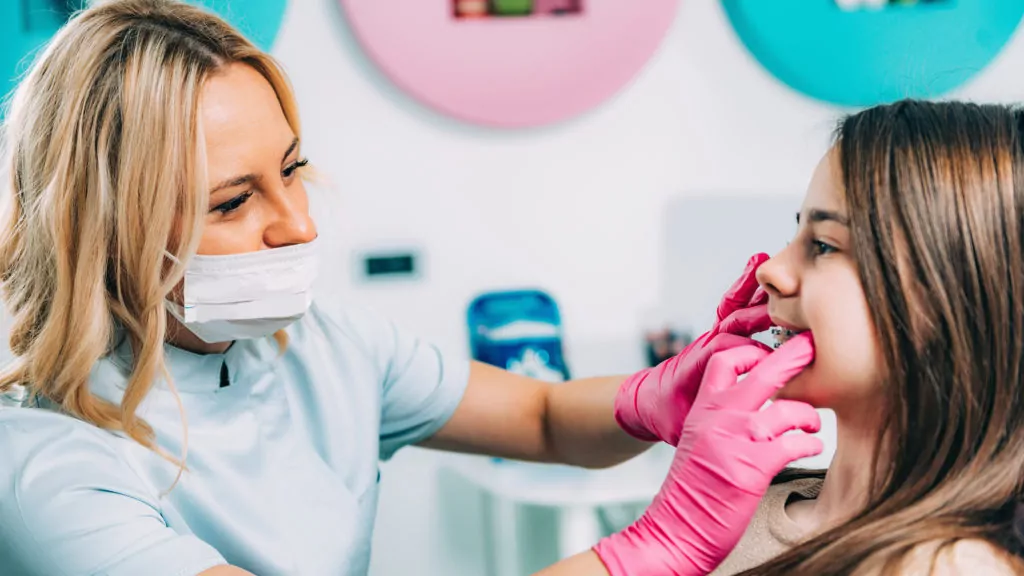
Blog Summary: When do kids typically get braces? Between the ages of 9 and 14. In this guide, we’ll learn why early evaluation by age 7 is essential for identifying if your child may need braces, the benefits of treatment, and the orthodontic options available.
Key points:
- First orthodontic check-up is recommended by age 7
- Most kids get braces between the ages of 9-14
- Early treatment can prevent many complex dental issues
- Watch for signs like bite issues, jaw noises, and tooth crowding
- Braces options include metal, ceramic, and clear aligners
When do kids get braces? It’s one of the most common questions we hear from parents at The Super Dentists, and we fully understand where this and other questions surrounding braces come from. You want your child to feel confident flashing their super-powered smile. But between wondering what age kids get braces, what types are available, and where they need them or not, you might feel quickly overwhelmed by wading through all the information out there.
This is where we put on our capes and come in with a four-point superhero landing. This guide will help you understand when to check, what signs to look for, and how to choose the best path forward, all with the fun, expert care The Super Dentists are renowned for.
This is where we put on our capes and come in with a four-point superhero landing. This guide will help you understand when to check, what signs to look for, and how to choose the best path forward, all with the fun, expert care The Super Dentists are renowned for.
Every Child’s Smile Is Unique
Like their favorite superheroes, no child’s dental journey will be the same. Genetics, oral habits, and growth patterns all play a role in when your child may need braces. While braces are typically placed after permanent teeth come in, there are many reasons to visit an orthodontist earlier.
Every visit can address jaw growth, airway development, and poor oral habits impacting your child’s smile. The sooner we spot potential problems, the sooner we can help.
And here’s the good news: there’s no such thing as too late for braces! Teens and adults can absolutely benefit from orthodontic treatment, often with clear or invisible options that fit any lifestyle.
Why Do Kids Need Braces?
Braces aren’t simply a means to achieve a picture-perfect smile. They can correct dental and structural issues that affect overall health. So, what happens if kids don’t get braces when they need them?
Problems can worsen over time, leading to pain, poor self-esteem, and even speech or eating difficulties. Some of the most common reasons kids need braces are:
- Early or late loss of baby teeth
- Trouble chewing or biting
- Mouth breathing
- Thumb or finger sucking
- Crowded, misplaced, or blocked-out teeth
- Jaws that make sounds or appear recessed or protruding
- Difficulty speaking clearly
- Cheek biting or biting the roof of the mouth
- Protruding top or bottom teeth
- Improper bite or teeth that do not meet
- Facial imbalance or asymmetry
- Teeth grinding or clenching
If you notice these signs or are unsure, please visit The Super Dentists for a complimentary consultation.
How Can You Tell If Your Child Needs Braces?
Thousands of parents just like you often wonder: How do I know if my child needs braces? Here’s what you should know: when first teeth fall out and permanent teeth erupt, it’s common for them to appear crooked at first. Often, they straighten naturally as your child’s mouth grows.
However, if crookedness persists or your child displays any signs we mentioned, it’s time to have them evaluated. Spotting issues early can reduce the need for complex treatment later.
Remember, understanding when a child’s best age is to get braces begins with you knowing what to look for and check, and when to consult an expert.
When Should My Child See an Orthodontist?
What’s the best age to get braces for a child? The American Association of Orthodontists recommends an initial orthodontic visit by age 7. At this age, an orthodontist can assess your child’s airway, bite, jaw growth, and oral habits.
Most children begin treatment between 9 and 14, but earlier evaluation can determine whether an easier or more complex treatment is needed. Just a few of the benefits are:
- Addressing airway and bite issues before they become severe
- Guiding proper jaw development
- Preventing dental trauma or abnormal tooth wear
- Reducing the need for extractions or surgery later
At the Super Dentists, our experts customize every treatment plan based on your child’s unique needs. We use advanced techniques to ensure the smoothest and most comfortable orthodontic experience possible.
Why Early Orthodontic Treatment Matters
If your child shows early signs of bite issues, facial asymmetry, or if their jaw is making noises (clicking or popping in the jaw, sometimes accompanied by pain), do not wait! An orthodontic check-up before the age of 7.
Early intervention provides benefits like:
- Creating room for proper tooth eruption
- Improving facial symmetry
- Protecting protruding teeth from injury
- Preserving space for unerupted teeth
- Reducing the need for tooth extractions or possible surgery
- Shortening future treatment time
- Preventing issues like decay, gum disease, or speech complications
The Super Dentists have specialized their super-powers in early orthodontic treatment. We’re dedicated to helping children learn to enjoy going to the dentist and to developing their healthy, confident smiles.
What To Expect During an Orthodontic Check-Up?
An orthodontic check-up is a super-charged opportunity for parents, children, and our dental heroes to work together.
During your child’s visit, we will:
- Thoroughly evaluate jaw growth and tooth eruption
- Check for bite alignment and airway issues
- Identify any habits that impact their oral health
- Recommend the right time to begin treatment if needed
Some children may not need treatment right away. In these cases, we’ll monitor growth to make sure we act at the optimal time, because knowing when to fight the villains of dental health is all about timing it perfectly for success.
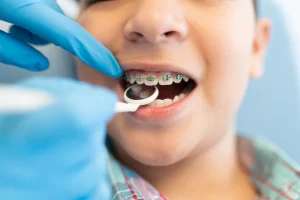
Common Questions About Braces for Kids
What types of braces are available?
We offer several options:
- Traditional metal braces with colorful elastics (kids love personalizing these!)
- Clear ceramic braces
- Removable clear aligners for eligible patients
- Specialty devices (if needed) or jaw or bite correction
We’ll help you choose the right option based on your child’s needs and lifestyle.
How much do children’s braces cost?
Costs vary depending on the treatment complexity and type of braces selected. Your treatment coordinator will explain every option and the financial details during your consultation.
The great news is that many dental insurance plans cover a portion of orthodontic care, plus, The Super Dentists offer flexible payment plans to fit your budget.
Will getting braces hurt my child?
Braces should not hurt, but it is natural for your child to feel temporary discomfort when they first get their braces or after an adjustment. This sensation usually fades within a few days as their mouth adapts.
We are adamant about using gentle techniques and advanced materials to make the entire experience as smooth as possible. We’ll also share tips to ease your child’s adjustment period.
Are clear aligners an option for kids?
Yes! In many cases, clear aligners can be a fantastic choice for kids. Aligners are often used for mild to moderate orthodontic corrections and especially appeal to older children and teens who want a more discreet option.
That said, not every child is a candidate. Traditional braces might be the best choice for younger kids or those who need more complicated corrections.
Can my child still play sports or instruments with braces?
Absolutely! Your child can continue playing their favorite sports and practicing with musical instruments while wearing braces. For athletes, we recommend a custom mouthguard to protect their smile during play.
Musicians may need a short adjustment period when playing wind or brass instruments, but most adapt very quickly and can continue playing beautifully.
How long do treatments take?
On average, kids wear braces for 18 to 36 months. The exact timeline always depends on individual factors, and regular check-ups make certain your child’s smile stays on track.
Are there side effects from having braces?
Our top priority is keeping your child’s dentistry and orthodontic experience as comfortable, positive, and amazing as possible. While mild discomfort is common when braces are first placed or adjusted, this discomfort rapidly passes in a few days. Rare side effects may happen, such as tooth decay or allergic reactions, but with expert care, these are minimized. We monitor your child’s progress closely at The Super Dentists.
Why Thousands of San Diego Families Trust the Super Dentists
No matter what question, we are happy to answer them for you, and an early expert evaluation can make the difference. Here’s why so many families trust the Super Dentists:
- Board-certified orthodontists who follow the latest AAO guidelines
- Fun, kid-friendly experience that reduces dental anxiety
- Comprehensive early orthodontic treatments tailored for every child
- Transparent pricing and flexible financing
- Proven track record as San Diego’s top pediatric orthodontic practice
Our mission is to turn dental care from a chore into something magical, while ensuring every child (and parent!) feels empowered and supported on their brilliant smile adventure.
Confident Smiles Start Here
Braces are a powerful tool for helping children achieve healthy, beautiful smiles that last a lifetime. Whether your child is ready for treatment now, needs monitoring, or you are simply unsure, we’re here to guide you every step of the way.
Knowing when kids get braces and what the best age for them is helps you make better, more informed decisions, but you never have to try to figure out their best care.
Let’s talk if you’re still wondering if your child needs braces or when! Schedule your free orthodontic consultation with us today by calling 1 (885) GO SUPER (467-8737), texting us at 1 (844) 765 1234, or book directly from our website.
At Super Dentists, we believe every child deserves an experience and a smile they’re proud to show.
At Super Dentists, we believe every child deserves an experience and a smile they’re proud to show.
How Many Dental X-Rays Are Safe in a Month?
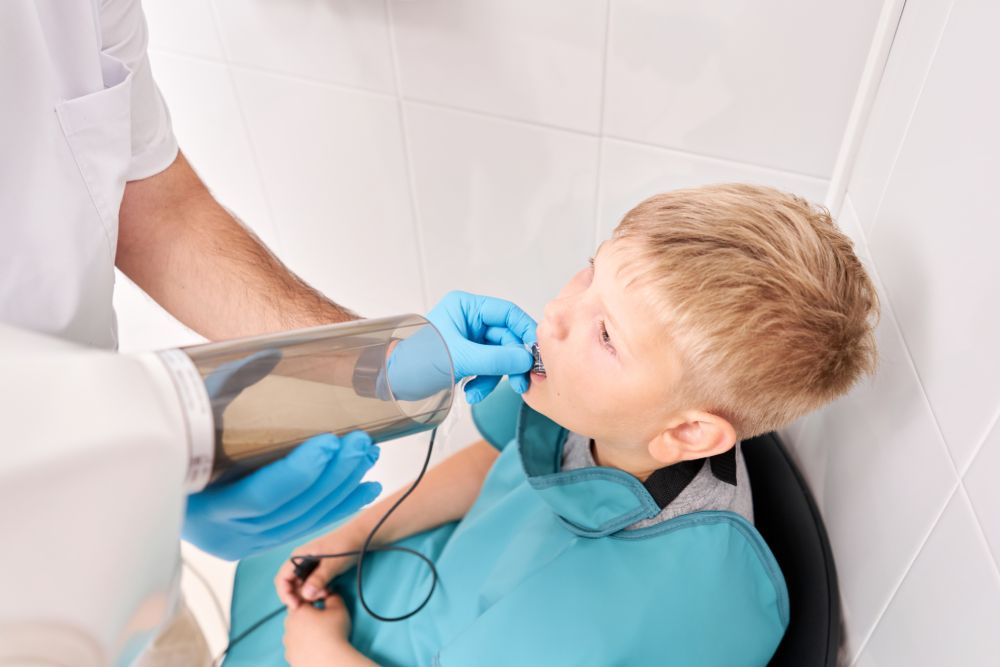
Dental X-rays play a key role in oral health. They enable a dentist to review their patients’ oral health development and identify underlying problems related to the teeth, jaw, and soft tissues of the mouth. Plus, X-rays help a dentist provide an accurate diagnosis and determine the best course of action to treat oral health issues.
But one thing every patient wants to know is: are dental X-rays safe?
The Super Dentists are concerned about your family’s dental and orthodontic care. And we’re also concerned about your safety, too! Since many parents ask us all the time about x-rays and are dental x-rays safe, we thought it would be a great idea to address the question here.
But first, why are dental x-rays ordered in the first place? Which common (and not so common) dental or orthodontic conditions warrant dental X-rays?
Which Conditions Require Dental X-Rays?
There are several other reasons why a dentist may recommend dental X-rays, too. These reasons include:
- Monitor Oral Health Injury Healing and Recovery: If a child or adult suffers a mouth injury, a dentist may use an X-ray to track the patient’s healing progress and ensure that he or she can make a full recovery.
- Identify Oral Infections: Dental cavities, gingivitis, and other oral infections are problematic. Thanks to an X-ray, a dentist is better equipped than ever before to identify an oral infection before it gets out of hand.
- Determine If an Orthodontic Treatment Is Necessary: A dentist sometimes uses an X-ray to determine whether to recommend an orthodontic treatment.
Not all dental X-rays are created equal. In fact, a dentist may recommend one or more of the following types of dental x-rays:
- Bitewing: Examine the crowns of the upper and lower teeth in one section of the mouth, identify cavities in tough-to-reach areas of the mouth and assess fillings.
- Periapical: Display a tooth from the crown to the root in order to examine one or two teeth for root problems, cavities, and oral health issues that affect the surrounding jaw bone.
- Panoramic: Show the entire mouth and is often used to track a child’s tooth development to determine if orthodontics is necessary.
Occlusal: Illustrate the arch of the teeth from either the top or bottom jaw. - Orthodontic: Depict the side of a child’s head.
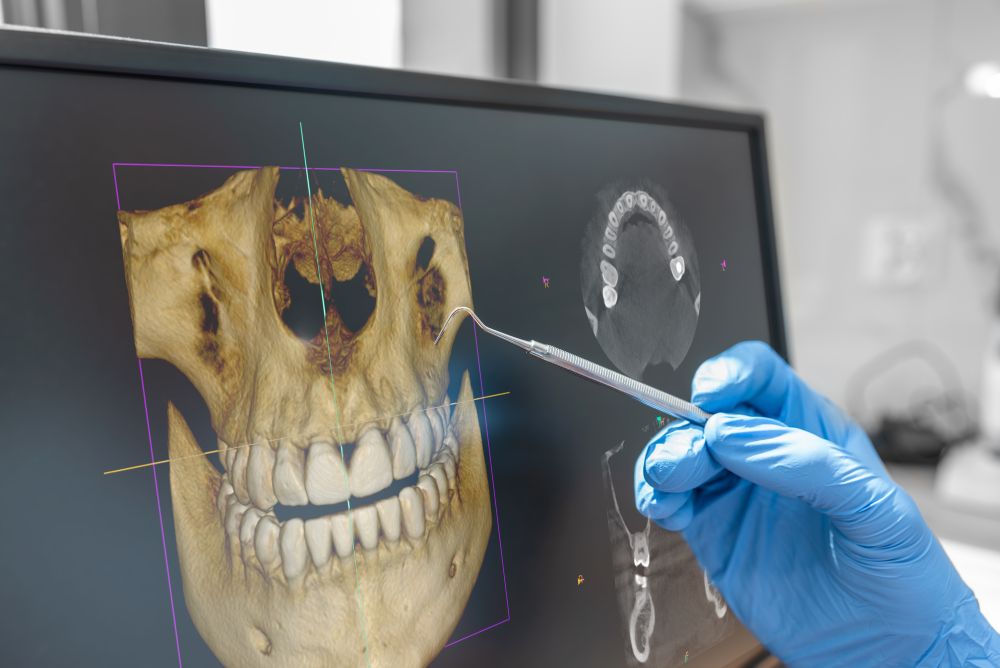
- Cone Beam Computerized Tomography (CBCT): Provide a 3D view of the patient’s mouth to help a dentist assess the development and space of their teeth.
The best type of dental x-ray for identifying an issue depends on the unique situation. Different types of x-rays are used to diagnose different dental problems, and a combination of x-rays may be necessary to provide a comprehensive assessment.
In general, the two most common types of x-rays used in dentistry are bitewing and periapical x-rays. Bitewing x-rays are commonly used to diagnose cavities and evaluate the health of the teeth and gums.
They show the crown portions of the upper and lower teeth, and can detect decay between teeth, bone loss due to gum disease, and other dental problems.
Periapical x-rays are used to evaluate the entire tooth, from the crown to the root, and can diagnose issues such as abscesses, cysts, or impacted teeth. They are useful in assessing the overall health of the tooth structure and root, and can help dentists plan for treatment.
Are Dental X-Rays Safe?
X-rays emit some radiation, but according to the American Dental Association (ADA), radiation exposure due to dental X-rays is minimal in comparison to both human-made and natural radiation sources. Americans receive an average radiation dose of about 0.62 rem (620 mrem) annually, the U.S. Nuclear Regulatory Commission reports.
Meanwhile, the ADA notes that dental radiographs account for roughly 2.5% of the effective radiation dose received from all medical radiographs and fluoroscopies (medical X-ray imaging procedures).
Safety Guidelines & Precautions
X-ray technologies and methods vary in dental practices and medical offices across the United States. The Super Dentists use the latest technology at its six San Diego offices.
For example, the ADA promotes Image Gently, a national X-ray safety campaign that was launched in 2008. Image Gently encourages dentists and other medical professionals to limit radiation doses during pediatric medical imaging exams. It also offers the following X-ray safety guidelines for pediatric dental professionals:
- Use X-rays based on a patient’s needs, not as a routine
- Choose the fastest image receptor available
- Select Cone Beam CT only when necessary
- Focus the X-ray beam exclusively on the patient treatment area
- Provide a patient with a thyroid collar or shield during an X-ray procedure
- Limit X-ray exposure to a “child-size” dose
The ADA is one of more than 80 healthcare organizations to promote Image Gently. But as of today, there are no standard X-ray safety guidelines for all U.S. dental practices and medical offices.
This means the amount of radiation exposure from an X-ray may vary between dental and medical procedures. It also means the amount of radiation exposure from an X-ray may differ based on where a patient goes for dental or medical treatment.
According to the ADA’s own records, a person in good health with lowered risk of dental disease can have dental X-rays taken every 24 to 36 months. This figure varies with the patient’s age, and rest assured The Super Dentists take every precaution to promote a healthy smile for every patient. This includes optimal scheduling for all dental X-rays.
How Many Dental X-Rays Are Safe in a Month?
The amount of dental x-rays that are considered safe in a month depends on various factors, such as the age of the patient, their medical history, and the type of x-ray being taken.
In general, the amount of radiation exposure from dental x-rays is relatively low and considered safe for most people. The American Dental Association recommends that dentists use clinical judgment to determine the frequency of x-rays for each individual patient, taking into account their specific needs and risks.
For most adults, dental x-rays are typically recommended once every 24 to 36 months for routine check-ups. However, in certain cases, such as for patients with a history of dental problems or those undergoing orthodontic treatment, more frequent x-rays may be necessary.
Are X-Rays Used to Find Impacted Teeth?
An X-ray can help in identifying impacted teeth by producing an image of the teeth and jaws that can show the position, size, and shape of the impacted tooth.
When a tooth is impacted, it means that it is trapped below the gum line, and it has not emerged fully or at all. The impacted tooth can cause pain, swelling, and other dental problems, and it may require extraction or surgical intervention to resolve the issue.
To identify impacted teeth, dentists typically use panoramic X-rays or cone beam CT scans, which provide a complete view of the teeth and jaws. These images allow the dentist to visualize the impacted tooth and determine its position and orientation in relation to the other teeth and surrounding structures.
The X-ray can also reveal any potential complications that may arise due to the impacted tooth, such as infections or damage to adjacent teeth.
It’s important that you don’t wait on issues like this due to fears over the level of radiation. The amount of radiation you’ll undergo is not worse than leaving your oral health issues unanswered.
How Do Super Dentists Handle Patient X-Rays?
At The Super Dentists of San Diego, we strive to provide safe, effective dental care for both children and adults. As part of our commitment to our patients and their health and well-being, we use state-of-the-art X-ray technologies to help protect kids and adults from radiation exposure. Are dental X-rays safe?
They certainly are at The Super Dentists! At our offices, we think every dental visit should be as extraordinary as your child, and this includes sensible, as-needed dental X-rays.
Our zero- and no-radiation cavity detection technologies allow us to use autofluorescence to identify cavities and tissue damage in the mouth. They help us accurately detect dental issues and provide an instant diagnosis of cavities and cracks in the teeth. Then, if we identify an oral health problem, we can treat only the diseased area accordingly.
The Super Dentists provides digital, panoramic, and cephalometric X-rays as well. Our digital X-rays are instantaneous, and our X-ray results can be shared with medical caregivers worldwide. Whereas the average dental office’s bitewing or posterior-anterior (PA) X-rays emit 0.5 mrem of radiation, our digital X-rays emit approximately 0.08 mrem of radiation.
Comparatively, our panoramic and cephalometric X-rays are used for orthodontic treatments. They provide 2D images of a patient’s mouth and jaw, as well as help us diagnose a patient’s oral health problems and map out a personalized treatment plan. That way, we can best help a patient achieve a healthy, beautiful smile.
Why Does It Feel Like Dentists are Always Pushing X-rays?
The Super Dentists only perform dental X-rays when they are absolutely necessary and we protect our patients by having them wear a lead apron to protect their organs against the minimal radiation exposure during the X-ray.
We will quickly and safely perform the X-rays, review the results and offer a treatment recommendation based on our findings. If a patient has any concerns or questions before or after an X-ray procedure, just ask your dental technician.
The Bottom Line on Dental X-Ray Safety
A child’s safety is a parent’s top priority. However, dental practices use different X-ray technologies that emit varying amounts of radiation.
At The Super Dentists, the health and well-being of our patients guide our day-to-day efforts. We understand the radiation exposure dangers associated with X-rays, and to combat these risks, we deploy the latest X-ray technologies. Our team takes the maximum precautions to keep patients safe during X-ray procedures and performs X-rays on an as-needed basis.
We take into consideration X-ray frequency, family dental history, and other crucial factors to ensure each patient is comfortable with their treatment and we help our patients weigh the pros and cons of X-ray procedures so they can make an informed decision based on their personal needs.
The Super Dentists is all about safety – and giving each patient an extraordinary experience every time they visit our office. Come see why 1 in every 5 kids in San Diego is a Super Dentists kid!
Dental X-rays may seem complicated at first, but The Super Dentists is happy to help patients understand X-rays and X-ray safety. If you need more information related to the question, “are dental X-rays safe,” don’t hesitate to contact us.
To find out more about our dental X-rays or to schedule a consultation with one of our dentists, please contact us today at 1 (855) GO SUPER, or text The Super Dentists at 1 (844) 765-1234. You can also schedule your exam, including x-rays online.
If you’re ready to take positive steps toward ensuring your child has optimal dental health, you can schedule an appointment today!
When Should Kids Go to the Dentist? Important Milestone Ages
Blog Summary:
This blog post explores the most important ages for children to visit the dentist and why early, consistent care is essential for lifelong oral health. From baby teeth to braces, here’s what parents need to know about the ideal timing for dental checkups.
- Children should have their first dental visit by age 1, or when their first tooth appears, to establish a foundation for healthy oral habits.
- Follow-up visits at ages 2 and 3 help monitor tooth development, reinforce brushing routines, and check for early signs of cavities.
- At age 4, dental visits are important for correcting oral habits like thumb-sucking and preparing for orthodontic assessments.
- By age 7, children should see both a dentist and an orthodontist to evaluate bite alignment and identify potential issues early.
- The Super Dentists offer comprehensive, child-friendly care at six locations across San Diego to support every stage of your child’s dental journey.
When do kids start going to the dentist? It’s a great question – and one we hear frequently here at The Super Dentists.
Our pediatric care experts get tons of questions from caring parents just like you.
“When do babies go to the dentist?” is an especially common question that we get asked. The internet can give you a range of answers, recommending a first dental visit at age 2 or 3. These ages are important for follow-up appointments as teeth start erupting, but the first dental appointment should come sooner rather than later.
It’s no wonder parents have questions!
Fortunately, we have the answers. Discover the key ages for kids to visit the dentist and what to expect at each stage.
When Do Babies Go to the Dentist?
There are a number of key ages when little ones should go to the dentist, but as we covered in our blog post “What to Expect at a Kid’s First Dental Appointment”, the very first dental visit should occur “as soon as the first baby teeth erupt or no later than their first birthday”.
What age should kids go to the dentist after that initial visit? Simply put, it’s important for children to go to the dentist again at ages 1, 2, 3, 4, and 7 for milestone appointments and regularly in between those milestone appointments.
Why Should Kids See the Dentist at Age 1?
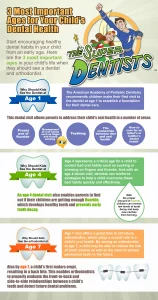
When do kids start going to the dentist? Actually, when they’re still babies. The American Academy of Pediatric Dentistry recommends that children make their first visit to the dentist by no later than age 1 to establish a foundation for their dental care.
This dental visit allows parents to address their child’s oral health in a number of areas:
- Management of oral habits such as finger and thumb sucking
- Teething
- Assessment of first teeth
- The connection between diet and oral health
- Development of gums and jawline
- How to care for an infant’s or toddler’s dental health
Your baby’s first dental visit is the foundation for lifelong dental health. Make sure you write down any important questions you have for the pediatric dentist and follow up about the next appointment. Speaking of which, assuming everything’s okay with your child’s teeth and gums, you’ll want to pencil in their next visit to The Super Dentists.
Why Should Kids See the Dentist at Age 2?
At age 2, children are often starting to develop more independence, and their teeth continue to grow and erupt. This is an ideal time for a follow-up dental visit to ensure their baby teeth are healthy and to check for early signs of cavities. Dentists will also help parents reinforce good oral hygiene habits, such as brushing twice a day with a small amount of fluoride toothpaste.
This visit allows the dentist to monitor dental development and provide tips to help toddlers transition from bottles or sippy cups to regular cups, which can prevent future dental issues.
Why Should Kids See the Dentist at Age 3?
By age 3, most children will have a full set of baby teeth, making this visit crucial for evaluating overall dental health. The dentist will check for proper alignment, cavities, and gum health while reinforcing healthy oral hygiene habits. A visit at this age can also help kids build confidence and comfort with dental checkups, reducing anxiety as they grow older.
This is a great opportunity for parents to ask questions about thumb-sucking, pacifiers, or other habits that may affect dental development.
Why Should Kids See the Dentist at Age 4?
After your baby’s first dental visit at age 1, you shouldn’t have to see the dentist again for about 3 years. Unless there are signs of tooth decay or other problems with your baby’s teeth, schedule your child a dental checkup at age 4.
The American Dental Association reminds us that “children can get cavities as soon as their teeth first appear. Nearly one in four children ages 2–5 has cavities in their baby teeth. Cavities can hurt. Cavities can also cause children to have problems eating, speaking, learning, playing, and sleeping, so it’s good to pay attention in these first few years.
Age 4 represents a critical age for a child to correct bad oral habits such as sucking or chewing on fingers and thumbs. And with an age 4 dental visit, dentists can reinforce strategies to help young children overcome these bad habits quickly and effectively.
This dental visit is the important “bridge” between when kids should start going to the dentist (age 1) and when a child should see an orthodontist, which is 7 years old. Think of this visit as the transition from a “baby” dentist to a true pediatric dental visit. And with The Super Dentists, your child is assured of the absolute best dental treatment in Southern California!
So the first two important visits are done…the trifecta is nearly complete.
Why Should Kids See the Dentist at Age 7?
By age 7, a child’s first molars erupt, resulting in a backbite. This enables orthodontists to properly evaluate the front-to-back and side-to-side relationships between a child’s teeth and identify potential future dental problems, and have enough time to create a plan to solve those issues.
According to The American Association of Orthodontists, 7 is the perfect age for this visit. “By that age, a child will have a mix of baby and permanent teeth, and the orthodontist will be able to recognize orthodontic problems (“malocclusions”) even in their earliest stages.”
While at this first appointment, The Super Dentists’ orthodontists will also assess possible teeth alignment solutions in the near future. Depending on current alignment and future tooth movement, braces might be required. Most children who need braces typically receive them between the ages of 9 and 14, though some situations may necessitate a different timeframe.
By seeing an orthodontist at age 7, a child may be able to reduce the risk of tooth trauma as well as the need to extract permanent teeth in the future.
To recap, at what age should a child go to the dentist? To ensure your child has the best dental care, they will need to see the dentist at ages 1 and 4, and preferably see the dentist at ages 2 and 3 as well. They should also see the dentist AND orthodontist at age 7.
Visit The Super Dentists for Exceptional Dental and Orthodontic Care – For any Age!
Have more questions about when babies go to the dentist, when to take your child to the dentist, or anything else related to pediatric dental care? We’re here to help!
Remember, where to take your baby to the dentist is as important as when to go. For many parents around the greater San Diego region, The Super Dentists is their #1 option when their babies go to the dentist.
Our pediatric dentistry, orthodontics, and parent dentistry practice includes six area offices serving the greater San Diego area.
If you’re ready to take your child to Southern California’s premier dentists and orthodontists, call 1 (855) GO SUPER, or text The Super Dentists at 1 (844) 765-1234. We also offer convenient online scheduling. Thanks for considering The Super Dentists for your baby’s first dental visit!
SuperMouth ULTIM8 SmartBrush System
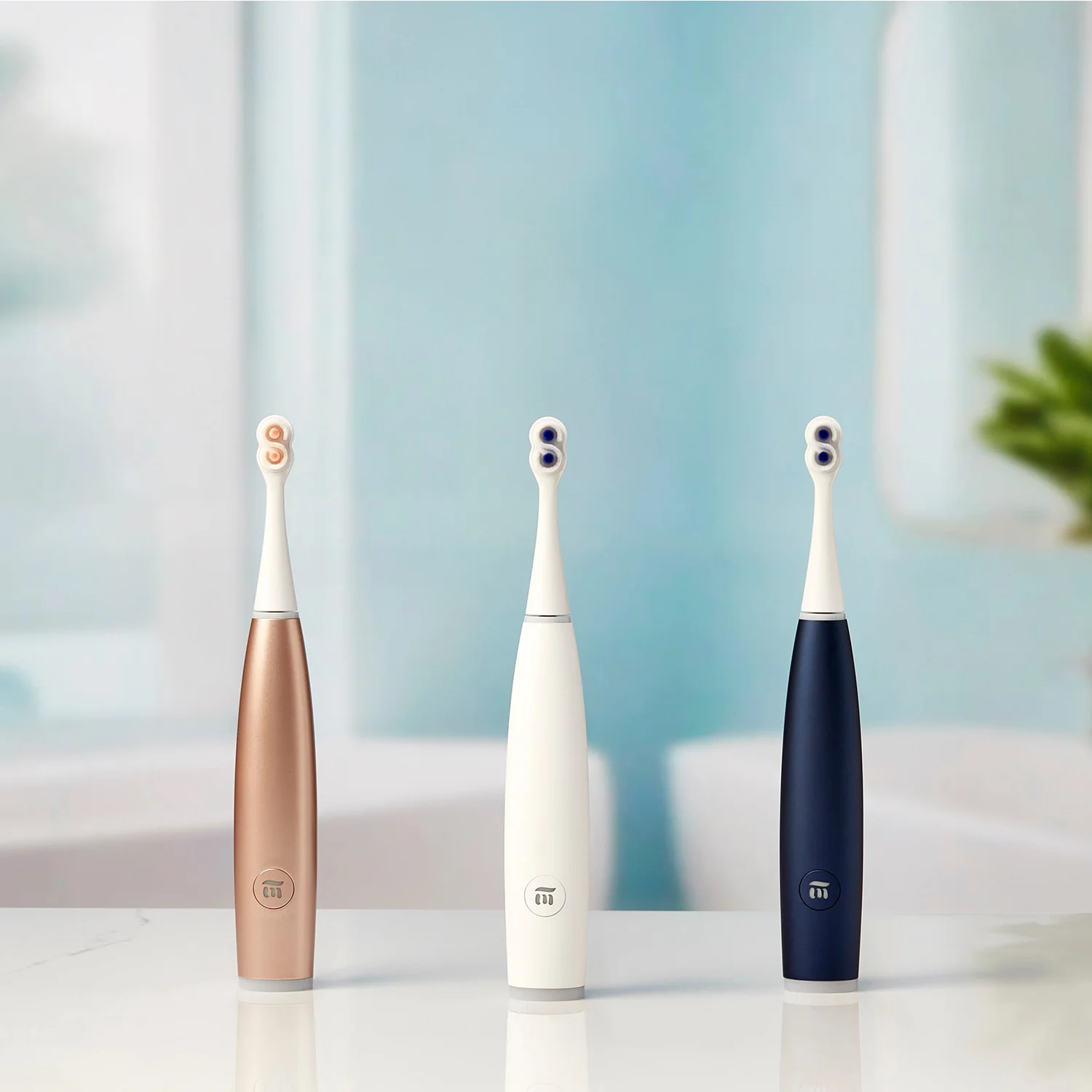
Looking for the best electric toothbrushes for plaque removal, healthier gums, and a whiter smile? The ULTIM8® SmartBrush™ System by SuperMouth delivers a dentist-level clean at home with a rechargeable sonic toothbrush designed by leading dentists. Featuring patented bristle technology, smart pressure sensors, a UV sanitizing SmartHub™, and a sleek travel case, it’s the last rechargeable toothbrush you’ll ever need—for cleaner, healthier brushing and more confident smiles wherever life takes you.
What Makes It Super?
Introducing the ULTIM8® SmartBrush® System—the first reinvention of the toothbrush in nearly a century. For decades, traditional toothbrushes have fallen short: they are often too abrasive, causing sensitivity and gum recession; they struggle to clean effectively between teeth, where cavities commonly develop; and they are grossly unhygienic, harboring millions of microbes. That’s why we’ve completely reimagined the toothbrush from the ground up. The ULTIM8 SmartBrush electric toothbrush features patented revolutionary bristles for an unprecedented clean, a pressure sensor to prevent over-brushing, and the groundbreaking SmartHub® with UV sanitizing, drying, and wireless charging for ultimate hygiene. Imagine a rechargeable electric toothbrush so advanced, it feels like you’re visiting the dentist every time you use your toothbrush. Plus, the Travel SmartCase® keeps your toothbrush clean and protected while holding your toothpaste and floss for convenient travel. For the first time, brushing teeth and gums is safer, more effective, and more hygienic—experience the future of oral care today.
Why Choose the ULTIM8 SmartBrush System?
- Innovative Bristles for Superior Cleaning: Patented SuperBristles® Pro technology cleans teeth up to an incredible 40 times better than a manual brush. For those with braces, the SuperBristles® Ortho option ensures thorough cleaning around brackets and wires up to an astonishing 60 times better than a manual toothbrush.
- Pressure Sensor: Prevents over-brushing by indicating optimal pressure in real-time, protecting your tooth enamel and gums.
- Dual Sonic Modes: Customizable cleaning with two sonic toothbrush modes for different levels of intensity and effectiveness.
- SmartHub®: The patent-pending SmartHub is designed as the home for your SmartBrush, keeping it stored safely between uses while also featuring a built-in UV sanitizer that eliminates 99.9% of germs, an integrated dryer, wireless charging, a convenient rinse cup, and a protective cap all in one. This ensures your electric toothbrush is always hygienic, charged and ready to use.
- SmartCase®: The travel SmartCase features a wireless charger, UV sanitizer, and custom spaces for SuperMouth’s travel toothpaste and floss, ensuring your oral care routine stays intact. The SmartCase will ship separately once received in Spring of 2025.
- Waterproof and Wireless Charging: Fully waterproof design and wireless SmartMag technology for hassle-free electric toothbrush charging and easy cleaning.
- Smart Timer: Ensures you brush for the dentist-recommended two minutes every time.
Adult Braces 101: Age Limit, Pros & Cons, and Comparing Before & Afters

Blog Summary: Thinking about straightening your smile as an adult? You’re not alone! In this guide, we dive into the world of adult braces, including how they work, how long they take, and what kind of before and after results you can expect. We’ll also cover the most popular types of braces for adults, reasons to consider orthodontic treatment later in life, and answer common questions about dental braces for adults—like costs, insurance, and treatment comfort. Whether you’re 25 or 75, a healthier, straighter smile is absolutely possible!
Adult braces are becoming more common, accounting for 20 percent of braces patients yearly. Many adults choose to get braces because they did not have the opportunity to get them as a child, or maybe they even had braces as a child, and their teeth have shifted since then.
No matter the reason for getting braces, adult braces before and after offer excellent results. Braces not only help to straighten teeth and give you a more natural smile but also help you regain confidence when the braces come off.
Many adults feel more confident in their daily lives with a straighter smile. Braces offer many positive effects for adults and can be life-changing for some.
Braces for Adults: Do They Take Longer?
Braces for adults take slightly longer than they would for a child or teenager. One of the most significant differences between adult and pediatric orthodontics is that adults are not growing like children, so they have more mature bone density than children. This means that braces have to work harder to move teeth, and can also take longer to do so.
In addition, adults have some habits and medications that can affect the outcome of their treatment, such as teeth grinding, smoking, or tongue thrusting. Adults typically wear braces for two to three years, which can be the same time as a child.
It might seem like children wear braces for a longer time than adults, and this can sometimes be true because children often do not follow the dentist’s instructions as well as adults, which in effect means they wind up wearing braces longer than expected. But in most cases, assuming adults and kids follow all instructions from their orthodontist, adults do have to wear braces longer than kids.
Thanks to advances in orthodontic technology, however, many discreet types of braces for adults are available, such as clear aligners. These can make the prospect of wearing braces for an extended period of time as an adult much more palatable for some patients.
At What Age Are You Too Old for Braces?
As long as you are healthy, braces have no age limit. Adults as mature as 70 and 80 years old wear braces. However, some conditions might prevent adults from getting braces as they get older, such as osteoporosis and diabetes.
The Super Dentists provides parent and adult dentistry. Parents can even make appointments at the same time as their children for convenience.
Reasons Adults Might Need Braces
Adult braces help correct oral health problems in an efficient and quick manner. Adults might need braces for many reasons. These reasons include:
- Gradual Teeth Movement: Adults may need braces because their teeth have shifted due to age, injury, or bone loss. When the teeth move gradually, this can cause them to become overly crowded and crooked.
- Previous Treatment Wore Off: If adults had braces as children, their teeth might have shifted over time, causing them to reconsider braces.
- Difficulty Cleaning Teeth: When teeth shift, it can be difficult to clean them efficiently. If teeth are not correctly cleaned, it can lead to oral health problems like tooth decay or cavities.
- Jaw Pain: If adults experience jaw pain, it could be due to crooked teeth. Braces can help straighten the teeth and alleviate jaw pain.
- Improved Smile: Braces can help adults show off a new and improved smile, creating a higher sense of confidence.
- Support for Cosmetic or Restorative Dental Work: Braces for adults are sometimes recommended before getting cosmetic dental work done. Your orthodontist may advise you to wear braces before they provide dental implants, veneers, or bridges, for example.
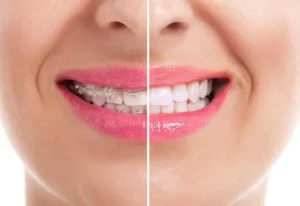
Adult Braces Before and After: Results
Noticing the difference is clear for braces before and after in adults. Many adults start wearing braces with gaps, crooked teeth, or they have misaligned bites. Once the braces are put on, the doctor will check them about once every month.
The teeth will begin to move over time. Depending on the person, the results may take one to three years. Pictures of the teeth are typically taken before and after the braces come off. When comparing the pictures, you will notice a significant difference and a straight smile.
X-rays will also indicate the difference between when the braces were put on versus when they were taken off. Patients who’ve worn adult braces often report better bite alignment, improved facial symmetry, and greater self-confidence when looking at before and afters.
Types of Braces for Adults
Adults can get the following types of braces:
- Clear Aligners: You’ve probably heard these referred to as “Invisalign” braces before, but Invisalign is a brand of clear aligners, not a type of braces. The Super Dentists offer Ortho Plus clear aligners, which are just as effective as Invisalign.
- In-Ovation Braces: These are self-litigating braces, meaning they don’t use traditional wires or elastic ties. This also means they don’t require tightening. They’re usually available in clear or metal so that they are less visible than traditional braces.
- Incognito Braces: This type of lingual braces goes behind your teeth on the tongue side, so they are invisible from the front of the mouth. They’re usually a bit more expensive than traditional braces and can be harder to clean, but they’re a popular option with adults who don’t want their braces to be visible. At The Super Dentists, we offer Incognito™ braces, a type of lingual braces.
- AADvance Braces: Three of the biggest concerns of patients using traditional braces are discomfort, tooth discoloration, and long treatment times. Developed to alleviate the most common concerns with braces for adults, Aadvance braces by The Super Dentists are traditional braces with an edge. They utilize rhodium-coated brackets for enhanced comfort and the minimization of unsightly marks on the teeth after removal. They also commonly help adults straighten their teeth in months instead of years.
What Is the Downside of Wearing Braces As an Adult?
Overall, braces have a positive impact on your adult teeth. The only downside is that the process might take longer for a child to have braces due to more mature and developed teeth and bones.
There are some disadvantages of having braces in general, whether an adult or child, but they are minimal, and the pros outweigh the cons for most people. That said, you should be aware that when you wear braces, you may experience:
- Sore gums, lips, and inner cheeks
- Canker sores
- Mild mouth discomfort
- Temporary changes in speech (more common with lingual braces)
- Lifestyle adjustments, such as avoiding foods like popcorn and caramel, not to mention gum
Can Adults Get Braces? FAQs
How much are braces for adults?
Adult braces cost between $2,500 to $7,500 for the traditional variety of options. However, that cost can fluctuate based on the specific type of braces you choose and your insurance coverage.
How painful are braces for adults?
Braces are not any more uncomfortable for adults than they are for children. Braces are generally uncomfortable when they are first put on or when you have an adjustment. An excellent way to compare the discomfort is to think of how you feel when you get new shoes. The new shoes might initially feel uncomfortable, but the more you wear them, the more comfortable they get.
Does insurance cover braces for adults?
You will notice a difference in your smile after you have braces. You might even begin seeing changes in your smile after three to four months of wearing braces. The changes occur slowly, but all come together in the end.
Conclusion
While having braces as an adult might take longer than braces as a child, the before and after results are effective. Luckily, braces have no age limit as long as you are healthy. If you are considering adult braces, The Super Dentists offers many adult orthodontic options in and around San Diego.
We can work with you to straighten your smile and help you achieve the adult braces before and after results that you desire. Contact The Super Dentists today to schedule a consultation for your adult braces!
Is a Pedodontist the Same as a Pediatric Dentist?

Blog Summary:
Are you wondering what a pedodontist is and how they differ from other dentists?
This blog post breaks down everything you need to know about these specialized dental professionals who focus on children’s oral health. We’ll explore the unique training that sets them apart from general and family dentists, the benefits of choosing a pedodontist for your child, and the range of services they offer, from preventive care to treating dental injuries.
Discover why a pedodontist might be the perfect choice for your family and how they can help your child develop a positive relationship with dental care.
Break down the word “pedodontist” and you get “pedo”, closely related to “pedia”, which refers to a child or children, and “dontist”, which refers to someone who studies teeth. “Wait a minute!”, you might be thinking. Is a pedodontist the same as a pediatric dentist? In a word, yes.
You can think of the term pedodontist as a more “official” way to refer to a pediatric dentist. Most people, however (even pedodontists themselves) more commonly refer to this type of profession as pediatric dentists, probably because it’s just a little bit simpler to understand and a little less tongue-twisting!
With that out of the way, here’s some more information about pedodontists, or children’s dentists.
What is a Children’s Dentist Called?
What is a teeth doctor called? A dentist. But what about a children’s dentist? Simply put, pedodontists, pediatric dentists, and children’s dentists are all just titles for the same profession.
So, what exactly does a pedodontist do? That’s a simple question with a complex answer! Before we get into the nuances, you should know that pediatric dentists are just one type of dentist, alongside which there are also:
- General Dentists
- Family Dentists
- Orthodontists
As we covered in our blog post “Choosing a Dentist: Pediatric Dentist vs Family vs General”,
“All dentists are highly trained, skilled medical professionals. On top of an undergraduate degree, dentists must attend dental school, which usually lasts four years, and results in a Doctor of Dental Medicine (DMD) or Doctor of Dental Surgery (DDS) degree. Dentists must then be licensed and often, undergo a 2-3 year residency program.”
In other words, general dentists are highly-trained professionals who can often treat children, teens, and adults. However, some general dentists only specialize in treating adults.
Family dentists specialize in treating members of the whole family, ranging from children to adults.
Pediatric dentists, or pedodontists, on the other hand, receive unique training and education in treating issues that are specific to children and teens.
What Exactly Does a Pedodontist Do?
As healthychildren.org explains, pediatric dentists provide a number of services. Here are some of the things they commonly do for patients:
- Examine your infant’s oral health and assess the risk of cavities.
- Provide preventive dental care, including cleaning and fluoride treatments, along with nutrition and diet recommendations.
- Counsel on habits such as pacifier use and thumb sucking.
- Repair tooth cavities or defects.
- Diagnose oral conditions associated with diseases such as diabetes, congenital heart defects, asthma, hay fever, and attention-deficit/hyperactivity disorder (ADHD).
- Manage gum diseases and conditions including ulcers, short frenulae, mucoceles, and pediatric periodontal disease.
- Treat dental injuries (for example, fractured, displaced, or knocked-out teeth).
- Assess and treat early for straightening teeth and correcting an improper bite (orthodontics).
Why See a Pedodontist vs. a General or Family Dentist?

While general dentists and family dentists can both treat children, pedodontists, or pediatric dentists, are really good at treating children, because it’s their unique area of focus.
Think of it this way. Say you drive a fancy German luxury car that needs mechanical attention. You could take it to any ASE-certified mechanic for repairs, and that repair shop would be trained to diagnose and fix your car, along with a number of other cars on the road.
But what if you instead, took it to a shop that specialized in German imports? The likelihood of that shop knowing what is wrong with your car right away is much higher because chances are that the shop likely deals with cars like yours frequently, along with other German brands.
But if you took your car to a service shop that specializes only in your brand of vehicle, such as an OEM dealer service center or independent shop specializing in only your car’s brand, the chances of that shop being able to diagnose and fix your vehicle quickly and adeptly goes up even more.
In this scenario, the regular mechanic is like a general dentist, the shop specializing in German imports is like a family dentist, and the shop specializing in only your car’s brand is like a pediatric dentist.
Pediatric Dentists Are Experts in Supporting & Educating Young Patients
But there’s more. Pediatric dentists don’t just have more specialized hands-on experience treating dental issues.
- Pedodontists often receive training that makes them better able to make kids of all ages and abilities, including those with special needs, feel safe, supported, and at ease.
- Pedodontists also are masters at explaining issues to kids in ways that are clear, understandable, and age-appropriate.
- Pedodontists may also have access to instruments and tools that general dentists don’t.
What’s more, many pedodontists do specialize in treating children, but also frequently treat adults or teens, making them convenient options for parents seeking specialized care for their little ones and convenient care for the whole family. These types of pedodontists usually refer to themselves as “children and family dentists”.
Rely on The Super Dentists for Expert Pediatric Dental Care
Whether your infant requires an initial dentist’s visit, your kid chipped a tooth, or you’re looking to have braces put on your teen, The Super Dentists can help.
Our tooth-loving crew has the training and experience required to make light work of all dental and orthodontic care for teens, adults, and families in the greater San Diego region. Have any questions? We invite you to get in touch or book an appointment online now.
Are Dental Sealants Safe for Kids? Different Types of Sealants for Kids
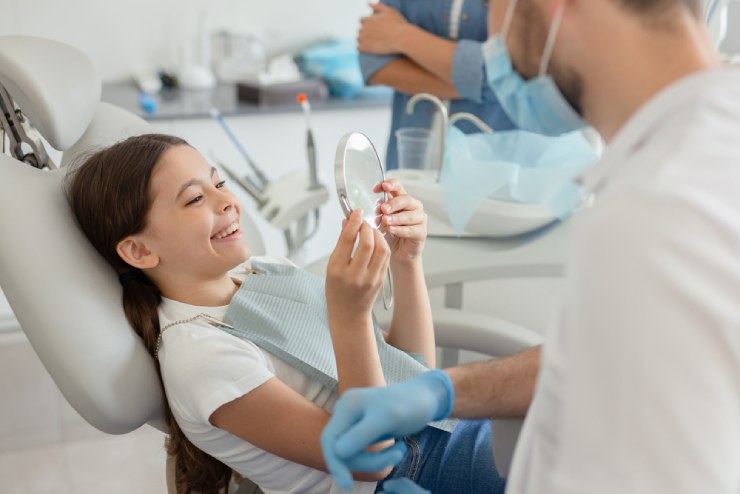
Dental sealants are thin, liquid coatings that are painted onto the surface of the premolars and molars. Once applied, the dentist hardens the sealant material to help prevent the teeth from forming cavities.
Sealants are considered very safe for children and are recommended by most pediatric dentists, as they help protect teeth from the effects of tooth decay and plaque. While sealants are effective for cavity prevention in children, they are not meant to replace having a healthy oral care routine.
How Dental Sealants Work
Dental sealants help to seal and protect the teeth. While they are not considered a substitute for daily flossing and brushing, they are designed to help prevent cavities from forming. When putting sealants on a child’s teeth, the pediatric dentist places them over the grooved and pitted areas in the molars and premolars.
Since these grooves are smaller in children’s teeth than in adult’s, it can be difficult for children to clean thoroughly, and plaque can form within those grooves, eventually creating a cavity.
The dental sealants help to add a layer of protection to the teeth by creating a smooth surface on the teeth, helping to prevent cavities. Sealants can also be placed over cavities in the beginning stages of their formation to help slow down the process of the cavity forming.
What Age Should Kids Get Sealants?
Dental sealants for kids are applied to the permanent molars as soon as they come in. This way, children’s teeth are protected before the decay attacks them and creates a cavity.
Their first permanent molars are between ages 5 and 7, and the second permanent molars are between ages 11 and 14. Therefore, the best time for children to get sealants is between 5 and 14 years old.
Why Children May Need Dental Sealants
The most important reason that children and teenagers are the ideal ages for dental sealants is that they can get the sealants before they experience tooth decay. Sealants are mainly used to help prevent cavities from forming within the grooves of the teeth, which is why they are effective.
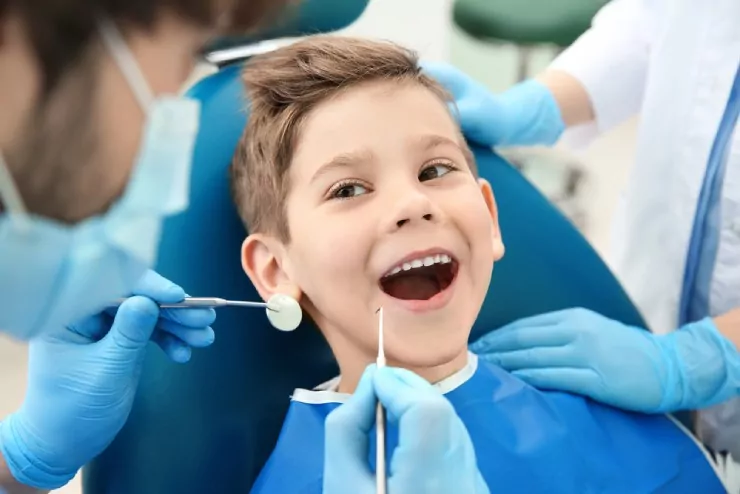
Dentists typically recommend sealants if a child’s teeth have deep grooves, fissures, and pits. Pediatric dentists may also recommend sealants if babies have a high risk of tooth decay.
Side Effects of Teeth Sealants
A possible allergy is the only possible side effect of dental sealants, but it is rare. Dental sealants are generally very common and safe, especially for children.
It is important to always discuss any potential side effects with the dentist before applying sealants. Still, sealants are recommended for children because they are considered safe and helpful in preventing cavities.
Different Types of Dental Sealants
There are two different types of dental sealants:
- Composite Resin: This type of sealant is very common. It is a tooth-colored resin material that can be colored and matched to the teeth.
The only drawback of composite resin is that it cannot repair teeth with small cavities, but it is an excellent choice for preventative dental care. Composite resin fillings do not release fluoride onto the teeth but last longer than glass ionomer sealants.
- Glass Ionomer: Glass Ionomer is a transparent acrylic material most common in pediatric dentistry, as it releases small amounts of fluoride mineral on children’s teeth.
This glass ionomer is the top choice of sealants for children because it protects the teeth from tooth decay and bacteria and protects the teeth with fluoride to help strengthen teeth enamel.
Are Dental Sealants Worth It for Kids?
Dental sealants are highly effective in preventing cavities in children’s teeth. If you want to know if kids need dental sealants, they are worth it for kids.
Sealants are especially beneficial between the ages of 5 and 14. Once the sealants are applied, they protect 80 percent of cavities for up to two years and 50 percent of cavities for up to four years.
Dental Sealants: Additional FAQ
Are sealants safe for children’s teeth?
Dental sealants are very safe for children’s teeth. They have been deemed safe by the American Dental Association (ADA), the Food and Drug Administration (FDA), and the Center for Disease Control and Prevention (CDC).
Do kids need sealants?
It is recommended by most dentists that children get sealants on their premolars and molars between the ages of 5 and 14. Without sealants, kids are more susceptible to getting cavities.
The sealants help to smooth out the grooves within the teeth, making it easier for them to be cleaned. Without sealants, children may need to get multiple cavities filled due to the buildup of bacteria and plaque within the grooves of the molars and premolars.
Does insurance cover the cost of sealants?
Many dental plans cover the cost of dental sealants for children under the age of 18. However, sealants for adults are typically not covered under insurance.
To ensure that sealants are covered under insurance, you should contact your dental insurance carrier to verify that sealants are covered for children.
How long do sealants last?
Generally, sealants can last between two and four years for children before they need to be replaced. During every appointment for a cleaning, the dentist will check to ensure that the sealants are still in good condition and will let you know when it is time for them to be replaced with new sealants.
Conclusion
Dental sealants are a safe and effective way to help prevent bacteria and plaque from forming on children’s teeth, which also helps prevent cavities from forming.
While sealants help prevent tooth decay, children need to maintain a good oral hygiene routine daily by brushing twice a day with fluoride toothpaste, flossing between the teeth daily, and visiting a pediatric dentist regularly.
Every child deserves a great smile, which is why The Super Dentists go above and beyond traditional dental services. The Super Dentists provide a fun and memorable experience during every dental visit in San Diego. Schedule your visit today with The Super Dentists!
Are Cavities Genetic? Here’s Everything to Know
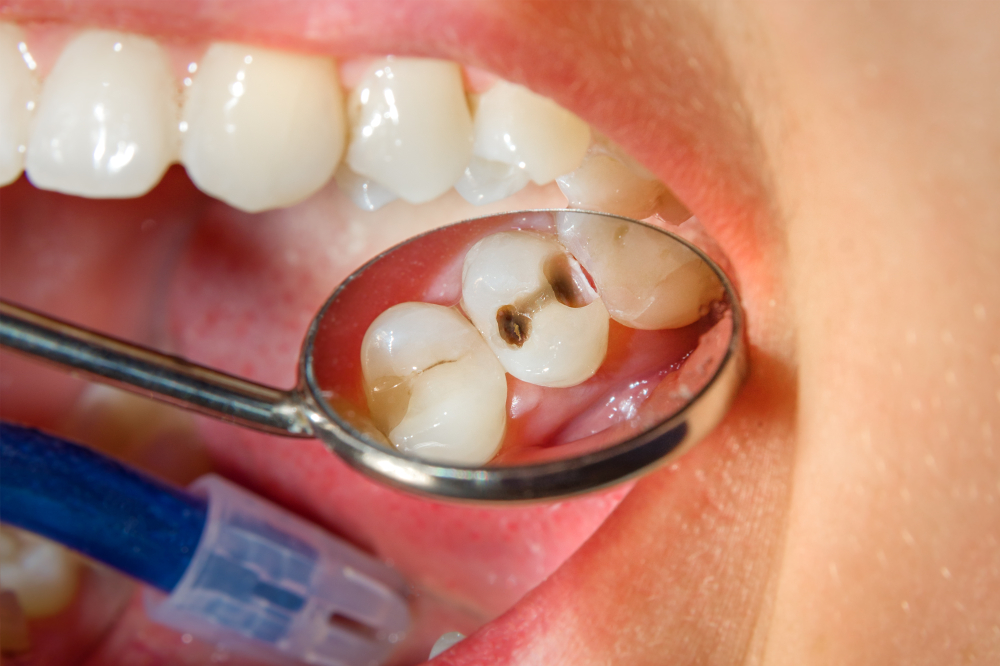
The risk of developing cavities and tooth decay is genetic. Your genes can affect how your teeth develop, meaning that the development of your teeth can be why you are susceptible to dental issues.
While genetics are sometimes the cause of cavities, cavities can also develop due to the lack of poor oral hygiene, smoking, lack of saliva, or not flossing your teeth. To understand if cavities can be hereditary, it is essential to understand how genetics can affect oral health.
What Percent of Cavities are Genetic?
Many people wonder, “Are cavities hereditary?”. While cavities alone are not genetically passed down, the risk of dental susceptibility can be passed down. Genetics account for up to 65 percent of tooth decay or other dental predispositions.
Are cavities genetic? Some factors make the susceptibility to cavities or other dental issues genetic.
Enamel
Your genes strongly determine the enamel of your teeth. People with strong enamel teeth more easily absorb vital minerals, such as fluoride and calcium.
These essential minerals help to keep the teeth strong and resistant to bacteria and plaque, which can be the reason for cavities.
Saliva
Saliva can help prevent cavities and tooth decay by efficiently metabolizing vitamins and minerals. Therefore, your saliva can either hinder or aid the bacteria that cause cavities in your mouth.
Tasting Ability
While some people have a strong ability to taste, others do not, meaning that some people have a wider variety of tastes than others.
People with a stronger ability to taste are less likely to develop cavities or tooth decay, likely because their broader taste palate may help them consume fewer sweets.
Shape of Teeth
Is tooth decay hereditary? Sometimes, even the shape of your teeth due to genetics can contribute to cavities.
Everyone has the same shape of teeth. However, each person’s teeth vary by size and shape. If a person has teeth that are tight and crowded, it makes flossing difficult.
Without flossing regularly, there is a higher risk of developing a cavity due to the extra plaque buildup. Some people have teeth with more grooves in between their teeth, which gives the bacteria more space to gather.
Immune System
Every person has a lot of bacteria in their mouth, which is normal, but some bacteria are more harmful than others. If your immune system is compromised or does not work efficiently, it may not adequately protect your teeth from harmful bacteria.
Are Cavities Genetic: Can Parents Pass Down Cavities to Kids?
Parents can pass down the risk of developing cavities to their kids, especially mothers when pregnant with their children. Since tooth decay is a transmissible disease, the cavity-causing bacteria in the mother’s mouth can be passed down to a child in utero.
Mothers must visit their dentist regularly before and during pregnancy to ensure their mouths do not have cavity-causing bacteria.
In addition, sharing the same drink, or even a spoon or fork, with your child can contribute to them developing cavities through the transfer of saliva.
If a parent passes down the gene G20A, a child can be five times more likely to develop cavities throughout their lifetime than those who do not have this specific gene.
Are Some People More Prone to Cavities? Are Their Teeth?
Yes, certain teeth are more prone to cavities than others. For example, teeth with deep grooves are more likely to trap foods and develop cavities. Also, misaligned teeth can collect food or food particles between them, causing cavities.
If your teeth have thin enamel, you can also be more prone to developing cavities because you do not have the extra layer of protection.
When Genetics Do Not Contribute to Cavities
While the cause of cavities can be due to your genetics, often, it does not have to do with your genes. If you lack proper oral hygiene and have bad oral habits, you increase your likelihood of developing a cavity.
Smoking cigarettes also increases the risk of tooth decay because smoking decreases saliva production in your mouth. Since saliva is essential to help keep your teeth clean and wash away food particles throughout the day, insufficient saliva will leave the food particles stuck between your teeth.
Also, those with a diet high in starches or sugar are more likely to develop cavities. These are some other common causes of cavities that are not as well known:
Frequent Snacking
Snacking regularly brings a lot of sugar into contact with your teeth throughout the day. Limiting the number of snacks you consume throughout your day can help prevent cavities.
You should focus on consuming well-balanced meals instead of snacks, so you do not feel the need to eat between meals.
Snoring
Snoring can decrease the health of your teeth over time because it causes your mouth to dry. A dry mouth makes it easier for harmful bacteria to spread throughout your mouth, potentially causing cavities.
Not Going to the Dentist
One of the best preventative measures to help prevent cavities in a child is regularly going to dental exams with the pediatric dentist.
While flossing and brushing your teeth are helpful in tooth decay prevention, they are not enough to keep cavities away altogether. Getting your teeth cleaned and checked twice yearly is the best way to prevent tooth decay and cavities.
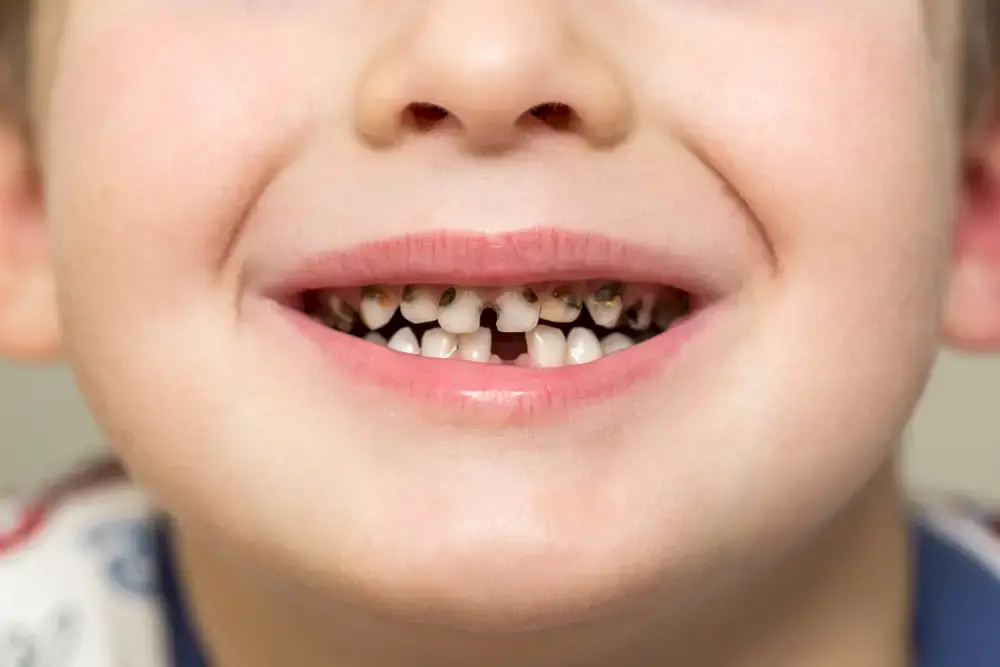
What Are the Symptoms of Cavities?
There are many symptoms of cavities to be aware of, as these signs and symptoms should not be ignored. If these symptoms occur, it is vital to visit the dentist to ensure the tooth decay does not become worse. Symptoms of a cavity include:
- Tooth sensitivity
- Pain when you bite down
- Spontaneous toothaches
- Mild to sharp pain when drinking or eating something cold, hot, or sweet
- White, brown, or black staining on the tooth’s surface
- Visible pits or holes in the teeth
Final Thoughts
While genetics can be the cause of cavities in children, it is crucial to remember how good oral hygiene can help prevent the development of tooth decay.
Regular visits to the pediatric dentist can help prevent cavities and promote good oral health. Make an appointment with The Super Dentists today!
The 3 Most Important Ages for Kids to Visit the Dentist
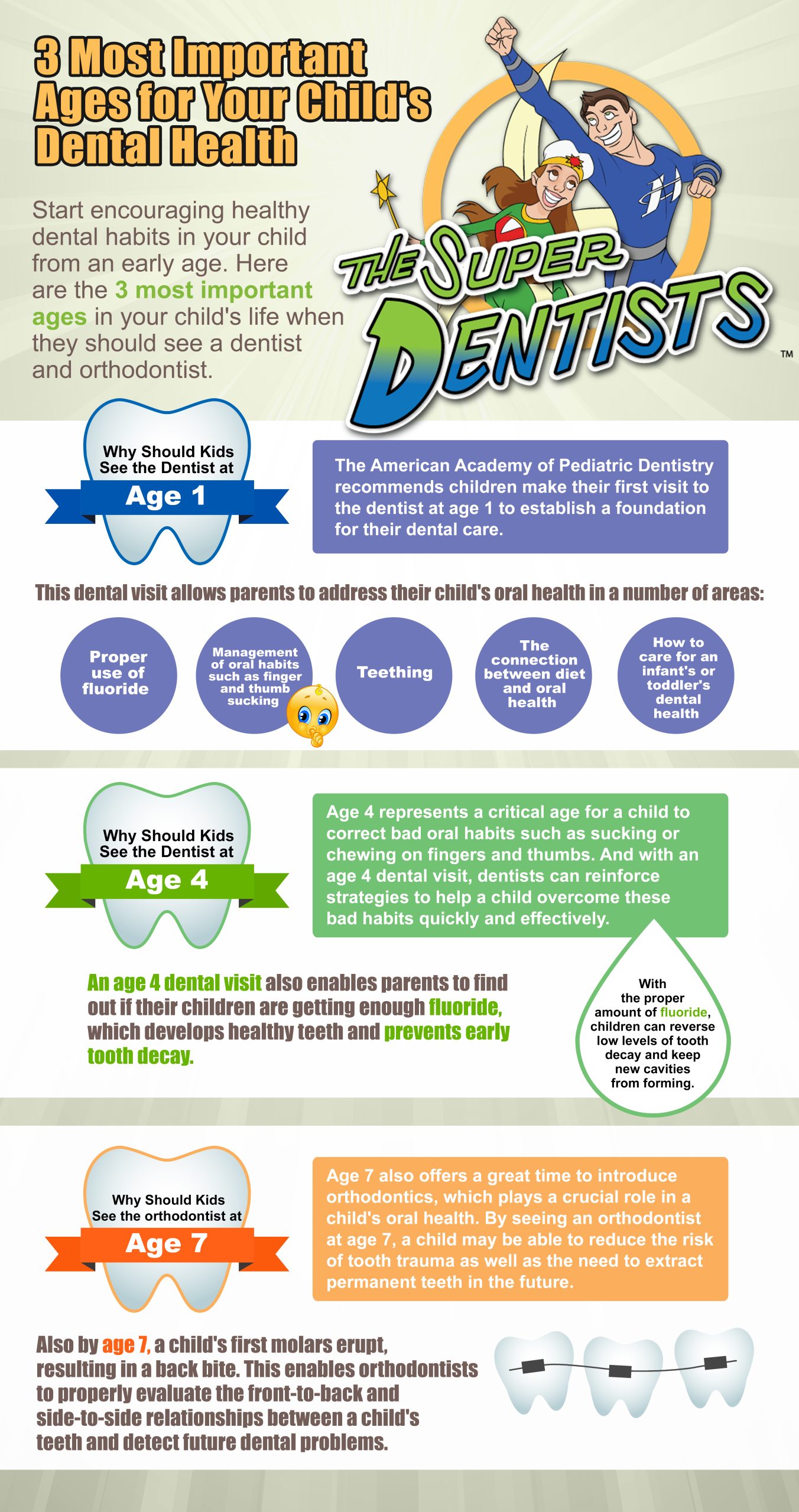
When do kids start going to the dentist? It’s a great question – and one we hear frequently here at The Super Dentists.
We’re the #1 pediatric dentistry in the San Diego area, thanks to a unique combination of high-skilled dentists, state-of-the-art dental technologies, and amazing amenities, unlike any other dentist office. Our revolutionary approach to kids’ dental care means that every child – including yours – will have an out-of-this-world experience every time they visit The Super Dentists!
Our pediatric care experts get tons of questions from concerned patients just like you. “When do babies go to the dentist” is a frequent query. The internet can give you a range of answers, recommending a first dental visit at age 2, or a first dental visit at age 3. And like these examples, many online answers aren’t quite correct.
It’s no wonder parents have questions!
Fortunately, we have the answer – actually, answers. That’s right, there are three key ages when kids should go to the dentist.
When Do Babies Go to the Dentist?
Your child’s first dental appointment – it’s an exciting time, yet also can create anxiety. When do babies need to go to the dentist? As we said above, there are three key ages when to take your child to the dentist.
While the first appointment is the most critical, dentist appointments are vital for kids when they are 1, 4, and 7 years old. Here’s why.
Why Should Kids See the Dentist at Age 1?
When do babies start going to the dentist? The American Academy of Pediatric Dentistry recommends children make their first visit to the dentist by no later than age 1 to establish a foundation for their dental care.
This dental visit allows parents to address their child’s oral health in a number of areas:
- Management of oral habits such as finger and thumb sucking
- Teething
- Assessment of first teeth
- The connection between diet and oral health
- Development of gums and jawline
- How to care for an infant’s or toddler’s dental health
Your baby’s first dental visit is the foundation for life-long dental health. Make sure you write down any important questions you have for the pediatric dentist and follow up about the next appointment. Speaking of which, assuming everything’s okay with your child’s teeth and gums, you’ll want to pencil in their next visit to The Super Dentists.
Why Should Kids See the Dentist at Age 4?
After your baby’s first dental visit at age 1, you shouldn’t have to see the dentist again for about 3 years. Unless there are signs of tooth decay, or other problems with your baby’s teeth, schedule your child a dental checkup at age 4.
The American Dental Association reminds us that “children can get cavities as soon as their teeth first appear. Nearly one in four children ages 2–5 has cavities in their baby teeth. Cavities can hurt. Cavities also can cause children to have problems eating, speaking, learning, playing, and sleeping” So it’s good to pay attention in these first few years.
Age 4 represents a critical age for a child to correct bad oral habits such as sucking or chewing on fingers and thumbs. And with an age 4 dental visit, dentists can reinforce strategies to help young children overcome these bad habits quickly and effectively.
This dental visit is the important “bridge” between when kids should start going to the dentist (age 1) and when a child should see an orthodontist, which is 7 years old. Think of this visit as the transition from a “baby” dentist to a true pediatric dental visit. And with The Super Dentists, your child is assured of the absolute best dental treatment in Southern California!
So the first two important visits are done…the trifecta is nearly complete.
Why Should Kids See the Dentist at Age 7?
By age 7, a child’s first molars erupt, resulting in a backbite. This enables orthodontists to properly evaluate the front-to-back and side-to-side relationships between a child’s teeth and identify potential future dental problems and enough time to create a plan to solve those issues.
According to The American Association of Orthodontists, 7 is the perfect age for this visit. “By that age, a child will have a mix of baby and permanent teeth, and the orthodontist will be able to recognize orthodontic problems (“malocclusions”) even in their earliest stages.”
While at this first appointment, The Super Dentists’ orthodontists will also assess possible teeth alignment solutions in the near future. Depending on current alignment and future teeth movement, braces might be required. Most children who need braces typically receive them between ages 9 and 14, though some situations may necessitate a different timeframe.
By seeing an orthodontist at age 7, a child may be able to reduce the risk of tooth trauma as well as the need to extract permanent teeth in the future.
To recap… at what age should a child go to the dentist? To ensure your child has the best dental care, they will need to see the dentist at ages 1 and 4. They will want to see the dentist AND orthodontist at age 7.
Visit The Super Dentists for Exceptional Dental and Orthodontic Care – For any Age!
Have more questions about when babies go to the dentist, when to take your child to the dentist, or anything else related to pediatric dental care? We’re here to help!
Remember, where to take your baby to the dentist is as important as when. For many parents around the greater San Diego region, The Super Dentists is their #1 option when their babies go to the dentist. Our pediatric dentistry, orthodontics, and teen and adult dentistry practice include six area offices serving the greater San Diego area.
If you’re ready to take your child to Southern California’s premier dentists and orthodontists, call 1 (855) GO SUPER, or text The Super Dentists at 1 (844) 765-1234. We also offer convenient online scheduling. Thanks for considering The Super Dentists for your baby’s first dental visit!
Category: Patient Education
About the Super Dentists
The Super Dentists is San Diego’s largest and most trusted Pediatric Dentist, Orthodontic and Teen and Adult Dentistry practice. We create the most unique and out-of-this-world dental experience for children and their parents. We are the only dental practice where kids ask, and even beg, their parents to take them to the dentist – imagine that!
We offer the newest technologies for the most comfortable, safe, and effective dental treatments. The Super Dentists accept most insurance, including Medi-Cal, and is available on the weekends and for emergencies. With 6 locations throughout San Diego and growing, the practice gives back to our communities whenever possible by hosting free quarterly events, and complimentary dental care to those in need.
What is the Best Age for Kids to Get Braces?
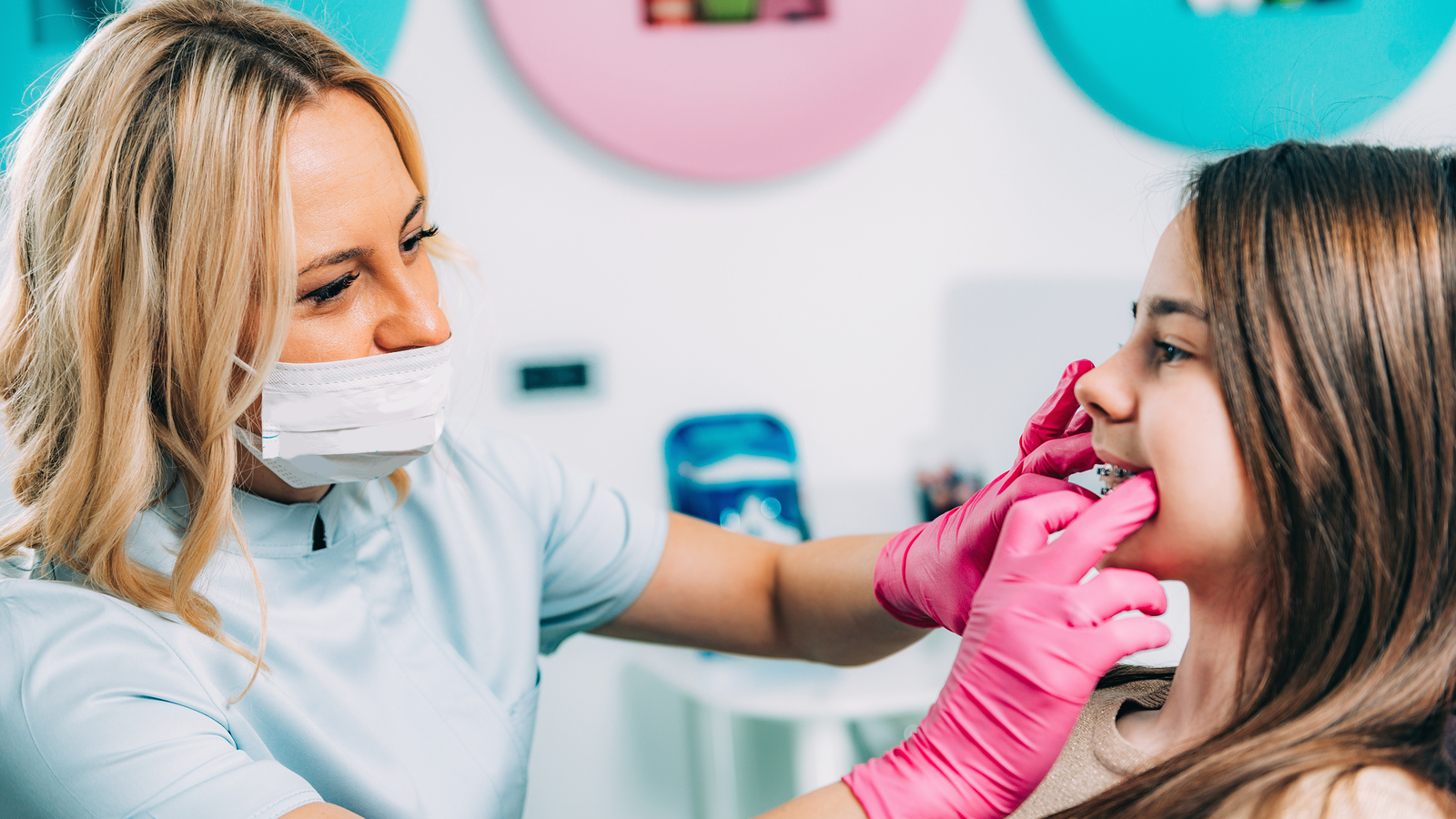
Some of the most common questions about dental care we offer at The Super Dentists are regarding braces. We get it, you want your kids to have the best smile possible. But it’s hard to understand some things such as how old you have to be to get braces, what types of braces are available, and the right choice for your child (or you!) Then there are the other questions like how long will it take and how do you even know if you need to get braces for children.
Like many other dental-related questions, the issue of braces is subjective. Some kids require braces earlier than others and some are lucky enough to never need braces. Genetics and oral healthcare also play a role. Even though braces are typically placed on permanent teeth, there are many reasons why you may need to visit an orthodontist much sooner. For example, a skilled orthodontist can help your child with airway, jaw-growth issues, and poor oral habits from a very young age.
As for what age is too late for braces, there is really no upper limit for getting braces. Adults get braces all the time, and thanks to less-visible and invisible braces, no one ever can tell.
Why Do Kids Need Braces?
Many people erroneously assume braces are simply vanity or can only fix crooked teeth. What happens if kids don’t get braces? Braces are not only important for dental health but for overall well-being. Aside from crooked teeth or gaps, braces may be necessary if your child experiences or exhibits any of the following:
- Early or late loss of baby teeth
- Trouble chewing or biting
- Mouth breathing
- Finger sucking or other poor oral habits
- Crowding, misplaced or blocked-out teeth
- Jaws that make sounds, shift, protrude or are recessed
- Difficulty speaking
- Cheek biting or biting into the roof of the mouth
- Protruding teeth–top or bottom teeth
- Teeth that fail to meet normally or at all
- Facial imbalance or asymmetry
- Teeth grinding or clenching
This list is not exhaustive, however. If you have questions about your own bite or your child’s potential need for braces, come see The Super Dentists.
How to Tell if Your Kid Needs Braces
How do I know if my child needs braces? Keep in mind that, as first teeth are falling out and adult teeth are erupting, those new teeth don’t always grow straight into their assigned spots. Often, they come in at an angle and straighten into position as they move and your child (and their mouth) grow. So please don’t panic or assume your child will definitely need braces based on the early appearance of adult teeth.
But if you notice the teeth are remaining crooked or out of position or your child exhibits other signs previously mentioned, it’s a great idea to have your child evaluated by an orthodontist.
When Should My Child See an Orthodontist?
While there is no exact age for braces, the American Academy of Orthodontists (AAO) recommends children visit an orthodontist for the first time no later than age 7. At this point, an orthodontist can evaluate a child’s airway, bite, and oral habits. The orthodontist can then determine if braces or other orthodontic treatments are necessary, and when.
So, 7 years old answers the question of what age can kids get braces. But at what age do kids get braces, at least most of the time? Most kids get braces when they are between 9 and 14 years old.
Regarding the side effects of braces, every patient is different. Some children require a different treatment protocol than others. Rest assured, The Super Dentists’ orthodontic care experts always put the patient’s needs first. We do everything in our power to lessen any side effects of braces!
The Super Dentists is San Diego’s largest, most trusted & top awarded pediatric dentistry, orthodontics, and teen and adult dentistry practice and has six locations to serve your family. We’re here to clear up any questions you have about what age your child should see the orthodontist, how long braces stay on, the side effects of braces, orthodontic accessories, and more.
What is a Good Age for Braces?
At what age can you get braces? For children, most get braces between 9 and 14 years old. But adults can benefit from orthodontia as well, and there’s no right or wrong age for adults to get braces. As a general rule, once the adult teeth are in, braces are possible.
There are, however, some rare instances in which orthodontics are appropriate earlier, such as before all the baby teeth have fallen out. It’s also important to know your child and if they will understand how to take care of braces.
Early Orthodontic Treatment
If you identify an issue such as the misalignment of your child’s bite, facial asymmetry, or sounds in the jaw before your child turns 7, you don’t have to wait to schedule an orthodontic check-up. The sooner the child sees an orthodontist, the sooner they can receive orthodontic treatment.
Early intervention helps prevent a minor airway, bite, or oral problem from becoming a serious, long-term issue. It also allows an orthodontist to correct an issue that cannot be addressed once a child’s face and jaw stop growing. The Super Dentists provides comprehensive early orthodontic treatment for children of all ages. There are many reasons why an orthodontist recommends early orthodontic treatment, including to:
- Create room in a child’s mouth to limit the risk of crowded, erupting teeth
- Improve facial symmetry
- Limit trauma to protruding front teeth
- Preserve space for teeth that have not yet erupted
- Reduce the need for tooth removal and/or jaw surgery
- Accelerate braces treatment time
- Correct a bad bite that otherwise may cause tooth decay, gum disease, accidental chipping, uneven tooth wear or speech impediments
Ultimately, an early orthodontic evaluation is exceedingly valuable. It enables an orthodontist to help a child identify oral health problems at a young age, so they can be addressed. At the same time, the evaluation ensures a parent can put the child on the right track toward a healthy, beautiful smile.
What to Expect During an Orthodontic Check-Up
An orthodontic check-up is a learning opportunity for the orthodontist, parent, and child. During the check-up, an orthodontist can identify subtle problems with jaw growth and emerging teeth while baby teeth are still present in a child’s mouth.
In some cases, an orthodontist finds that a child’s teeth appear straight, and his or her bite is fine. Conversely, an orthodontist might recommend monitoring a child’s growth and development and beginning orthodontic treatment at a later date. In other instances, an orthodontist identifies a tooth problem that requires early treatment.
The Super Dentists create orthodontic treatment plans that take into account the age, medical history, and unique teeth straightening requirements of each patient.
Common Questions About Children’s Orthodontic Treatments
For a parent, helping a child achieve a terrific smile is a top priority. Yet determining the best course of action relative to a child’s orthodontic treatment is sometimes difficult.
A parent who asks questions during an orthodontic evaluation can take the guesswork out of their child’s orthodontic treatment. Perhaps most importantly, the parent can determine if they need braces for children or other orthodontic treatments.
Now, let’s take a look at some other common orthodontic treatment questions.
What exactly are braces?
Braces are orthodontic brackets that guide a child’s teeth and bite into the optimal position. They are constructed from a variety of materials and may be used by both children and adults.
What types of braces are available?
Oftentimes, kids require braces with brackets, wires, and rubber bands. With these braces, the brackets attach to the teeth and are connected via a wire and rubber bands. In other cases, kids may qualify for clear removable braces. And some children will require headgear, mouthguards, or other orthodontic devices in addition to their braces.
How much do children’s braces cost?
The cost of children’s braces varies based on the type of braces a parent selects and other factors. Your treatment coordinator will explain the different options and costs to you, and answer any questions you have before scheduling orthodontic treatment for your child. Additionally, dental insurance will sometimes cover some of the cost.
How long do braces take?
The length of time a person needs to wear braces varies, but most children wear braces between 18 and 36 months. The adult average is 2 to 3 years. An orthodontist will see you or your child regularly to ensure the treatment stays on track. Plus, these check-ups enable an orthodontist to quickly address any problems that could otherwise slow down orthodontic treatment.
Are there any side effects of braces?
The Super Dentists make every effort to lessen and eliminate any side effects of braces. We provide regular checkups and consultations to ensure side effects are taken care of as soon as they surface, as well as minimize pain or discomfort. While rare, potential side effects of braces may include: tooth decay, relapse (teeth reverting back to their original position), allergic reactions, and other issues. There may be some pain or discomfort when braces are first put on or after adjustments, but it usually resolves in a few days.
The Bottom Line on Braces for Kids
Braces are usually the last step to addressing a child’s dental issues. They allow a child to simultaneously straighten his or her teeth and minimize the risk of long-lasting orthodontic issues.
And if a talented and experienced orthodontist, such as The Super Dentists, administers a braces treatment, you can rest assured they will do everything possible to ensure a child achieves the best possible results, as quickly as possible. Our revolutionary care techniques ensure every child who visits our San Diego orthodontists enjoys an out-of-this-world experience!
For parents who are considering braces for their kids or themselves, The Super Dentists is happy to answer any questions about braces to help you make informed orthodontic treatment decisions. To schedule an orthodontic treatment consultation with The Super Dentists, call us today at 1 (855) GO SUPER, (467-8737), or text 1 (844) 765-1234.
At Super Dentists, we are board certified by the American Association of Orthodontists are follow all of the latest guidelines and techniques.
Can Oral Health Affect Your Pregnancy and Fertility?

Importance of Dental Health While Pregnant
The importance of dental health on pregnancy and even fertility cannot be overstated. Ultimately, a mother-to-be cannot have a healthy body without a healthy mouth. It’s a pretty remarkable cycle of cause-and-effect. Pregnancy affects your dental health and your dental health affects the pregnancy and your unborn baby. So how does oral health affect pregnancy and why is it even more important while pregnant or trying to conceive? The Super Dentists answer all of these questions and concerns below.
How Does Pregnancy Affect Oral Health?
Everything that happens in the mouth can affect a pregnant mother and her baby. There are a few main ways in which pregnancy affects the mother’s oral health. First, the influx and change of hormones in a pregnant woman can make gums more inflamed and subject to bleeding or infections. If left unchecked, the bacteria and infection can enter the bloodstream and ultimately reach the baby.
Secondly, those same hormones can contribute to morning (or afternoon or middle-of-the-night) sickness. The stomach acid from vomiting can weaken and erode the tooth enamel. This weakened state makes pregnant women more prone to cavities and other dental problems.
In addition, during pregnancy, your eating habits will probably change. And those changes may not necessarily be healthy choices, but rather sugary snacks (if that’s what you’re craving). Finally, those inflamed gums may increase tooth sensitivity or pain and discomfort. And let’s be honest, when you’re pregnant and something hurts, you’re less likely to do it…like brushing and flossing.
Can Gum Disease Harm My Unborn Baby?
It seems like pregnancy and oral health changes go hand in hand. But what do gum disease, pregnancy gingivitis or other dental problems mean for the baby? Poor pregnancy outcomes such as low birth weight or preterm (before 37 weeks) birth have been reported. And while these might not seem like a big deal, they can lead to complications either at birth, in infancy or even poor health later in life. Bacteria can also increase the risk of preeclampsia, diabetes and other medical conditions during pregnancy.
The good news is that maintaining good oral health while pregnant can be done pretty easily by following a few basic tips.
Tips to Maintain Oral Health During Pregnancy
Women have a lot they can do to maintain healthy teeth and gums during pregnancy, and most of it is pretty basic stuff.
- Brush your teeth regularly. Prevent gum disease by brushing twice a day with fluoride toothpaste and floss once a day.
- Maintain a balanced diet. Eat a healthy assortment of foods with minimal sugar to avoid cavities.
- Check your airway and sleep. If you snore or have sleep apnea, check with your physician or airway-trained dentist to be evaluated and if necessary wear a CPAP or dental/oral devices to keep the airway open during sleeping. Sleep apnea – where breathing stops and starts as a result of airway obstruction during sleep – can have devastating effects on the health of the mother and the fetus.
- Stay hydrated. Dry mouth may increase a pregnant woman’s risk of tooth decay and infection. Drink plenty of water to prevent dry mouth. Pregnant women may also chew sugarless gum as a way to increase saliva production.
- Visit the dentist. Schedule dental appointments more frequently during pregnancy. While two-thirds of all women visit a dentist at least once a year, this figure drops to about 50% among pregnant women – despite the fact that dental visits are crucial for the well-being of a mom-to-be and her baby. Dental care, including x-rays, is safe for pregnant women.
Dental Hygiene and Fertility
There is a direct correlation between oral health and pregnancy, as well as fertility in both males and females. For men, poor oral health can reduce their sperm count and the sperm’s ability to swim. In women, bacteria triples the risk of infertility before pregnancy. The direct association between dental hygiene and fertility is just another way teeth & gum health is tied to overall well–being. From tooth infection and infertility to excessive bacteria in the mouth and other issues, The Super Dentists is here to answer all your questions about the connection between oral health, pregnancy and fertility.
The bottom line for men and women: take care of your oral health, and you’ll have a better chance to transition from a couple to a family! Questions About Tooth Infections and Infertility or Pregnancy and Oral Health? The Super Dentists is Here to Help!
Dental Care for the Whole Family
At The Super Dentists, we now see the parents of our patients. Moms- and dads-to-be – and current moms and dads – can be seen at the same time as their children to eliminate extra trips to the dentists. We provide standard dental check-ups, adult braces and other dental and orthodontic services to help parents address cavities, gingivitis and other oral health issues – all at our award-winning teen and adult dentistry practice.
Plus, we can help women learn how to take care of their teeth and gums before and during pregnancy. And when it’s time for your baby to go to the dentist, we can help moms and dads develop and maintain good oral health habits for their children to start them on the path to healthy, beautiful smiles.
Getting your oral health in order is beneficial for your entire family – including, of course, your chances to have future family members!
Ready to set up a teen and adult dentistry appointment with The Super Dentists? To find out more, please contact us today at 1 (855) GO SUPER, or text 1 (844) 765-1234. To discuss dental hygiene and fertility or other issues related to pregnancy, schedule an appointment.
Don’t Fear the Dentist – How to Overcome Dental Anxiety

Dental anxiety is experienced by people of all ages, from kids to adults. Public speaking, extreme water depths, the dark, spiders and other phobias are nothing compared to the dental chair for some people.
More than 1 in 10 Americans cancel appointments or delay oral health care due to dental phobias. It’s a much more common fear than most people realize – up to 25% of people worldwide experience mild to severe dental anxiety. Children are especially vulnerable to dental chair phobia.
The Super Dentists is at the forefront of the fight against dental anxiety. With a kid-friendly environment, caring staff and state-of-the-art services designed to put any child at ease, our area dental offices have one goal: to give kids stress-free, educational and fun dental care. No other pediatric dentistry helps children (and even adults) overcome dental anxiety like The Super Dentists.
Let’s take a deep-dive into dental anxiety – don’t worry, it’s not as scary as you think!
 Dental Anxiety Basics
 Dental Anxiety Basics
Like every other fear, a host of factors can trigger dental anxiety. For many children, simply sitting back in the dental chair automatically triggers a perceived lack of control. That’s a primary reason why our dentists and staff provide personalized, attentive care. Each patient is different – and no two patients experience dental anxiety in the same way.
Pain is another major reason for dental anxiety. Both actual and perceived pain keeps more people away from the dental chair than you’d think. And it’s not just pain from the actual procedure that causes fear – needles to administer anesthesia are as much to blame for dental anxiety as anything else.
Sensory stress also plays a major part. From sharp needles to loud noises to weird smells and more, the mere act of getting a dental procedure can be enough to instantly trigger dental anxiety. In some ways, dental anxiety is a natural response to perceived fear. But with The Super Dentists’ modern and innovative treatments, it doesn’t have to be this way!
How The Super Dentists Help Children Overcome Dental Anxiety
We know that fear of the dentist is a common problem with some children, especially for new patients. Every child deserves exceptional dental care – especially those facing dental anxiety. That’s why all of our San Diego area offices employ specialists who can help your child manage and overcome dental anxiety.
Sometimes, special accessories are required to help alleviate dental anxiety. Enter The Wand®. Known as the “Magic Wand” at our offices, this innovative computerized device delivers anesthesia in steady doses to specific areas in the mouth. As a result, needles aren’t required to administer painkillers for regular dental procedures. The Wand can even treat a single tooth, if required. Both adults and children appreciate the added control – and more importantly, less stress! We implement the latest dental accessories to reduce stress in the dental chair. The Wand is just another method to help our patients get the care they deserve.
A major source of dental anxiety involves the amount of time spent in the dental chair. Thanks to our innovative, time-saving approach to pediatric dentistry and orthodontic services, The Super Dentists can offer optimal care in minimal time. For example, our Clear Aligners® braces, Acceledontics™ orthodontic procedures and other cutting-edge practices ensure your child spends less time in our office, and more time enjoying what they love to do! But even while they’re here, rest assured our that patient, responsive staff will tend to their every need.
For new patients, our welcome is like none other. Our friendly staff, colorful characters, augmented reality experiences and more helps any child to forget about dental anxiety, and focus on fun instead. The Super Dentists makes going to the dentist fun! There’s something to be said for avoiding dental anxiety in the office, and no other dental network works harder to put your child at ease.
What’s more, we have a ton of educational resources on our website to increase patient knowledge. Since dental anxiety often involves ignorance about treatment, our video library and other tools help patients conquer their fears before ever stepping foot in our office.
Visit The Super Dentists Today!
 Visit The Super Dentists Today!
The Super Dentists have a handful of San Diego-area offices to serve you and your family. Discover why one in five San Diego children is a Super Dentists kid – schedule an appointment and see how we can help anyone overcome dental anxiety. Going to the dentists shouldn’t invoke fear…it should be fun! That’s the thinking behind The Super Dentists experience. Stop in and visit us today.
6 San Diego ‘Super Dentists’ Offices Reopen After COVID Shutdown

The Super Dentists has reopened its six countywide dental offices, following a two-month shutdown. Here are some safety protocol.
San Diego, Calif. (May 20, 2020) – Dr. Kami Hoss, co-founder and CEO of The Super Dentists, announces the reopening of its six countywide dental offices, following a two-month shutdown, due to the COVID-19 pandemic. Offices reopen Wednesday, May 20, with a number of new safety protocols in place to protect patients, staff and doctors.
Both, the California Department of Public Health and the California Dental Association announced late May 7 that dental offices can reopen and the San Diego Health and Human Services Agency also lifted most of its restrictions on May 10. “We are excited to welcome our patients back. Parents can feel safe, because we’ve exceeded all post-COVID-19 safety recommendations set forth by the American Dental Association,” said Dr. Kami Hoss.
Oral health issues have not paused, because there is a pandemic. Over the last few weeks, while seeing emergency patients only, The Super Dentists has seen a consistent increase in the number of the emergency cases and severity of dental health issues due to a lack of proactive care caused by the pandemic. Because of the pent-up demand and the need to prioritize more urgent cases, there may be some delays in scheduling.
The Super Dentists has put the following procedures in place for reopening to ensure the health and safety of their patients, crew members and doctors:
- The Super Dentists will thoroughly screen every person who will be entering the office, communicating with patients beforehand to ask screening questions about their health and any travel. Those same questions will be asked again upon arrival.
- Everyone who enters the office will be required to wear a mask. Additionally, The Super Dentists is asking parents to minimize the number of people who accompany patients to the office (can one parent wait in the car with a child’s siblings or can one parent/guardian take them into their appointment?).
- Hand sanitizer will be provided in the reception area and throughout the office. Patients will be asked to brush their teeth at home prior to their appointment instead of brushing in the office.
- The Super Lounge and VIP Lounge will no longer offer magazines, children’s toys and other shareable items, because they cannot be easily disinfected; however, The Super Dentists has developed an out-of-this-world ‘Virtual Super Lounge’ and has virtualized many amenities families expect from The Super Dentists. Visit TheSuperDentists.com/VirtualSuperLounge for educational content and fun activities.
- Patients will be able to “check-in” virtually to fill out necessary paperwork – all can be done via their phone or tablet; parents will also receive a live video-conferencing progress report on their child’s visit, which they can view from the car or home, using the Virtual Super Lounge portal.
- Appointment flow will be managed to allow for social distancing between patients.
- Even with the national and international shortages of PPEs (personal protective equipment), The Super Dentists has secured N95 masks and other protective gear to keep everyone safe.
- The Super Dentists has also upgraded its HVAC (heating, ventilation and air conditioning) with new advanced filters and have added professional air-cleaners and UV light technology as an additional safeguard.
- As a healthcare facility, The Super Dentists already had stringent cleaning and infection control protocols in place, but has added additional measures.
- Some dental procedures have been modified to reduce or eliminate aerosols. The Super Dentists is pleased to announce that they are one of the first dental offices to utilize an advanced droplets and aerosol terminator (ADS) to provide an additional level of safety for patients, crew members and doctors.
- Coming soon: The Super Dentists will also be rolling out a new virtual consultation tool for tele-dentistry for certain visits.
For more information on The Super Dentists Virtual Super Lounge or to learn more about these new safety protocols, visit TheSuperDentists.com. Schedule your visit today, call (855) GO-SUPER (855-467-8737).
Recently named to the Board of Counselors at the UCLA School of Dentistry, Dr. Kami Hoss, DDS, MS is a renowned author, consultant, inventor, speaker, and philanthropist in the fields of dentistry, healthcare, and education. Twenty-three years ago, he co-founded The Super Dentists with his business partner and wife, Dr. Nazli Keri. Their business has become one of the most trusted, top-awarded and leading pediatric dentistry, orthodontics, and teen and adult dentistry practices in Southern California. He is also passionate about educating parents about dental care, oral health and whole-person healthcare, and integrated dental and medical care. Through community programs, events, seminars and speaking engagements, Dr. Hoss and The Super Dentists team tackle topics like oral health and its impact on pregnancy, airway & sleep, psychological health and physical health.
In all his pursuits, Dr. Kami Hoss aspires to give back by being of service to the people in his community by creating opportunities for others to receive high-quality care and education. He has decades of experience working in the dental space and has treated more than 10,000 patients. He has served on faculty at Howard Healthcare Academy and University of Southern California’s postgraduate orthodontic program. He is a member of the American Association of Orthodontists, American Dental Association, California Dental Association, and San Diego Dental Society. With this extensive background, he has developed a reputation for innovation and making oral health care accessible, welcoming, educational and entertaining for families. For more information on Dr. Kami Hoss, visit www.KamiHoss.com.
Click here for the original article featured on Patch.com
Something to Smile About: The Benefits of Daily Discipline with Dental Care

Achieving exceptional oral health isn’t exactly a secret: engage in routine dental cleaning, visit your dentist on a regular basis, and pay attention to warning signs for tooth decay and other dental problems.
That’s it – simple as pie (although we don’t recommend eating too much pie; it’s bad for those pearly whites.)
But like most things related to kids, it can be easier said than done.
For one thing, it takes discipline. For another, routine dental cleanings are not something most children or adults look forward to , even if our innovative dental specialists make it more fun for kids with things like augmented reality and super-cool toothbrushes).
And how exactly is a routine dental cleaning defined, anyway?
The Super Dentists is here to lay it all out for you and your children. While our pediatric dentistry reinvents and transforms the traditional dental visit, the time-tested tradition of routine dental cleaning still stands. There’s something to be said for self-care habits that have worked for generations.
Routine Dental Cleaning: A Plan of Action for Parents and Kids
Once you establish a solid, routine dental cleaning schedule, kids’ dental care pretty much takes care of itself. For most parents and kids, the problem is getting started.
The Super Dentists is here to help. Follow these common sense, foolproof, stick-to-it-and-see-the-benefits dental cleaning activities to start on ASAP! (By the way, these are ideal for parents, too. And just like kids, regular dental visits for parents are also encouraged.)
- Make brushing & flossing part of going to bed. The average day is tough on kids’ teeth. Sugary snacks. Plaque buildup. Bad breath. The list never ends. It’s important to get kids into the daily routine of brushing and flossing every night to end the day on a positive– their smiles will show the difference.
- Brush at least for 2 minutes. You know how your child comes back from brushing after 30 seconds claiming to be done? Especially for young kids, getting a full two minutes of brushing time is a critical element of routine dental cleaning. Musical toothbrushes are a great way to accomplish – hey, we know of some brushes you might be interested in!
- Visit the dentist regularly. Dental visits and routine dental cleanings should be part of taking care of your entire family’s oral health. Make sure your kids see the dentist at least two or three times per year, or at the frequency recommended by their dentist for their individual needs
- Watch the diet! Sometimes, routine dental cleaning can be augmented with a smart, healthy mix of snacks and teeth-friendly beverages. Crunchy veggies like celery and carrots help clean teeth naturally. Water is always a great option as a beverage, particularly for children involved in sports and other activities – many sports drinks are loaded with sugar.
Keep up with your kids’ routine dental cleaning, and their entire health will improve! To see San Diego’s premier pediatric and general dentists today, schedule an appointment at The Super Dentists. To see a list of our area dental offices, click here.
Dr. Kami Hoss Reinvents the Toothbrush- 92129 Magazine

Dr. Kami Hoss has recently been featured on 92129 Magazine. Read the story below:
According to the American Academy of Pediatric Dentistry, childhood tooth decay is the most common chronic disease among children right now. It is four times more common than early childhood obesity, five times more common than asthma, and 20 times more common than juvenile diabetes. In fact, one in five California kindergarteners has had more than seven cavities and 71% of California third graders currently have dental decay. Because oral care is a critical part of overall health, poor oral health can impact a child’s long-term physical health and even longevity.
Dr. Kami Hoss and The Super Dentists have introduced The Super Toothbrush, an interactive toothbrush that encourages children to brush their teeth properly with a special integrated augmented reality component. Each toothbrush includes a magic sticker for the bathroom mirror that, when paired with VIVARRA Dental app, brings The Tooth Keri to life to remind kids how to brush and floss their teeth correctly. The Super Toothbrush also features a two-minute tooth-brushing song so children know how long they should be brushing, as well as premium Tynex DuPont bristles for comfort and a long-lasting battery.
 “Parents have been asking us for toothbrush recommendations for years,” said Dr. Kami Hoss, Co-founder of The Super Dentists. “We developed this toothbrush with the latest in augmented reality technology, to make brushing fun for kids. Getting them to develop good oral health care habits while they’re young is part of an overall whole-person health care plan that will benefit them for the rest of their life.”
There are four Super Toothbrushes featuring The Super Dentists superhero and villain characters – Dr. Have One Super Smile, The Tooth Keri, Cavitar, and Molar – available in all The Super Dentists offices or on Amazon. A collector’s set with all four characters will be available this fall. Other oral health care products, including toothpastes and mouth washes, will follow.
For more information go to www.TheSuperDentists.com/TheSuperToothbrush.
The original article can be found here: http://92129magazine.com/2019/08/12/dr-kami-hoss
Dr. Kami Hoss & The Super Dentists Team Up with Del Mar Union School District to Highlight the Importance of Dental Health

**More than half of California kindergarteners have dental decay; 1 in 5 Kindergarteners have more than 7 cavities**
California students entering Pre-K and Kindergarten are required to show proof of a dental examination prior to entry into school. Through a new partnership with Del Mar Union School District (DMUSD), The Super Dentists hope to educate local families about the importance of good oral health and help them comply with the law.
More than half of California kindergartners have dental decay, which has become the most common chronic disease in children today. This staggering statistic is more widespread than childhood obesity, asthma and diabetes. Childhood dental tooth decay is four times more common than early childhood obesity, five times more common than asthma and 20 times more common than diabetes, according to American Academy of Pediatric Dentistry.
“Cavities indicate a bacterial imbalance which can be a sign of serious health issues,” said Dr. Kami Hoss, Co-founder & CEO of The Super Dentists. “Poor oral health can impact: a child’s oral and facial growth and development, confidence and psychological health and long-term physical health and even longevity.”
By the time California’s children reach third grade, 70% have dental decay, causing them to miss 51 million school hours, which can impact their education long term. Some additional, serious stats include:
- 1 in 5 California kindergartners have more than 7 cavities
- 70% of California third graders have dental decay
- 35% of children brush their teeth less than twice a day
Annually the district welcomes 750 to 1,000 new families each year, many of which are new to California, and this dental screening law.
“The Super Dentists is only the sixth corporate entity the district has chosen to officially partner with, because of their longtime commitment to San Diego,” said Jason Romero, assistant superintendent, Del Mar Unified School District.
Because oral care is a critical part of essential whole-person healthcare, this partnership will support student achievement and provide mutual assistance and benefits through shared time and resources.
The Super Dentists will also sponsor the August 10 DMUSD WOW Families Festival at Sage Canyon School & Park to welcome new students and parents to the area and to give the families a chance to meet the principal, teachers and local businesses and have a little fun before school starts on August 26.
Dr. Kami Hoss, DDS, MS is a renowned author, consultant, inventor, speaker, and philanthropist in the fields of dentistry, healthcare, and education. Twenty-three years ago, he co-founded The Super Dentists with his business partner and wife, Dr. Nazli Keri. Their business has become one of the most trusted, top-awarded and leading pediatric dentistry, orthodontics, and teen and adult dentistry practices in Southern California. He is also passionate about educating parents about dental care, oral health and whole-person healthcare, and integrated dental and medical care. Through community programs, events, seminars and speaking engagements, Dr. Hoss and The Super Dentists team tackle topics like oral health and its impact on pregnancy, airway & sleep, psychological health and physical health.
In all his pursuits, Dr. Kami Hoss aspires to give back by being of service to the people in his community by creating opportunities for others to receive high-quality care and education. He has decades of experience working in the dental space and has treated more than 10,000 patients. He has served on faculty at Howard Healthcare Academy and University of Southern California’s postgraduate orthodontic program. He is a member of the American Association of Orthodontists, American Dental Association, California Dental Association, and San Diego Dental Society. With this extensive background, he has developed a reputation for innovation and making oral health care accessible, welcoming, educational and entertaining for families.
How to Get Kids to Brush Their Teeth

Understanding how to get kids to brush their teeth as part of good dental hygiene is no small feat. Dental hygiene is not just a good idea for children; it’s crucial for their overall health. In fact, according to the American Academy of Pediatric Dentistry, tooth decay is the single most prevalent chronic disease in childhood, and rates of pediatric cavities are on the rise. As a parent, you’re correct to ask not only “how long should kids brush their teeth for” but also “how can I help my child develop lifelong good oral habits?” At The Super Dentists, our team is committed to providing top-notch “super dentistry” services for the whole family at our offices serving the greater San Diego area. Check out answers to common questions about teaching dental hygiene to children, and contact us to schedule a consultation.
How to Get Kids to Brush Their Teeth – Frequently Asked Questions
At The Super Dentists, parents frequently ask us how to keep their children’s dental health on track. Below are some of the most common questions we hear, plus some kid-centered answers to questions like how to get kids to brush their teeth and how long should kids brush their teeth for.
What age should I start teaching my kids to brush their teeth?
It is never too early to start teaching your children to brush their teeth. In fact, the National Institute of Health reports that a whopping 42 percent of youth age 2 to 11 years old have dental caries (cavities) in their primary (“baby”) teeth. To take preventative measures, get a jump start on your kids’ learning by introducing the concept of regular brushing as soon as their first tooth emerges.
How do I get kids to brush their teeth?
Children are naturally curious, so understanding how to get kids to brush their teeth means knowing how to get them asking questions. Starting from a young age, you can brush your teeth around your kids and explain to them what you’re doing, and why it’s important.
Education paired with engagement and consistency will get your kids excited to brush their teeth. You can also explain the mechanics of tooth decay in an age-appropriate manner. Try this: food gets stuck in our teeth when we eat, which will grow bacteria if you don’t remove it with proper brushing and flossing – this bacteria leads to cavities, gum disease and bad breath! Then, explain that proper dental hygiene (brushing and flossing) helps our smiles stay healthy, which in turn helps us feel happy and confident.
When Should Kids Brush Their Own Teeth?
Setting a good example is your first line of defense in learning how to get kids to brush their teeth. Brush and floss in front of your child twice daily so that dental hygiene is the norm in your household. When your child is old enough to begin brushing his or her own teeth (around two years old), supervise your child so that he or she brushes and flosses completely (don’t forget along the gumline, gums, all tooth surfaces and tongue!). Make tooth brushing fun for kids. Let them select their own toothbrush, select a two-minute long song for them to brush to, when the song ends, that’s when they’re done brushing.
Include them in your own dental health and bring them along to your dental appointments. The Super Dentists provides comprehensive dental services for parents in addition to pediatric dentistry, for a whole-family care experience.
What does “proper dental hygiene” look like for babies and small children?
As soon as babies cut their first tooth, their teeth need the same daily care we give adult teeth. Use a washcloth or a soft-bristled (infant) toothbrush to gently clean the teeth and gums for two minutes at least twice a day, including before bedtime. For kids under two years of age, use a tiny “smear” of toothpaste, and for kids older than two years of age, use a pea-sized amount. Once a child has two teeth that touch each other, the time is also ripe for beginning twice-daily flossing. Ask your pediatric dentist for additional, customized strategies to maintain your kids’ dental health.
How Long Should Kids Brush Their Teeth?
“How long should kids brush their teeth for” is one of the most common questions we hear at The Super Dentists. Your child should brush his or her teeth for about two minutes twice a day, including before bedtime. If your child will not or cannot brush for the full two minutes, brush his or her teeth yourself to make sure you hit the two-minute mark. Using songs during brush-time or toothbrushes with a timer built in can be helpful reminders while building this routine. Teach your child to brush the surface of the teeth, including the chewing surfaces, front and back of the teeth, as well as the gumline, gums and tongue. Use floss to clean between each tooth and floss gently under the gumline.
When do kids need to see a dentist?
In addition to daily at-home preventative care, take your child to the dentist when his or first tooth comes in, and no later than the child’s first birthday. Twice-yearly dental visits are recommended to prevent cavities and other dental problems.
How to Get Kids to Brush Their Teeth – More Information
For more information on how to get kids to brush their teeth or to schedule an appointment, contact the Super Dentists, welcoming patients throughout San Diego County. We also invite you to visit The Super Dentists’ blog, which contains articles and videos for parents and kids alike. Whether you need pediatric dentistry, orthodontics, Teen and Adult Dentistry or other services, our friendly, experienced team is here to help. We look forward to providing outstanding child-centered care for which The Super Dentists is known.
The History of Cavities
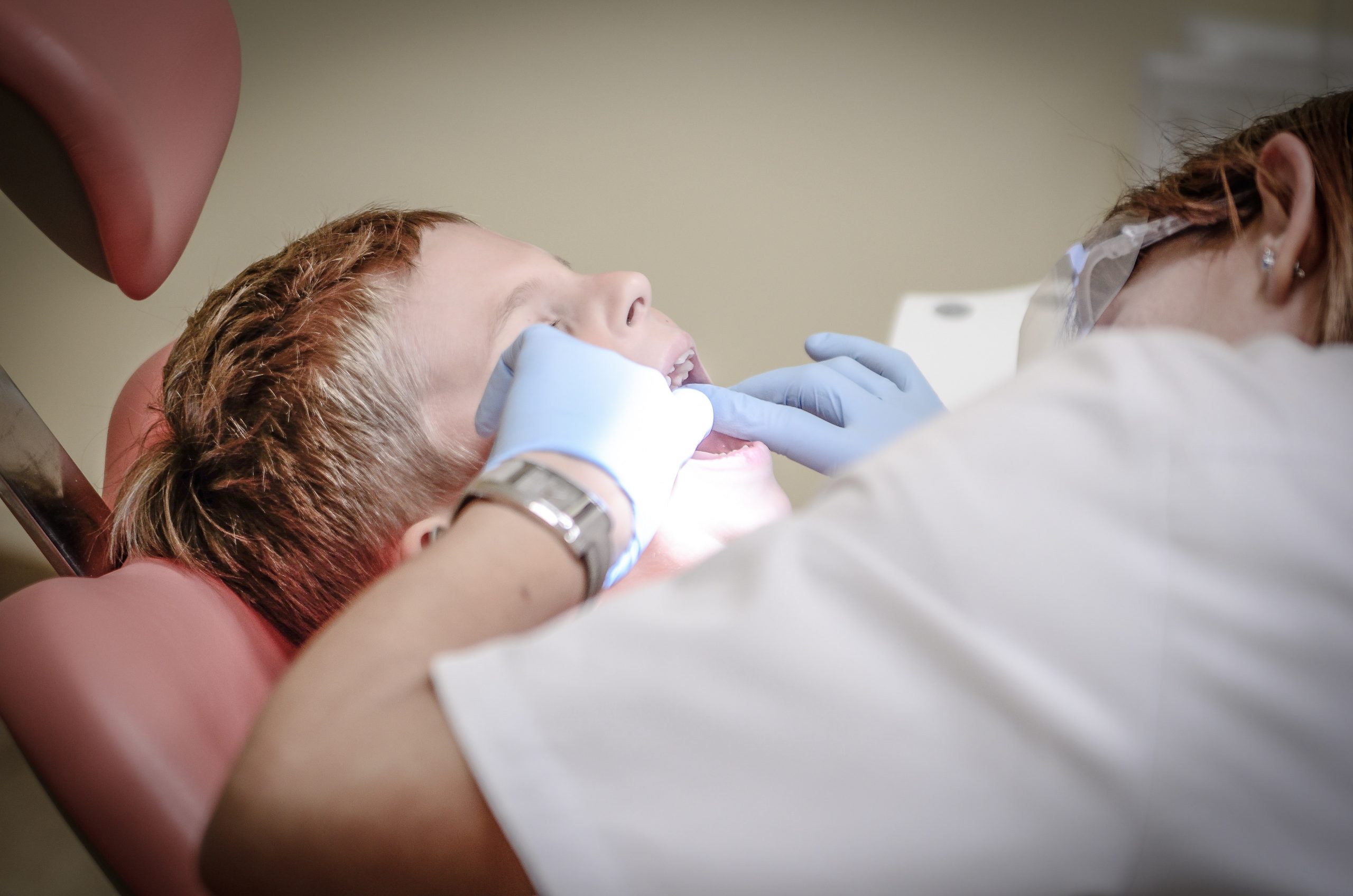
A cavity is an infection that weakens tooth enamel, i.e. the hard, protective outer layer of your teeth. When bacteria is not properly removed via brushing and flossing, it eats away at tooth enamel. This bacteria usually comes from foods that contain carbohydrates and become trapped in the teeth. The result: cavities develop. If cavities go unaddressed, they will grow – eventually causing decay that destroys teeth.
A Look Back in History
Cavities, also referred to as dental caries, have caused tooth pain for millions of years. Fossils from the Australopithecus species reveal some of the earliest dental caries from 1.1 million to 4.4 million years ago. Paleolithic and Mesolithic skulls also show signs of cavities. The Paleolithic period took place roughly 3.3 million years ago, and the Mesolithic period began around 8,000 BC.
Two of the leading factors of increased dental caries were the consumption of plant-based foods containing carbohydrates and rice cultivation. This led to the development of the first cavity treatments in Pakistan between 7,000 BC and 5,500 BC. At this time, simple dental drills were used to treat cavities. Text from the Sargonid dynasty of Assyria (which lasted from 668 BC to 626 BC) revealed that tooth inflammation was cured via tooth extraction. Ancient Egyptians, Greeks and Romans also used a broad range of cavity treatments.
In the 11th century, the appearance of sugar cane led to an increase in the number of reported cavities. Top treatments for dental caries at this time included charms and herbal remedies.
Meanwhile, the Age of Enlightenment proved to be a critical period for the advancement of cavity treatments. French physician Pierre Fauchard, often considered the father of modern dentistry, was one of the first people to cite sugar as a possible cause of cavities.
In the 1890s, W.D. Miller, the world’s first oral microbiologist, said he believed bacteria in the mouth could dissolve tooth structures. Miller and dental pioneers G.V. Black and J.L. Williams researched plaque and investigated the causes of dental caries.
In 1921, scientist Fernando E. Rodriguez Vargas discovered several strains of lactobacilli bacteria linked to dental caries. Vargas’ discovery was followed by researcher Killian Clarke’s suggestion in 1924 that the bacterial strain Streptococcus mutans was responsible for cavities. Hamster studies performed by R.J. Fitzgerald and Paul Keyes in the 1950s ultimately showed a direct correlation between bacteria and cavities.
Cavities currently represent the most prevalent chronic disease in both children and adults, according to the National Institute of Dental and Craniofacial Research. However, cavities are preventable, and dental treatments are available to address dental caries and other oral health issues.
How to Prevent and Treat Cavities
To help prevent cavities, you can:
• Maintain a healthy diet. Sugary food and drink feeds bacteria in the mouth that can cause cavities. Enjoy sugary foods and drinks in moderation to limit the risk of dental caries.
• Use a fluoride toothpaste. Fluoridated toothpaste helps to reduce the breakdown of enamel and mineral loss in the teeth. By brushing the teeth regularly with fluoridated toothpaste, an individual can enhance his or her tooth enamel and prevent tooth decay.
• Floss the teeth daily. Food particles sometimes accumulate in the spaces between the teeth and can be difficult to remove with a toothbrush alone. Daily flossing allows a person to eliminate tough-to-reach food particles in the teeth, as well as develop healthy gums and teeth.
• Replace your toothbrush at least every three months. Toothbrush bristles wear down with extended use. To get the best results when brushing the teeth, replace your toothbrush at least every three months.
• Go to the dentist at least twice a year. Regular dental appointments are paramount. They help you identify the initial warning signs of cavities and treat dental caries and other oral health issues before they get out of hand.
Options for Cavity Treatment at TSD
If you suffer from a consistent toothache or tooth sensitivity, you may be dealing with one or more cavities. It is important to seek out a dentist immediately to identify and address the problem.
Dental fillings and crowns are among the most common cavity treatments. If a tooth is damaged by decay, a dentist may recommend a filling. If a large portion of a tooth has been severely damaged or virtually destroyed by decay, a dentist may recommend a crown.
A dental filling is frequently used to remove decayed material from a tooth, as well as to repair broken or cracked teeth. During a dental filling treatment, a dentist removes decayed tooth material, cleans the affected area of the mouth and fills the area. The dental filling material is usually determined by the severity of tooth decay and other factors. A dentist may use gold, porcelain, composite resin or another type of dental filling.
A dental crown helps restore a tooth damaged by decay to its previous size, shape and function. A crown may consist of metal alloy, ceramic, porcelain or other materials used to resemble the color of a patient’s teeth. During a dental crown procedure, a dentist removes decayed material from the affected tooth, makes an impression of the treatment area and fits the crown accordingly.
Even if you receive a dental filling or crown, there is no guarantee that you will not get cavities going forward. That’s why it is essential to have a plan in place to prevent dental caries. Fortunately, The Super Dentists of San Diego help you and your children prevent and treat cavities and other oral health problems.

Now, let’s take a closer look at the history of cavities.
Fossils Reveal First Cavities
Fossils dating back 4.4 million years revealed some of the earliest cavities. Paleolithic skulls dating back roughly 3.3 million years and Mesolithic skulls from around 8,000 BC also showed signs of cavities.
Introducing the First Cavity Treatments
Simple dental drills were used to treat cavities in Pakistan between 7,000 BC and 5,500 BC. The Sargonid dynasty of Assyria (which lasted from 668 BC to 626 BC) used tooth extraction to treat cavities. Ancient Egyptians, Greeks and Romans developed cavity treatments, too.
New Foods Lead to Innovative Cavity Treatments
The consumption of plant-based foods containing carbohydrates, rice cultivation and the first appearance of sugar cane led to an increase in cavities. People cultivated the use of charms, herbal remedies and other innovative cavity treatments.
French Physician Identifies Possible Cause of Cavities
In the late 17th century, French physician Pierre Fauchard cited sugar as a potential cause of cavities. He also introduced dental fillings to treat cavities.
Researchers Develop an Etiology of Cavities
In the 1890s, W.D. Miller, the world’s first oral microbiologist, cited bacteria in the mouth as a primary cause of cavities. He worked alongside researchers G.V. Black and J.L. Williams to study plaque and craft an etiology of cavities.
Bacteria Linked to Cavities
In the 1920s, researchers Fernando E. Rodriguez Vargas and Killian Clark found links between different bacterial strains and cavities. In the 1950s, hamster studies performed by R.J. Fitzgerald and Paul Keyes showed a direct link between bacteria and cavities.
Cavities Today: Here’s What You Need to Know
According to the National Institute of Dental and Craniofacial Research, cavities are the most prevalent chronic disease in the United States. They affect men, women and children and often go untreated – even though cavities are preventable.
The Super Dentists can treat your child’s cavities and help prevent them from getting new ones. We have 5 locations in San Diego County. Book an appointment online at TheSuperDentists.com, via text at 1.844.765.1234 or call 1(855) GO SUPER.
Book an Appointment with The Super Dentists Today
Cavities have been persistent problems for men, women and children for millennia. Yet cavities often go untreated. And the longer cavities persist inside a person’s mouth, the more likely that it will cause long-lasting tooth decay.
The Super Dentists prioritizes patient care. When it comes to cavities, The Super Dentists want patients to receive immediate treatment and find ways to prevent dental caries from becoming long-term problems. With our patient-centric approach to dental care, we help parents and children establish good oral health habits. That way, our patients can enjoy beautiful, healthy teeth and picture-perfect smiles.
Dealing with cavities or other oral health issues? The Super Dentists can help. To schedule an appointment, please contact us today on our website or at 1 (855) GO SUPER.
5 Terrifying Facts About Childhood Tooth Decay

Tooth decay (dental caries) is a major problem for kids worldwide. Not only can it cause painful mouth conditions, but it impacts other areas of a kid’s life, too. Let’s examine five terrifying facts that every parent needs to know about childhood tooth decay.

- Childhood tooth decay is more common than early childhood obesity, asthma and diabetes.
According to the American Academy of Pediatric Dentistry (AAPD), tooth decay is the most common chronic childhood disease. In fact, AAPD reports that childhood tooth decay is four times more common than early childhood obesity, five times more common than asthma and 20 times more common than diabetes.
- Untreated tooth decay can be life-threatening.
Untreated tooth decay has been linked to pain and infections that interfere with a child’s ability to eat, speak, play and learn, the Centers for Disease Control and Prevention (CDC) reports. Additionally, some studies indicate that there may be a direct correlation between untreated tooth decay and heart disease, stroke, pulmonary disease and other life-threatening conditions.
- Tooth decay affects children of all ages.
Dental caries are present in 21% of children between the ages of 2 and 5 and 51% of children between the ages of 6 and 11. The CDC also notes that untreated tooth decay is present in 9% of children between the ages of 2 and 5 and 15% of children between the ages of 6 and 11.
- Both children and teens are susceptible to tooth decay.
CDC indicates 37% of U.S. children aged 2 to 8 experience tooth decay in their primary teeth, and 58% of U.S. teenagers currently have or have had tooth decay.
- Tooth decay can negatively affect a child’s performance at school.
The Association of State and Territorial Dental Directors (ASTDD) reports 51 million school hours are lost annually due to tooth decay or other dental-related illnesses. Research also indicates kids with poor oral health are more likely than others to experience dental pain, miss school and perform poorly in school.
The Super Dentists is one of the top-rated pediatric dental practices in San Diego. We treat childhood tooth decay, cavities and other oral health issues. To find out more, please contact us today at 1 (855) GO SUPER.
8 Tips to Make Brushing Fun for Kids

Brushing a child’s teeth doesn’t need to be a long and stressful process. With the right approach, any parent can transform a daily teeth-brushing routine into an enjoyable experience for his or her child.
There are many things you can incorporate into your routine to help your child achieve and maintain a super smile. Let’s take a look at eight tips to help you make teeth brushing fun for your child.
Start Early
Incorporate brushing your child’s teeth into his or her morning and evening routines and start their oral hygiene routine at a young age. During infancy, wipe down your child’s gums with a soft, damp cloth. Meanwhile, once your child’s teeth start to develop – something that usually begins between the ages of 6 months and 1 year – you can gently brush his or her teeth in the morning and before bedtime with a soft-bristled toothbrush. Once your child’s teeth start touching, you can show your son or daughter how to properly floss, too.
Brush Your Teeth with Your Kids
Setting a positive example for your son or daughter can make a world of difference, especially when it comes to your child’s oral hygiene. If you brush your teeth at the same time as your child, you can instill good oral health habits in your son or daughter. Also, don’t be afraid to think outside the box when you brush your teeth with your child. For example, dentist Dr. Vidya Varathan notes that letting your child hold your toothbrush while you brush his or her teeth with another can be valuable. This will allow your child to see exactly how brushing the teeth can be used to eliminate plaque. Of course, when you are done brushing your teeth with your child, don’t forget to smile. “If you’re smiling and relaxed – your toddler will imitate you in no time,” Varathan says.
Use The Super Dentists’ Musical Toothbrushes
Songs often provide great learning tools that both parents and kids can appreciate. If you incorporate songs into your child’s oral health routine, you could help him or her learn how to brush and floss correctly. For instance, thanks to The Super Dentists’ Musical Toothbrushes your child can sing, dance and brush his or her teeth to achieve a beautiful, healthy smile. Studies show children brush their teeth 73% longer with musical toothbrushes. The Brush song lasts two minutes, exactly the amount of time your child should be brushing.
Pick Up Children’s Oral Hygiene Essentials
Aurora Satler, the author of “The Ultimate New Mom’s Cookbook,” notes there are several must-have oral hygiene products that parents should pick up for their kids. These products include:
- Toothbrush: Toothbrushes come in multiple sizes, styles and colors, and you can let your child select a fun toothbrush that matches his or her personality, as long as it has soft bristles, which are best.
- Stool: A stool enables your child to stand comfortably at the bathroom sink while brushing his or her teeth.
- Cup: Allow your child to choose a one-of-a-kind cup he or she can use while brushing his or her teeth.
Talk to your child’s pediatric dentist so they can recommend oral hygiene products that are just right for your child’s individual needs.
Use Games
Dentists often recommend brushing the teeth at least twice a day, for two minutes at a time, according to the American Dental Association. If you use games as part of your child’s oral health routine, you could help your son or daughter build a successful oral health routine and achieve an amazing smile. The Super Dentists musical toothbrushes also provide augmented reality experiences right in the convenience of your own home to educate your child about the right brushing techniques in a unique, out-of-this-world way.
Tell a Story
If you want to get your son or daughter to brush his or her teeth, build a story around this activity. In fact, you can create your own books and characters to inspire your child to improve his or her oral hygiene. “I suggest that parents and caregivers use entertaining books and fun characters to make brushing fun for kids,” says family and parenting blogger Tangela Walker-Craft. “I created cartoon characters for my daughter when I wanted her to learn and practice good hygiene habits.”
Offer Incentives
Caleb Backe, a health and wellness expert at organic and natural beauty product company Maple Holistics, says incentives may be exceedingly valuable to teach children about good oral hygiene. For example, you can offer rewards like a trip to a zoo or playground if your child brushes and flosses his or her teeth properly. With an incentive-based approach to oral hygiene, your child may eventually start looking forward to brushing and flossing his or her teeth day after day. “By associating brushing with this special reward, your child will begin to build positive mental energy towards brushing, and they can begin to learn to think of it as fun,” Backe says.
Choose the Right Pediatric Dental Practice for Your Child
Not all pediatric dental practices are created equal. Fortunately, if you spend some time reviewing your options, you are sure to find a pediatric dental practice that helps both you and your child feel comfortable.
The Super Dentists is proud to serve as a leading San Diego pediatric dental practice. Some of the reasons we stand out from other San Diego pediatric dental practices include:
- Legendary Reputation: We have built our sterling reputation based on our commitment to deliver out-of-this-world, kids-centered dental care to all children.
- World-Class Dental Technology: We use the latest dental technologies to deliver comfortable, safe and effective patient treatments.
- Convenient Locations: We have convenient office locations in Carmel Valley, Chula Vista, Eastlake, Kearny Mesa, Escondido, and Oceanside.
- Extended Hours: We are open from 7 a.m. to 7 p.m. on Monday through Friday, and we are also open most Saturdays , too.
- Insurance Options: We work with all types of insurance and help patients review their dental insurance coverage. And if a dental treatment is not covered by insurance, we provide flexible financing options.
Put your son or daughter on the path to a super smile – contact The Super Dentists today at 1 (855) GO SUPER to schedule a consultation with one of our pediatric dentists.
The Surprising Benefit of Mouthguards: Protect Against Concussions and Safeguard Your Smile
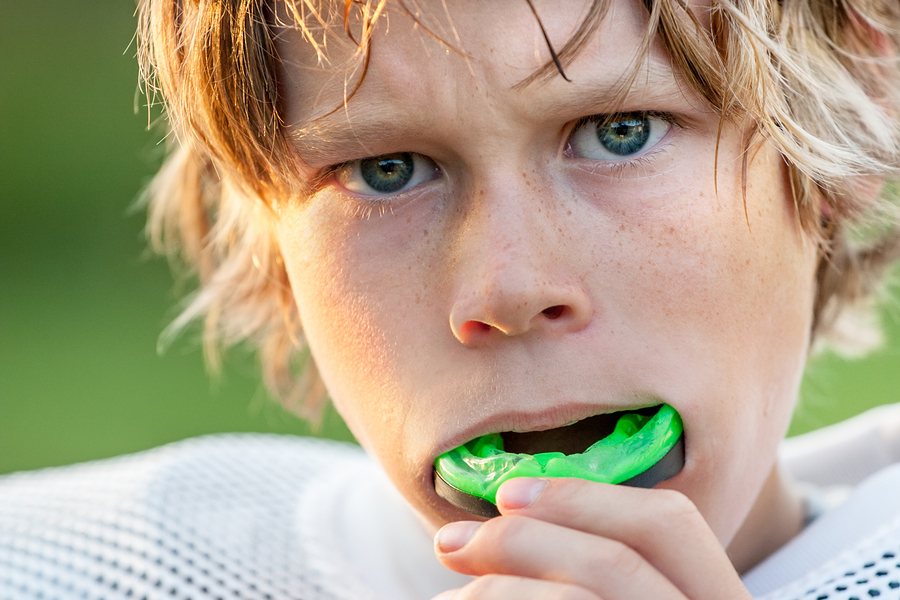
Four to five million concussions are reported annually, according to Dr. Kami Hoss of The Super Dentists. And that number just includes the concussions that are reported! While many people think that concussions occur from a blow to the top of the head, it is important to note that contact to any portion of the mouth or jaw can cause concussion symptoms.
In this segment with ABC Channel 10 San Diego, Dr. Hoss points out that the jaw makes up approximately two-thirds of a person’s face. An individual’s upper jaw extends underneath the eyes and supports the nose. The mandible consists of the entire bottom portion of the jaw. Failure to protect either of these jaw components during contact sports or activities may lead to concussions, tooth loss or mouth injuries.
With a custom mouthguard, an individual can protect himself or herself against concussions and other tooth or mouth problems. A mouth guard helps cushion the teeth to prevent tooth loss or mouth injuries due to physical contact. It also provides a barrier between the teeth and cheeks and lips and tongue to minimize soft tissue damage during contact sports and activities.
Most mouth guards cover only the upper teeth. However, individuals with protruding jaw or those wearing braces or other dental appliances on their lower jaw should also consider a mouth guard to protect their lower teeth.
Studies show a custom mouthguard is at least twice as effective in reducing concussions in comparison to a standard mouthguard, Dr. Hoss says. Since a custom mouthguard is designed to provide a perfect fit, an individual is more likely to wear it during contact sports and activities, too.
At The Super Dentists, our expert dentists understand a healthy lifestyle involves staying physically active. We also realize it sometimes is difficult to protect the jaw, teeth, and mouth during contact sports and activities. That’s why we work with each patient to craft a custom mouth guard that is safe, comfortable, and effective. With this approach, we can create a custom mouth guard that:
- Limits the risk of concussions, tooth and mouth injuries
- Enables a patient to speak more clearly
- Doesn’t hinder a patient’s ability to breathe
- Stays in place, even during football games, gymnastics meets, and other contact sports and activities
- Is simple to clean
- Won’t fall apart easily
Some insurance plans may cover all or some of the cost of a mouthguard.
To find out more about The Super Dentists’ custom-fitted mouthguards, please contact us today Text 1-844-765-1234 or call 1 (855) GO SUPER.
Dentistry Throughout Childhood

A teething timeline is a valuable tool for parents. It helps parents monitor their child’s dental health progress and ensure it stays on schedule.
Take a look at our infographic highlighting a timeline for a child’s teeth development, along with tips to help parents keep their kids’ dental health progress on track.

The Pre-Birth Stage
- Schedule regular dental examinations during and after pregnancy
- Consult with a dentist during pregnancy to discuss expectations
- A pregnant mom’s oral health can have a significant impact on baby
0 to 4 Months Old
- Avoid exposing any new teeth to unnecessary sugar
- Breastfeeding can help reduce cavities and help the mouth grow healthy
4 to 6 Months Old
- Wipe a baby’s gums with a damp cloth; this should be done at least twice a day for 2 to 3 seconds at a time
- Schedule a baby’s first pediatric dentist appointment
- Schedule pediatric dentist appointments at least every six months
- Avoid unnecessary sugar and foods that contain high amounts of citric acid
- Separate feeding and sleeping for baby to avoid developing severe cavities
- Avoid nighttime feeding as soon as baby is healthy enough
1 Year Old
- Children should see a pediatric dentist NO LATER than age 1.
- Provide a child with a soft-bristle toothbrush
- Teach a child how to brush properly (usually no toothpaste at this time)
- Show a child how to floss and start helping him or her floss regularly
- Establish oral hygiene best practices and routines
2 to 3 Years Old
- Limit a child’s pacifier use and help him or her overcome any pacifier habits
- Consult with a pediatric dentist about a possible need for additional home care such as using a toothpaste
- Encourage a child to brush his or her teeth at least twice a day
- Visit a pediatric dentist at least twice a year
- Promote regular flossing of a child’s baby teeth
3 to 6 Years Old
- Children should stop all ‘bad’ oral habits (like thumb-sucking) by age 4
- Supervise a child’s oral care as needed
- Offer flossing assistance
- Maintain a bi-annual pediatric dentist appointment schedule
- Schedule an orthodontic screening no later than age 7
- Consult with a pediatric dentist if your child snores or breathes through the mouth
6 to 10 Years Old
- Children should see an Orthodontist NO LATER than age 7
- Provide positive oral health feedback on healthy habits
- Brush and floss at the same time as a child
- Continue bi-annual pediatric dentist visits
10+ Years Old
- Conduct periodic check-ins to monitor a child’s oral health
- Manage bi-annual pediatric dentist appointments
- Schedule any procedures to correct cavities or other oral health issues
- Provide custom mouthguard for all contact sports
The Super Dentists offers out-of-this-world, kids-centered dental care. To schedule an appointment with The Super Dentists, please contact us today at 1 (855) GO SUPER.
The Super Dentists Offer New Online Booking and Text Message Services
Our goal at The Super Dentists is to connect you and your family with world-class pediatric dentistry, orthodontics and teen and adult dentistry services. Yet sometimes, family schedules, meetings and other pressing concerns get it the way of scheduling and communicating with The Super Dentists.
We realize how hectic it can be to coordinate your family’s complete range of dental and oral healthcare needs. But thanks to our new online booking feature and text message services, it’s easier than ever to get the dental and orthodontic care you and your family need!
Online Booking – Streamlined Appointment Setting
We added a Book an Appointment button to the top of every webpage on The Super Dentists website. This feature allows you to quickly schedule an appointment at any of our six locations in Eastlake, Chula Vista, Carmel Valley, Oceanside, Kearny Mesa, and Escondido. Our online booking platform (called LocalMed) is available in both desktop and mobile applications. Whether you’re at home on your laptop or out and about with the kids, you can use your home computer or phone to schedule an appointment with The Super Dentists – anytime and anywhere. Try our online booking service today!
Next-Generation Communication: Responsive Text Messaging from The Super Dentists
Along with online booking, we’re also pleased to announce Podium Messaging. This sophisticated text messaging platform allows customers to interact directly with staff members from The Super Dentists. Our staff provides detailed, direct responses to all patient communication. Similar to our online booking, this text messaging system is mobile-friendly. All you need to do is text us at 844-765-1234!
The Super Dentists recently unveiled our tech-friendly platform for busy families just like yours! This two-tier advanced communication system offers many advantages, including:
- 24/7 availability. Our online scheduling platform allows you to make appointments during regular business hours, off hours and anytime – your hours!
- Rapid, responsive communication. Leverage the convenience of text messaging with your dental orthodontist, thanks to the Podium Messaging platform.
- Time-saving convenience. The Super Dentists know what it’s like to run a family. With our two new services, you’re able to do more, in less time! Best of all, you and your family will receive the dental and orthodontic care you need, when you need it!
Try Our New Features Today!
Take back control of your busy schedule. Book an appointment online today, or sign up for our Podium Messaging texting service. For any questions about our new services, call us at 1 (855) GO SUPER or send a text message to 1 (844) 765 – 1234.
Thanks for visiting The Super Dentists – we look forward to seeing you and your family at our six San Diego-area offices.
What Every Parent Should Know About Their Child’s Dental Health
For parents, doing the bare minimum for their child’s dental health is insufficient. Instead, parents strive to go above and beyond the call of duty to ensure their child develops healthy dental habits at a young age.
The sheer volume of children’s dental health resources can be overwhelming. As such, parents sometimes struggle to determine what’s best for their child’s dental health. At The Super Dentists, our goal is to help you keep your child safe, strong and healthy. We understand your child’s dental health is a top priority, and we’re here to provide a convenient resource so your son or daughter can enjoy a beautiful, healthy smile.
As part of our efforts to help parents, we recently put together the “Super Parent Report,” which highlights what every parent should know about his or her child’s dental health. Now, let’s look at three key takeaways from the report.
- Your child’s risk of heart disease goes up dramatically when oral care isn’t a priority.
Most parents are oblivious to the fact that poor oral health is one of the primary causes of major – and sometimes life-threatening – illnesses. To better understand this concern, consider gingivitis.
Gingivitis is a gum disease that causes irritation, redness and swelling around the base of the teeth. It occurs due to plaque, an invisible, sticky film that consists of bacteria that forms on the teeth. The longer plaque stays in place, the more likely it becomes that plaque will harden into tartar, which is exceedingly difficult to remove. Then, plaque and tartar cause the gingiva, the part of the gum on the base of the teeth, to become inflamed. This ultimately leads to tooth decay, periodontitis (serious gum infection) and tooth loss.
Additionally, the effects of gingivitis extend beyond the teeth. Studies indicate gingivitis is associated with a variety of health problems, including:
- Cardiovascular diseases
- Diabetes
- Hypertension
- Stroke
Anyone can develop gingivitis, but treating this problem is simple. In fact, parents who promote good oral health habits like brushing teeth twice a day, flossing daily and getting regular dental check-ups can help their kids correct or prevent gingivitis.
- Not brushing and flossing damages more than just teeth.
Brushing and flossing teeth generally take only a few minutes each day to complete. Kids who ignore regular brushing and flossing may be more susceptible than others to cavities, tooth decay and other oral health issues, and may face a greater risk of gum disease that could lead to cancer down the line.
Recent research from Harvard University and Imperial College London indicates there is an increased risk of cancer due to gum disease among those who do not brush and floss their teeth. The aforementioned research also shows these individuals face an increased risk of the following types of cancer:
- Pancreatic cancer (63%)
- Kidney cancer (50%)
- Lung cancer (33%)
- Blood cancers (30%)
Those who fail to brush and floss their teeth are at greater risk of heart disease than others, too. The Harvard University and Imperial College London research indicates individuals with poor oral hygiene face a 4.3% greater risk of heart disease than others. Furthermore, those who are dealing with periodontal disease have a 19% increased risk of heart disease in comparison to all others.
Clearly, brushing and flossing are crucial for kids and adults alike. Parents should ensure their children are brushing and flossing both regularly and properly. Otherwise, kids may put their long-term health at risk.
- Dental problems can affect your child’s education and future success.
Although kids may suffer colds, the flu and other illnesses during the school year, children sometimes miss school due to oral health problems. Consider the following statistics:
- 51 million hours of school are lost each year due to dental illness; this also means a parent who serves as a “head chauffeur” for his or her child misses 51 million work hours annually
- 59% of kids between the ages of 12 and 19 years old have had cavities in their permanent teeth
- 20% of children between the ages of 12 and 19 years old have untreated tooth decay
When it comes to your child’s education, every second counts. Research shows kids who are frequently absent score 10% worse on math and 8% worse on reading in comparison to children who attend school every day. But with a plan in place to take care of your child’s oral health, your son or daughter could avoid missed school-time due to oral health issues.
Critical Steps to Great Oral and Physical Health
You don’t need to be a superhero to be a super parent, especially when it comes to your child’s oral and physical health. Here are five critical steps to put your child on the path to great oral and physical health:
- Create and follow good habits. On average, it takes 66 days to develop a new habit. If you start getting your child into the habit of brushing and flossing his or her teeth, you can make it easy for your son or daughter to get into a healthy dental care routine.
- Brush and floss every day. Brush and floss every day – without exception. We recommend kids and adults brush their teeth at least two times every day for 2 minutes using a fluoride toothpaste, as well as floss their teeth at least once a day.
- Learn to brush and floss correctly. To brush the teeth properly, we recommend using a gentle circular technique and a soft touch, along with committing at least 2 minutes to brush the teeth. Comparatively, to floss properly, wrap the dental floss around the fingers. Then, gently move the dental floss along each tooth, making a C shape. Finally, move the dental floss up and down to the gumline.
- Make things fun. Brushing and flossing do not have to be a chore. A parent can make brushing and flossing a fun activity by turning it into a game, encouraging a child to mimic the parent’s actions, playing music and much more.
- Don’t be embarrassed. If you are unsure about the best ways to take care of your child’s oral and physical health, it is vital to remember that you’re not alone. Research indicates 75% of parents don’t know when to take their child to the dentist for the first time. Meanwhile, the American Dental Association (ADA) recommends parents take their child to the dentist after his or her first tooth appears, or no later than the child’s first birthday.
Choosing the right dentist may prove to be difficult. As a parent, you’ll want to allocate plenty of time and resources to find the right dentist for your child. Lucky for you, we’re here to help you streamline your search for the right dentist. Here are some questions to consider as you evaluate a dentist for your son or daughter:
- Is the dentist a pediatric dentist? Pediatric dentists are focused on preventative dental care and can offer various recommendations and suggestions to help you give your child the best chance to develop positive oral health habits that will last a lifetime.
- Is the dentist’s office multi-specialty? A dental office that has practitioners with multiple specialties under a single roof offers unprecedented oral health expertise and support.
- Is the dentist’s office a kid-friendly environment? Taking your child to a kid-friendly dental office boosts the likelihood of a positive experience and reduces the risk that your son or daughter may dread dentist appointments in the years to come.
- Is the dentist’s office a fun place to go? A fun dental office is a comfortable environment for kids and will help them feel relaxed as they receive dental care.
- Do the dentist and staff try to develop a relationship with a child? The dentist and his or her staff should strive to do everything possible to learn about a child and provide him or her with exceptional dental care at all times.
The Super Dentists have been giving kids in San Diego County super smiles for more than two decades. Our pediatric dentistry, orthodontic specialists and teen and adult dentistry professionals strive to provide kids and parents with outstanding support time and time again. That way, we deliver amazing care that results in healthy smiles, beautiful faces and a strong sense of confidence and self-esteem. To find out more, please contact us today.
How to Prevent Tooth Decay in Your Child’s Mouth
Children’s first exposure to the bacteria that causes cavities is commonly through their parents or caregivers. Therefore, it’s very important to avoid sharing utensils or saliva and for parents to maintain a good oral health. However, tooth decay is preventable, and parents can help their kids reduce this risk.
Continue reading “How to Prevent Tooth Decay in Your Child’s Mouth”
What Are the Best and Worst Foods for a Healthy Mouth?

When it comes to your kids, only the best foods will suffice. However, the temptations of sugary beverages, take-out meals and various sweet, delectable desserts sometimes can be overwhelming, particularly for kids.
But when it comes to helping your child maintain a pristine smile, it is paramount to understand the best and worst foods for his or her mouth. That way, you’ll be able to help your child make healthy choices and keep his or her teeth clean for years to come.
First, let’s consider some of the best foods for a healthy mouth:
Water
Water helps your child stay hydrated and keep his or her teeth clean. It washes sugars and acid from the teeth and contains fluoride, a material that helps minimize the risk of tooth decay.
Leafy vegetables
Introducing leafy vegetables into a child’s diet is a good idea for a number of reasons. These vegetables are loaded with many nutrients and require a lot of chewing – something that is excellent for a child’s teeth. Plus, leafy vegetables like spinach and lettuce create plenty of saliva and actually scrubs the teeth to help clean them.
Strawberries
Strawberries serve as a sweet, delicious fruit that may help your child whiten his or her teeth. With each strawberry your child consumes, he or she also gets a healthy dose of malic acid – a natural enamel whitener.
Milk
Milk does a body good, and the same holds true for your child’s teeth. This dairy product is loaded with calcium, a key contributor to bone development that helps strengthen tooth enamel, too.
Sugarless gum
Have a child that cannot get enough gum? Offer him or her sugarless gum – by doing so, your child can chew gum that stimulates saliva creation and washes away acids produced by bacteria in the mouth.
Comparatively, let’s take a closer look at some of the worst foods for a healthy mouth:
Citrus fruit
Citrus fruit like oranges and grapefruit are highly acidic. As a result, they may cause tooth enamel to erode over an extended period of time.2. Chewy candy
Taffy, caramels and other chewy candy might taste great, but these sweets can cause substantial damage to your child’s teeth. Chewy candy can easily become stuck in your kid’s teeth and may be difficult to remove. As such, this candy ultimately could result in cavities and tooth decay.
Pickles
Eating pickles in moderation is unlikely to cause significant tooth erosion. However, consuming pickles too often can damage tooth enamel due to the high amounts of acid they contain.
Crackers
Crackers might seem like a good snack for your child, at least until you consider the potential damage they may cause to your kid’s teeth. The refined carbohydrates found in many different types of crackers transform into sugar in the mouth, which may result in cavity-forming bacteria.
Soda
Perhaps unsurprisingly, soda and other sugary beverages can lead to cavities. But did you know the acids found in soda and other carbonated beverages can be more harmful than sugar? That’s right – these acids can erode a child’s tooth enamel as well.
Maintaining a healthy mouth can be exceedingly difficult for children. But parents who understand the best and worst foods for a healthy mouth can take the necessary precautions to ensure their kids are able to enjoy clean, healthy smiles for years to come.
3 Common Dental Problems in Children

Every parent wants to ensure their child maintains a healthy smile. This remains a top concern for many patients at The Super Dentists.. As such, most parents will try to do everything they can to prevent their kids from encountering common dental problems.
Dental education is important, particularly for parents. Having the ability to identify the early signs of common dental problems in children empowers a parent to take the necessary steps to minimize them.
So what are some of the most common dental problems that your child may encounter?
Dental Problems in Kids & Common Dental Problems in Toddlers
Unfortunately, dental problems can happen to anyone including kids of all ages. Surprisingly, serious teeth and gum conditions can develop in kids as early as when they receive their first tooth.
The good news? Dental problems in kids can be avoided or minimized if detected early. According to the U.S. Centers for Disease Control and Prevention, if your child sees a dentist before their 5th birthday, subsequent dental costs over a 5-year span can be cut in half! The Super Dentists recommends your child see a pediatric dentist no later than age 1.
Here are three pediatric dental issues that every parent needs to know about:
-
Tooth decay
This is the most common of all dental problems in kids. According to the National Children’s Oral Health Foundation, tooth decay ranks as the number one chronic childhood illness. And if left untreated, tooth decay may cause pediatric dental disease that could result in eating and speaking problems.
Tooth decay is preventable, and parents who take their children to the dentist regularly can identify and resolve this issue quickly and effectively. In fact, dentists are happy to help your child avoid tooth decay altogether.
A dentist will clean your child’s teeth and teach them about proper brushing and flossing techniques during their visit. This is one of the easiest and least expensive steps you can take to proactively prevent tooth decay.
-
Thumb sucking
Thumb sucking that continues beyond the age of 4 or 5 can be problematic as a child’s permanent teeth begin to develop.
Thumb sucking may lead to a child’s teeth being pushed out of alignment, creating an overbite. Also, a child’s upper and lower jaws may become misaligned due to thumb sucking, which could result in speech problems.
For infants, thumb sucking is normal and can be a tough habit to break. But parents who offer positive reinforcement may be better equipped to help their children resist the temptation to suck their thumbs.
“Gradually increase the time needed without sucking to achieve the reward. The younger the child, the more frequent the rewards will need to be given,” WebMD recommends. “For children who want to stop, cover the finger or thumb with a Band-Aid as a reminder. Take the thumb or finger out of the mouth after your child falls asleep.”
-
Tongue thrusting
Tongue thrusting is common during infancy but may be a sign of an orofacial myofunctional disorder (OMD) that could impact a child’s ability to speak clearly. OMDs are one of the most common dental problems in toddlers – and also one of the most misunderstood!
When a tongue thrust occurs, a child’s tongue may move forward during rest or protrude between his or her upper and lower teeth when speaking or swallowing, the American Speech-Language-Hearing Association (ASHA) notes. And if a tongue thrust goes unaddressed, a child “may look, speak and swallow differently than other children of the same age.”
Dentists can diagnose tongue thrusting and other OMDs at an early age and work with parents to develop a treatment plan.
Not Sure About Common Dental Problems in Kids? Visit The Super Dentists Today
When it comes to pediatric dentistry in San Diego County, The Super Dentists are an out-of-this-world experience. We help identify and treat all of the most common dental problems in toddlers and older children.
Our team possesses the expertise and experience to provide your child with best-in-class dental treatments. Furthermore, our first-rate staff of dental professionals perform an array of dental services and treatments, ensuring your child is fully supported at all times.
To learn more about our pediatric dentistry services, please call/text us today at 619-DENTIST (619-336-8478). You can also get help with common dental problems in kids by using our convenient online scheduling portal. Come visit The Super Dentists today!
Sealants 101: 3 Things You Need to Know About Sealants
Sealants serve as protective coatings for your teeth. They are bonded to the back teeth to cover the grooves, and ultimately, make the surface of the teeth smooth. Thus, sealants can make it easier to brush your teeth and keep them as clean as possible at all times.
In addition, sealants offer long-lasting value for a number of reasons, including:
- Cost savings
A penny saved is a penny earned, and when it comes to sealants, they can help you improve your teeth without breaking your budget.
Sealants serve as a great choice to supplement your daily brushing and flossing efforts, and over an extended period of time, could help you save money on your dental treatments. According to The Super Dentists, $1 spent on sealants often results in $4 saved due to the reduced need for fillings and other expensive, time-consuming dental treatments.
It is important to note, however, that sealants cannot substitute for everyday brushing and flossing. Instead, you should use sealants as well as regular brushing and flossing to improve your smile and prevent cavities consistently.
- Reduction in cavities
The Super Dentists notes there is a direct correlation between the use of sealants and reduction of cavities in children. In fact, sealant placement in kids has shown an 86 percent reduction of cavity incidences after one year and 58 percent after four years.
In a perfect world, no one wants to deal with cavities. And thanks to sealants, you can minimize the chance that your child will ever encounter cavities altogether.
- Prevention of tooth decay
Sealants help protect baby teeth and back teeth – both of which can be incredibly difficult to keep clean, especially for children. Therefore, using sealants may help reduce the risk of tooth decay of baby teeth and back teeth both now and in the future.
The Super Dentists points out 80 percent to 90 percent of cavities on permanent back teeth occur due to pit and fissure decay, and 44 percent of cavities affect baby teeth as well. On the other hand, with sealants, your child may be able to eliminate the risk of tooth decay and improve his or her chances of maintaining a clean, healthy smile for years to come.
Of course, sealants should be installed and maintained by top-notch pediatric dentists. And with The Super Dentists, your child can receive expert dental care from experienced pediatric dentists at all times.
The Super Dentists serves as San Diego County’s premier pediatric dental care provider and continues to explore ways to assist children with their oral health problems. As a result, The Super Dentists will work with you to ensure your son or daughter is fully supported.
To learn more about the pediatric dental care offerings available from The Super Dentists, please visit our website or call us today at (619) DENTIST.
Why Is Brushing and Flossing Your Teeth Insufficient?
Although your child may brush and floss their teeth at least twice a day, there are no guarantees that he or she will be able to maintain a picture-perfect smile.
Of course, brushing and flossing the teeth are important. But scheduling regular visits to a pediatric dentist also is a must, as these appointments will allow your son or daughter to receive comprehensive dental care.
There are many great reasons to take your child to a pediatric dentist, including:
- Your child can receive tips to brush and floss properly.
What good are brushing and flossing the teeth if your child is doing so incorrectly? With the right pediatric dentist, your child will be able to receive expert guidance to help him or her brush and floss properly.
Also, a pediatric dentist can provide sealants, plastic coatings that attach to the tops and sides of a child’s teeth, to reduce the risk of cavities.
Sealants ensure your child can minimize food particles and plaque from the teeth; however, they are not a substitute for everyday brushing and flossing.
Thus, a pediatric dentist can offer sealants to help your child improve his or her teeth for years to come.
- A pediatric dentist can address biting and chewing issues.
Is your child biting and chewing foods properly? Improper biting and chewing can cause teeth pain and infection and may lead to a number of long-lasting oral health issues, including:
- Misalignment of the jaw
- Altered facial aesthetics
- Improper jaw growth
- Airway obstruction
- Speech problems
A pediatric dentist can perform an in-depth teeth cleaning to remove plaque from your child’s teeth as well as identify and address biting and chewing issues.
Plus, your child’s dentist will be able to examine your child’s bite to ensure he or she is not missing any teeth or developing excess (supernumerary) teeth.
- You and your child can learn about the dangers of tooth decay, how fluoride and dental rinse work and much more.
Tooth decay remains one of the most common chronic diseases in children between the ages of 6 and 11 years old, according to the Centers for Disease Control and Prevention (CDC). And if a child fails to eliminate tooth decay, it may become a persistent problem that extends into adulthood.
A pediatric dentist, meanwhile, can help your child address tooth decay immediately and provide assistance in other areas as well.
For example, does your child understand the differences between mouthwash and a fluoride rinse? If not, your child may struggle to keep his or her teeth clean and healthy.
Typically, mouthwash helps improve the smell of a person’s breath, but it does not clean the teeth. On the other hand, a fluoride rinse safeguards the teeth against acids produced by bacterial plaque. This rinse is designed to complement an individual’s everyday brushing and flossing, and ultimately, help protect the teeth against cavities.
A pediatric dentist will be able to explain the differences between mouthwash and a fluoride rinse. This dental professional likely will provide your child with a sample of fluoride rinse as well, enabling your son or daughter to incorporate this product into his or her everyday dental care routine.
On their own, brushing and flossing the teeth can help keep the teeth looking great. But with assistance from a pediatric dentist, your child can learn the skills and know-how needed to maintain an immaculate smile day after day.
3 Easy Ways to Help Your Kids Remember to Brush Their Teeth
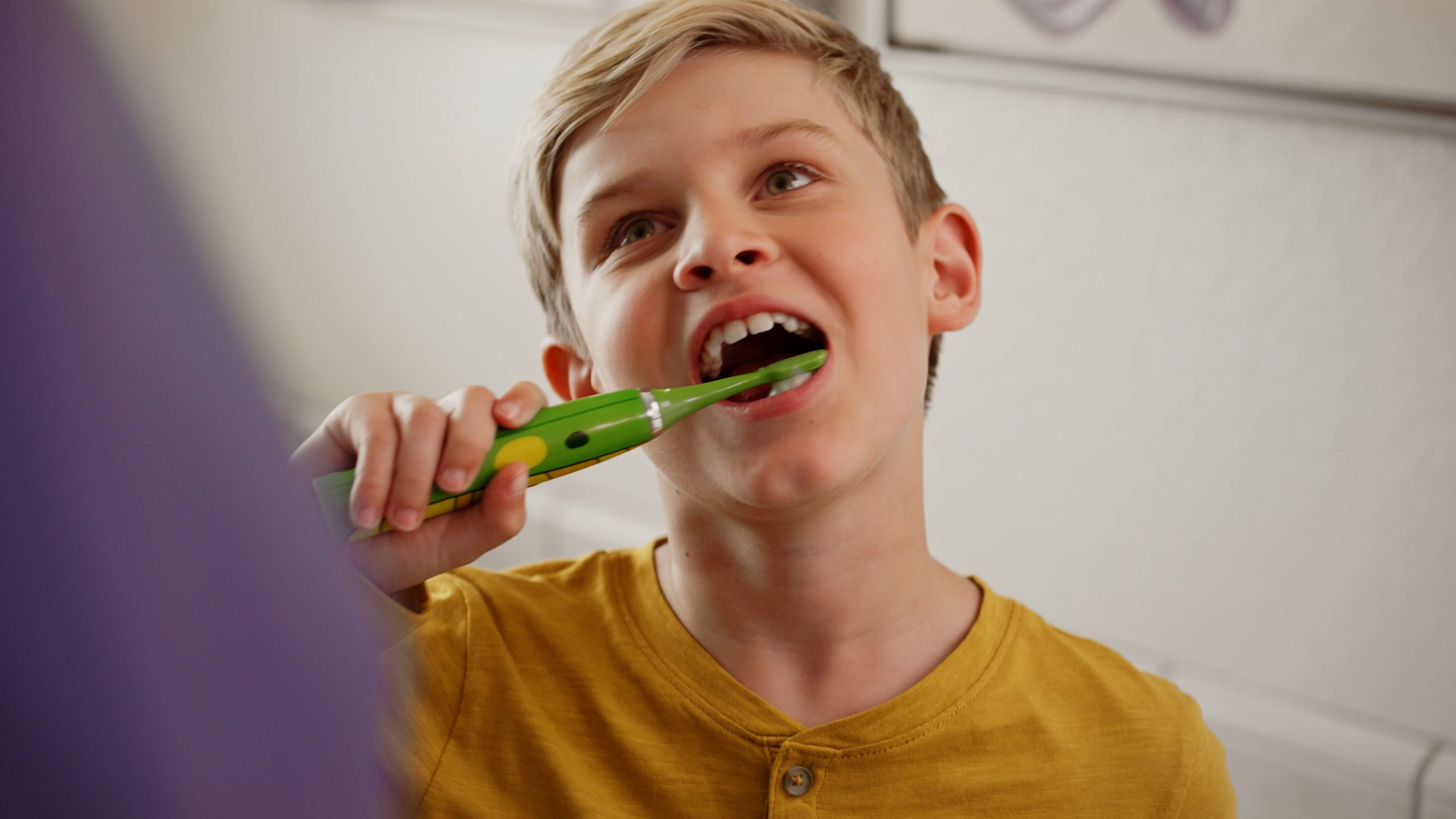
Help Your Kids Keep Their Teeth Clean and Healthy
Getting kids to brush their teeth may seem like a never-ending chore. But why does it have to be that way?
The Super Dentists is here to help with online tools and resources for parents, you can find everything you need to know about how to teach your kids to brush their teeth!
Thanks to The Super Dentists of San Diego, you can help your child develop and maintain an amazing smile for years to come. We’re here to ensure your child gets in the habit of brushing and flossing consistently so they can reap the rewards of beautiful teeth. Visit any of our six San Diego area offices and discover The Super Dentists difference!
So what does it take for your child to brush and floss the teeth to get a “Super” smile? Here are three easy ways to ensure your kids remember to brush and floss their teeth every day.
-
How to Get a Toddler to Brush their Teeth: Share the “Brush Your Teeth Sing-Along Song for Kids”
Transform your child’s “chore” of brushing his or her teeth into a fun-filled activity by sharing the “Brush Your Teeth Sing-Along Song for Kids” with your son or daughter.
The Super Dentists are committed to helping your child learn good brushing and flossing habits, and the “Brush Your Teeth Sing-Along Song for Kids” music video features a catchy tune that you can use to teach your child that you should brush for two minutes each time and it just so happens the song is two minutes long.
Our “Brush Your Teeth Sing-Along Song for Kids” highlights the importance of using circular motions to brush the teeth, brushing the tongue correctly, properly flossing the teeth and much more. As a result, you can teach your child to sing, dance and, of course, brush and floss with the sing-along to ensure a picture-perfect smile in no time at all.
With extra help fromThe Super Dentists team, you’ll be able to help your child move one step closer to achieving a Super smile and preventing cavities, gingivitis, and other long-term oral health issues.
Music is an important element in teaching a toddler to brush their teeth. That’s why we created The Super Toothbrush®, yet another tool to help you teach kids to brush their teeth. The Super Toothbrush®, includes a 2-minute song (the recommended time for how long children should brush their teeth), along with magic augmented reality sticker. When paired with the FREE Vivarra Dental app, the Tooth Keri will appear in 3D to teach your kids how to brush and floss. The battery lasts just about three months. When it runs out, you know it’s time to switch out toothbrushes.
-
How to Get Kids to Brush Their Teeth: Set Up a Reminder Chart
Does your child know when to brush and floss? Ideally, your child should brush twice daily, and floss at least once. A reminder chart can make it easier for you to reinforce the importance of consistent brushing and flossing.
Setting up a reminder chart in your bathroom serves as a great way to remind your child to brush in the morning and before bedtime every day and to floss once a day.
Also, don’t forget to reward children for brushing or flossing consistently. By doing so, you’ll be able to turn the chore of brushing and flossing into a rewarding activity, one your child may actually start to enjoy.
-
Brush and Floss Your Teeth with Your Child
Show your child there is no age limit when it comes to regular brushing and flossing by performing these activities side by side with them.
Spending a few minutes with your child on their oral healthcare routine is something you can do with your child.
Use these tips to encourage your child to establish an oral healthcare routine early on in life. Those habits will benefit their teeth, smile and their overall health for their whole life!
To learn more about pediatric dental care treatments, please contact The Super Dentists at please call/text The Super Dentists at 619-DENTIST (619-336-8478). See why 1 in every 5 kids in San Diego is a Super Dentists kid – contact us today!
What Is a Dental Tooth Space Maintainer (and How Does It Work)?

You’ve probably heard about a tooth space maintainer, or even received information about getting a tooth spacer for your child. This unique item is one of the least understood dental care accessories, so The Super Dentists thought it would be a good idea to answer some key questions on the subject.
Let’s take a look at what a tooth space maintainer does, why it’s required, and other common questions.
Losing a baby tooth too early may cause a child to suffer long-term oral health problems. Fortunately, space maintainers are available to make it easier for kids to keep the space previously occupied by a baby tooth open and ensure a permanent tooth is able to develop properly. A child tooth spacer helps ensure the current teeth are properly aligned, even as new ones are getting ready to erupt and they can help avoid the need for braces down the road, not to mention prevent pain and discomfort.
Understanding the True Value of a Tooth Space Maintainer
Baby teeth commonly serve as placeholders until a child’s permanent teeth are ready to develop. In total, a child will develop 20 baby teeth by the age of 3, and these teeth typically fall out in the order in which they erupted.
Usually, a child will lose his or her first baby tooth between the ages of 4 and 7. At this point, a child’s baby tooth will loosen and fall out to make way for a permanent tooth.
But what happens if any of your child’s baby teeth come out before the age of 4? In this situation, you’ll want to consult with a pediatric dentist at The Super Dentists to guarantee that your child’s permanent teeth are erupting correctly.
However, it also is important to note that baby teeth may fall out earlier than expected for many reasons, including:
- Accidents, falls, injuries, or other reasons.
- Severe tooth decay which requires tooth extractions
- Blood diseases, metabolic disorders or other diseases/conditions can lead to early tooth loss.
A space maintainer offers a viable option if any of your child’s baby teeth are lost before the permanent tooth is ready to erupt or if a permanent tooth is missing altogether. In fact, a space maintainer will ensure your child’s teeth will develop correctly by keeping a space open until a permanent tooth fully develops.
How Can a Space Maintainer Help My Child?
There are several types of tooth space maintainers, all of which may help your child enjoy a picture-perfect smile for years to come. Finding the right tooth spacer for your child involves finding the right dental experts to answer all of your questions and address any concerns you may have. The Super Dentists are ready to help today!
Types of Dental Space Maintainers for Kids:
The major types of tooth space maintainers include:
A band-and-loop maintainer serves as one of the most common types of space maintainers. This space maintainer consists of stainless steel wire that is held in place by a crown on the tooth or orthodontic-type band adjacent to the open space. Thus, it offers ample space for the permanent tooth to erupt without crowding.
A lingual holding arch (LHA) is an excellent device to use when either multiple teeth are missing early or there are additional concerns about a lack of space for the permanent teeth to erupt. This appliance alone may prevent the need to extract permanent teeth if used correctly and in a timely manner.
Also, a distal shoe appliance is another option that functions as a tooth space maintainer. Designed to help children who lose their first permanent molar (the “6-year molar”), this tooth spacer for your child is inserted under the gums and keeps the open space from closing.
If your child loses several teeth, they may benefit from a partial denture instead of a tooth space maintainer. In this scenario, the partial denture serves as a removable option that a child can use to replace the missing teeth until adulthood. After a child becomes an adult, he or she can continue to use the partial denture or receive dental implants or a bridge to replace the missing teeth.
The Super Dentists: Your Family-Friendly Source for Tooth Space Maintainers and Everything Else for Superior Dental Care!
Does your child require a space maintainer? Remember, every child is different. But if you consult with our pediatric dentists, you’ll be able to determine whether your child needs a space maintainer and how it could help.
To learn more about tooth space maintainers, or if you have any further questions about a tooth spacer for your child, call The Super Dentists at 1 (855) GO SUPER, or text 1 (844) 765-1234. For the ultimate in convenience, schedule your next appointment online.
Come to any of our six San Diego locations to see why 1 in every 5 San Diego kids is a Super Dentists kid. Plus, our teen and teen and adult dentistry makes The Super Dentists the ideal place for the whole family. Receive the best dental care right here in San Diego – visit The Super Dentists today!
What Is the Best Kind of Toothbrush for Kids?
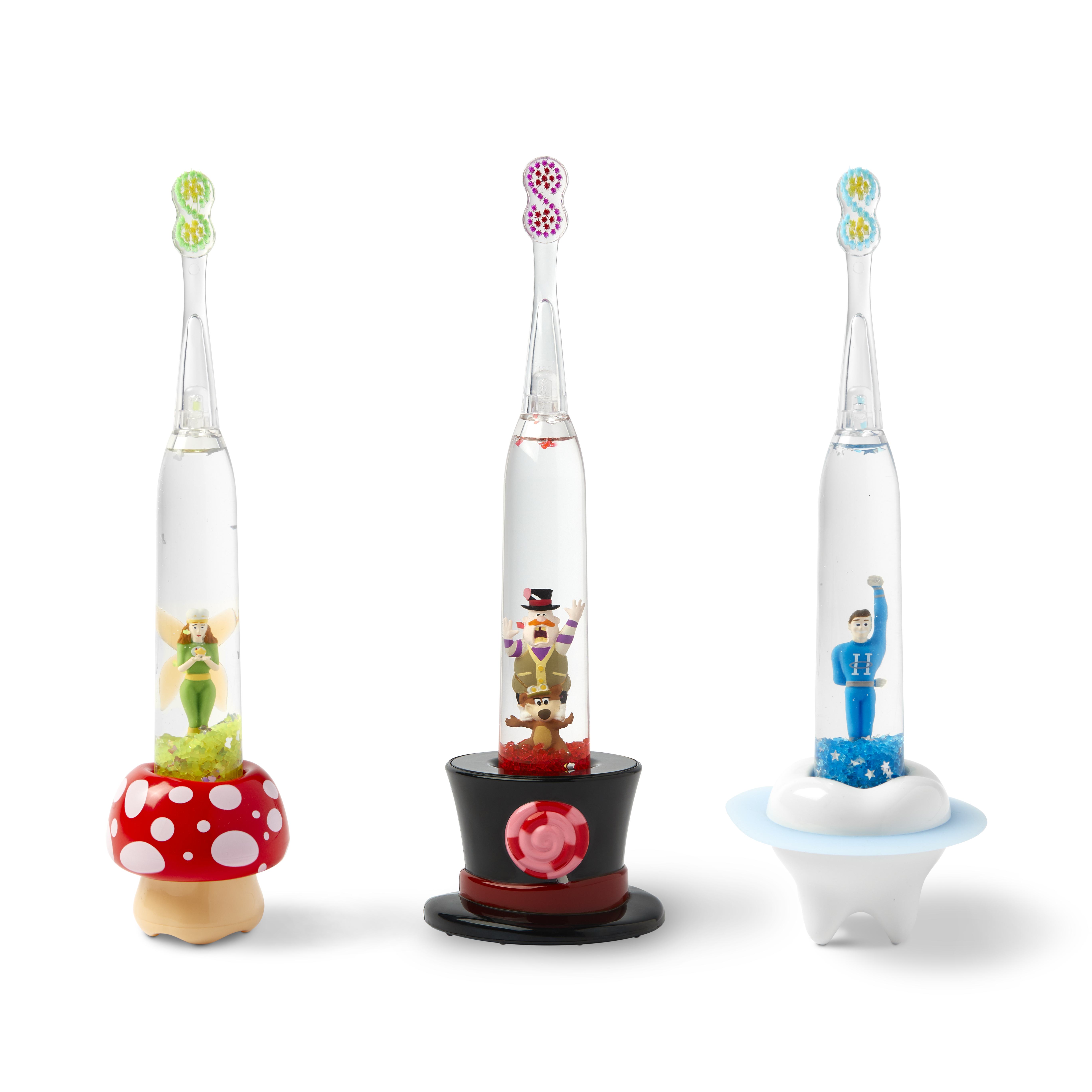
When it comes to choosing a toothbrush for your child, there is no shortage of terrific options at your disposal.
Typically, there are two categories of children’s toothbrushes: manual and powered. Each type of toothbrush has its pros and cons, and parents who understand how manual and powered toothbrushes work can make the best decision for their kids.
Here’s a closer look at manual and powered toothbrushes, and which type of toothbrush may serve your child best.
Manual Toothbrushes
Originally created in the 1930s, manual toothbrushes represent the most common toothbrushes used by adults and children across the United States. They enable users to combat plaque build-up and other oral health problems. Plus, in many cases, a pediatric dentist will provide your child with a free manual toothbrush that he or she can can use after a dental appointment, which means you likely won’t need to break your budget to pick up a manual toothbrush for your child.
Ultimately, a manual toothbrush enables your child to practice proper brushing techniques and only requires about two minutes to use. As a result, a manual toothbrush serves as a powerful tool, one that may help your child prevent cavities, tooth decay and other oral health problems.
On the other hand, using a manual toothbrush can be a lot of work, particularly for a child who is still learning the proper techniques for brushing his or her teeth.
Also, it is important to note that mouth rinse and dental floss serve as complementary tools that your child will need to use in conjunction with brushing his or her teeth at least twice a day with a manual toothbrush. And without proper use of mouth rinse and dental floss, there is still a chance that your child could encounter myriad oral health problems down the line.
Powered Toothbrushes
Powered toothbrushes were introduced in the 1990s, and today, serve as reliable options for kids to brush their teeth quickly and effortlessly.
Usually, powered toothbrushes require less effort to use than their manual counterparts, which means your child might not have to work as hard with a powered toothbrush. Some powered toothbrushes even feature built-in timers and even music, making it simple for kids to brush their teeth for at least two minutes for maximum effectiveness.
Powered toothbrushes provide great tools for kids to safeguard their teeth against gingivitis and plaque; however, these toothbrushes are far from perfect.
You’ll likely need to spend more on a powered toothbrush than a manual one. In addition, a powered toothbrush will need to be recharged regularly or require batteries, and it may break easily if your child drops the toothbrush.
Which Is Better: A Manual Toothbrush or a Powered Toothbrush?
Clearly, there are many pros and cons associated with both manual and powered toothbrushes. So how can you determine which type of toothbrush represents the perfect option for your child?
Finding the right toothbrush for your child is rarely simple. Fortunately, meeting with a pediatric dentist ensures you can evaluate many toothbrush options and make the best selection for your child.
A pediatric dentist understands that you want your child to maintain clean, healthy teeth. And with this professional at your side, you can find the right toothbrush for your child without delay.