
All About Kids’ Dental Emergencies: What They Are & What to Do
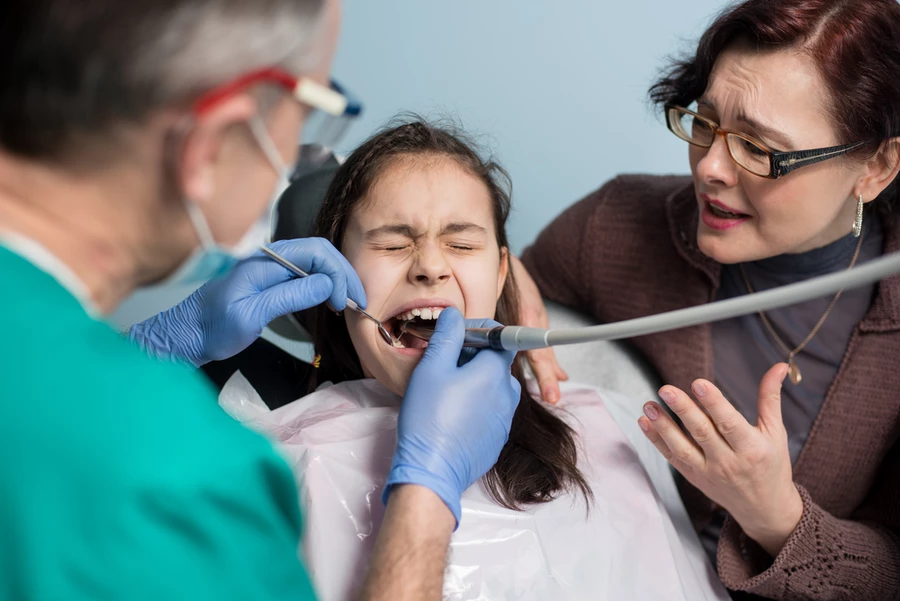
What do you do during a kid’s dental emergency or your own?
First things first: you’ll want to understand if what they’re experiencing is, in fact, classified as a dental emergency, medical emergency, or non-emergency situation. Understanding the difference between dental, medical, and non-emergencies is crucial.
Assuming that you or your child is experiencing a non-life-threatening dental emergency, you’ll want to get in touch with your nearest emergency dentist ASAP. Acting quickly is important to avoid long-term damage.
It may also be helpful to familiarize yourself with your dental insurance plan and emergency contact details before an emergency strikes.
Meanwhile, here’s some more information about dental emergencies that we hope you will find helpful.
What is a Dental Emergency?
The ADA defines dental emergencies as events that are “potentially life-threatening and require immediate treatment to stop ongoing tissue bleeding, [and] alleviate severe pain or infection”.
These are markers of a dental emergency, according to the ADA:
- Uncontrolled bleeding.
- Cellulitis or a diffuse soft tissue bacterial infection with intra-oral or extra-oral swelling that potentially compromises the patient’s airway.
- Trauma involving facial bones, potentially compromising the patient’s airway.
Experiencing an emergency can be confusing and distressing. Here’s what to know.
Per the California Department of Corrections and Rehabilitation (CDCR), dental clinics must have up-to-date emergency equipment, so if you or a loved one is experiencing a dental emergency in California, you can try calling your dentists’ emergency line, and someone can triage you to the dental office or the nearest emergency room.
For the Super Dentists, our emergency phone numbers are as follows:
- PEDIATRIC DENTISTRY (All Offices): (619) 790-1023
- PEDIATRIC DENTISTRY (ADDITIONAL #): 619-790-1024
- PARENT DENTISTRY: (619)432-0070
- ORTHODONTICS: (619) 432-0069
Regardless of what the ADA defines as a dental emergency:
- If you or a loved one is experiencing a potentially life-threatening emergency and you get an answering machine or don’t hear back right away, call 911 immediately or go to the ER.
- If you live in another state, where dental clinics may not be required to stock an emergency kit, call 911 or go to the ER.
- If in doubt and someone has trouble breathing or swallowing, call 911 or go to the ER.
Types of Non-Life-Threatening Kids’ Dental Emergencies
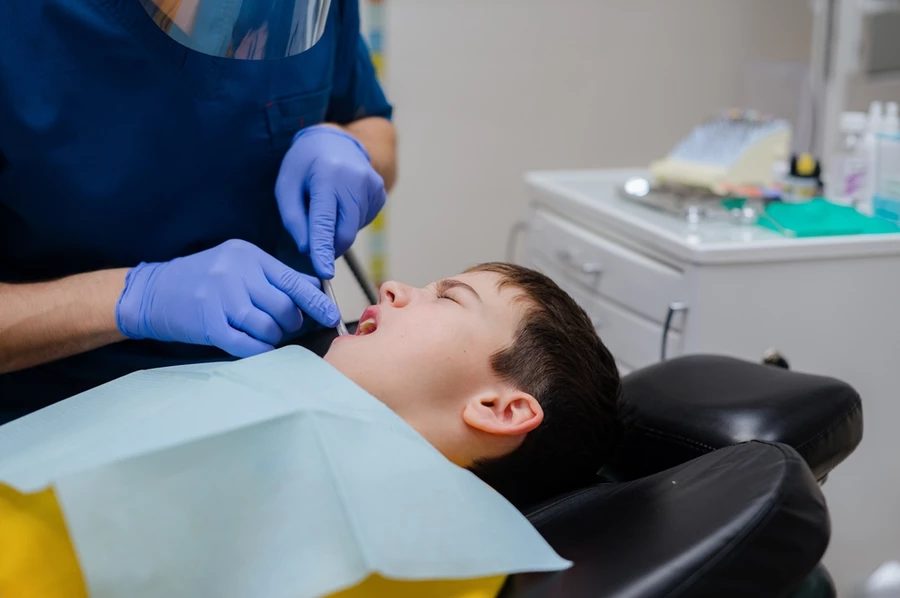
There are a variety of situations that classify as dental emergencies, but which may not be potentially life-threatening.
In these scenarios, it’s usually safe to contact a pediatric dentist and wait to hear back, rather than go to the ER or call 911. Here are the most common scenarios that fall under this category:
- Knocked-Out Teeth: Children often lose teeth due to accidents, trauma, or unexpected incidents.
- Chipped, Cracked, or Broken Teeth: Cracked or chipped teeth are among the most common dental injuries in children.
- Broken Braces and Wires: While broken braces or misaligned wires may not always be a dental emergency, they can cause significant discomfort. If the braces or wires are causing injury to the gums, cheek, or tongue, immediate pediatric dental care is essential.
- Toothaches: There are many potential reasons for a toothache, from cavities to teeth grinding and even tooth fractures. If your child is experiencing severe or persistent pain, this likely constitutes a dental emergency.
What to Do in a Non-Life-Threatening Kids’ Dental Emergency
Knocked-Out or Loose Teeth Due to Injury
If your kid’s tooth is knocked out completely or loose in the mouth, here’s what to do.
If your child has trouble breathing or swallowing:
- Call 911 or go to the ER immediately.
- Locate the tooth if you can.
- Rinse it with saline solution or milk. Do not use soap. Do not scrub.
- Put the tooth back in the socket if possible and instruct your child to bite down on a clean cloth gently.
- If you can’t reinsert the tooth, keep it moist in milk or saline solution.
- Call your pediatric dentist ASAP and try to make an emergency appointment within 30-60 minutes after the tooth falls out for the best chance of saving it.
Chipped, Cracked, or Broken Teeth
Can a chipped tooth be fixed? In most cases, the answer is yes! Here’s what to do if your child chips a tooth:
- If your child has trouble breathing or swallowing, call 911 or go to the ER immediately.
- Rinse the mouth with warm water.
- Store any fragments you can find in milk or saline solution.
- Apply a cold compress on the outside of the cheek or lip near the broken tooth. This should decrease pain and help reduce swelling.
- Schedule an emergency dental appointment ASAP.
Broken Braces Brackets & Archwires
Broken braces can be seriously painful. While orthodontic wax can be used if you can’t get an appointment right away, embedded brackets or wires are cause for more immediate attention. Here’s what to do if the wires or brackets on your kids’ braces are broken:
- Check to see if the broken bracket or wire is causing pain or puncturing the skin of the gums or inner cheek. If so, rinse with saline solution.
- Cover any sharp ends with dental wax. Do not attempt to cut wires yourself.
- Schedule an emergency dental appointment ASAP, especially if a wire is embedded in the gums, cheek, or tongue, or if discomfort is severe.
Toothaches
No one likes a toothache. Here’s what you should do if your kiddo has one:
- Rinse the mouth with warm water.
- Floss gently to remove food stuck in between the teeth, if able.
- Apply a cold compress to the outside of the mouth near the affected tooth to reduce swelling and discomfort.
- If pain does not subside, schedule an emergency dental appointment.
More Dental Emergency FAQs
How Does a Dentist Fix a Chipped Tooth?
Whether your kid chipped a front tooth, a molar, or an incisor, chances are, it’s fixable.
- For minor chips, a dentist will often use a dental bonding material to fill in the chipped area and restore the tooth’s shape, or, if you have the part that chipped off, affix that back onto the chipped tooth.
- For more significant chips, a dental veneer or crown will likely have to be used to cover and protect the tooth while restoring the original look and feel.
- In cases where the tooth’s pulp is exposed, a root canal may be required prior to restoring the chipped tooth.
My Kid Has a Toothache. Can I Apply Aspirin Directly to the Affected Area?
No. Do not do this. Applying aspirin directly to the tooth can cause tissue burning and damage.
Can I Re-Insert a Knocked-Out Baby Tooth?
No. Doing so could damage the developing permanent tooth underneath. Just as importantly, it’s likely that your baby or toddler has not yet learned safe swallowing skills, so re-inserting a knocked-out tooth could pose a serious choking hazard.
Rely On the Super Dentists for Emergency Dental Care
At The Super Dentists, we offer emergency pediatric dental care to families in the greater San Diego area.
If your little one is in need of emergency dental care for any reason, let us help. We provide a safe space with expert care for kids and adults of all ages experiencing dental emergencies.