One minute, everything seems fine. The next? You feel a strange sensation in your mouth, and you realize one of your braces brackets has broken (what a tongue twister, literally).
What are you to do?
That’s what we’re here to help you uncover! From what to look for to how to fix a broken bracket both temporarily and permanently, here’s everything you need to know about your broken bracket.
Why Do Braces Brackets Break?
There are several reasons that brackets come unstuck. Here are a few of the most common:
- Something You Ate: From bagels to gum; apples to popcorn, there are plenty of foods that can pop a bracket.
- Improper Cleaning: If you fail to clean your braces properly AND have eaten problem foods, it’s possible that something could get wedged in the bracket, causing it to break ─ especially if the bracket adhesive is also failing.
- Injury or Accident: Injured on the court or in an accident involving trauma or force to the mouth? That could have very well broken your bracket.
- Adhesion Failure: Sometimes the glue that binds brackets to your teeth, which is meant to last for the entirety of the time your braces stay on, fails for one reason or another, causing brackets to come unstuck.
How to Tell if a Bracket is Broken
What Does a Broken Bracket Look Like?
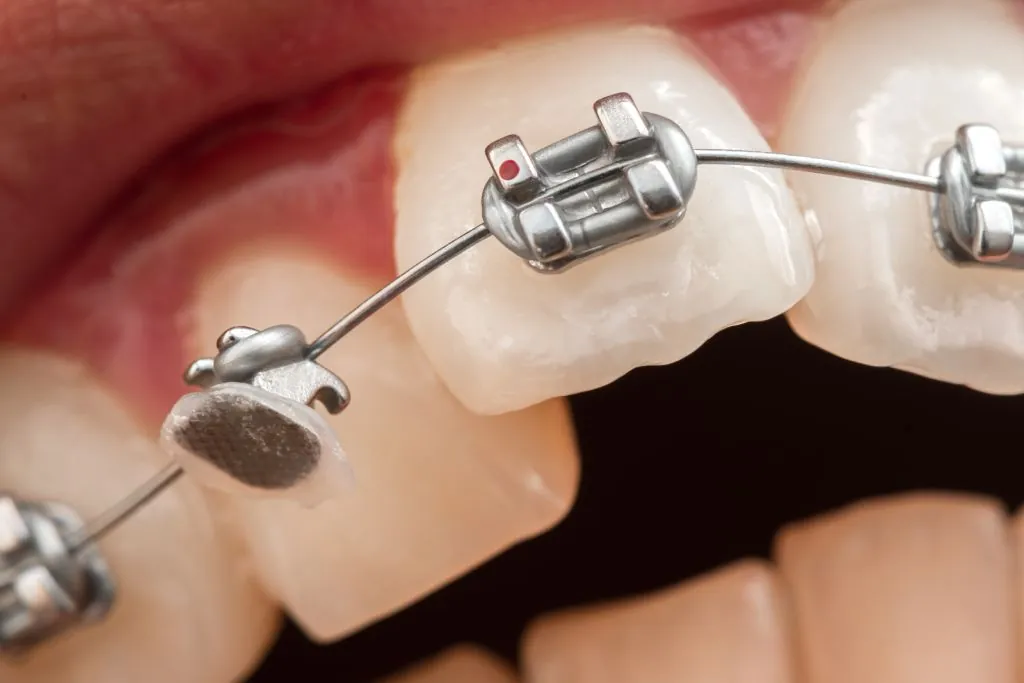
Broken brackets that have come unstuck from the tooth can be rotated around the archwire. The picture we’ve included at the beginning of this blog post is a good representation of a broken bracket.
Types of Broken Brackets
Normally the archwire stays in place and the bracket comes loose on it. Sometimes, if the bracket that breaks is on one of the last molars and the archwire breaks too, the bracket may come completely loose in the mouth. But this is rare.
Most times, if the bracket that has broken is between other brackets (on one of the middle teeth), it stays attached to the archwire, causing it to come unstuck but stay in place between other brackets. In other words, in these instances, it will come loose from the tooth but stay strung on the wire.
Imagine for a minute that you were to glue a necklace to your teeth (crazy we know – don’t do that!). If the glue from one bead came undone but it was still attached to the rest of the necklace, that’s kind of what a broken bracket is normally like.
Short Term Fixes for Broken Brackets
Here’s the million-dollar question: if a bracket is broken on your braces, what are you to do? While broken brackets do classify as a dental emergency, meaning you’ll eventually need to see your orthodontist, you can do the following before being seen by a professional.
Inspect the Area
Take a good look at the area so you can get a handle on what’s going on. Is the bracket broken off the tooth? Partially broken? Is it an end bracket coupled with a loose archwire? A middle bracket that’s less at risk of coming off completely? These are the types of questions to ask.
Apply Orthodontic Wax or Remove the Bracket If Needed
If the bracket is at the end of the tooth and the archwire has come loose, it’s probably best to remove the bracket entirely so you don’t risk ingesting it.
Otherwise, if the bracket, which in normal circumstances, holds the archwire down, comes loose enough that it’s starting to cut your inner lips or gums or enough to cause the wire to lift and create irritation, we recommend applying orthodontic wax around the bracket and surrounding wire.
For a Long-Term Fix, Contact Your Orthodontist
The only way to have a broken bracket fixed permanently is to schedule an emergency appointment with your orthodontist. They’ll have the tools and materials required to re-affix the bracket permanently.
In the meantime, feel free to learn more about the right ways to clean & maintain teeth with braces.