Category: Uncategorized
Anesthetic Instructions

Post-Anesthetic Patient Instructions:
- Your child has received a local anesthetic. In addition to blocking sensation from the teeth, the anesthetic will numb the lips, cheeks, and tongue in the treated area. This may be an unusual sensation for a child, but care must be taken to prevent your child from biting, sucking, or chewing their lips or tongue, as this could result in tissue lacerations. While not serious, these can be quite uncomfortable.
- Therefore, please supervise your child closely for approximately two hours and ensure they avoid consuming solid foods until the anesthetic has dissipated.
After Dental Treatment:
- Although your child will be awake after dental treatment, they may experience drowsiness and may wish to sleep for several hours or for the remainder of the day.
- Immediately following dental treatment, your child may experience hunger and thirst. At this time, your child should consume only clear liquids.
- At home, encourage your child to drink ample liquids and provide a soft/liquid diet such as Jell-O, applesauce, or lukewarm soup. Chewing hard foods may lead to your child biting their lips, tongue, or cheek.
- Supervise your child’s activities for the rest of the day. They may be slightly unsteady and should not be permitted to play outdoors or climb stairs without close supervision.
- Some children may exhibit irritability or experience nausea and vomiting. If your child needs to vomit, allow them to do so without intervention.
- Should you have any questions or concerns, either before or after your visit, please contact our office.
- We are accessible through our answering service at all times and welcome your call.
Instrucciones Post-Anestésicas para el paciente:
- Su hijo(a) ha recibido anestesia local. Esto provoca un bloqueo de la sensación en los dientes, y el anestésico adormece los labios, mejillas y lengua en el área tratada. Esta sensación puede resultar extraña para su hijo(a); por lo tanto, es crucial evitar que se muerda, chupe o mastique los labios o la lengua, ya que esto podría causar laceraciones en el tejido cutáneo. Aunque no son graves, estas lesiones pueden ser incómodas.
- Por esta razón, por favor supervise a su hijo(a) de cerca durante aproximadamente dos horas y evite la ingesta de alimentos sólidos hasta que el efecto de la anestesia haya desaparecido por completo.
Después del Tratamiento Dental:
- Aunque su hijo(a) estará despierto(a) una vez finalizado el tratamiento, es posible que experimente somnolencia y desee dormir durante unas horas o el resto del día.
- Inmediatamente después del tratamiento dental, su hijo(a) podría sentir sed y hambre. En este momento, solo se permite la ingesta de líquidos claros.
- En casa, anime a su hijo(a) a beber abundantes líquidos y a consumir una dieta de alimentos blandos y líquidos como gelatina, puré de manzana o sopa tibia. Masticar alimentos duros podría llevar a que se muerda los labios, la lengua o las mejillas.
- Supervise las actividades de su hijo(a) durante el resto del día. Es posible que esté algo inestable y no debería jugar al aire libre ni subir escaleras sin supervisión estricta.
- Algunos niños pueden volverse irritables o experimentar náuseas y vómitos. Si su hijo(a) necesita vomitar, no intente impedirlo; permita que lo haga.
- Si tiene alguna pregunta o inquietud, ya sea antes o después de su cita, por favor llame a nuestro consultorio.
- Nuestro servicio de emergencias está disponible en todo momento para atender sus llamadas.
Wax for Braces: What It Is & How to Use It
No pain, no gain.
Surely, you’ve heard that phrase before.
It implies that without a degree of pain (or maybe more accurately, discomfort) you won’t achieve worthwhile goals.
It certainly applies to braces. After all, let’s be honest: the pressure that braces apply to teeth can be hard to get used to.
But braces should never be truly painful. If you ever feel sharp, shooting pain from a wire or feel loose or broken brackets that are jutting into the inside of the cheeks causing cuts and mouth sores, it’s probably time to schedule an orthodontist appointment.
Before your appointment, you can use dental wax, otherwise known as orthodontic wax or wax for braces to provide both protection and pain relief.
Why Do You Need Wax for Braces?
Before diving into details about how to use orthodontic wax, or braces wax, let’s address this common question we get from patients: “What is braces wax for?”
Simply put, braces wax is a tool you can use to alleviate pain that occurs when components of dental brace hardware fail. This type of hardware failure is classified as a dental emergency.
How to Use Wax for Braces
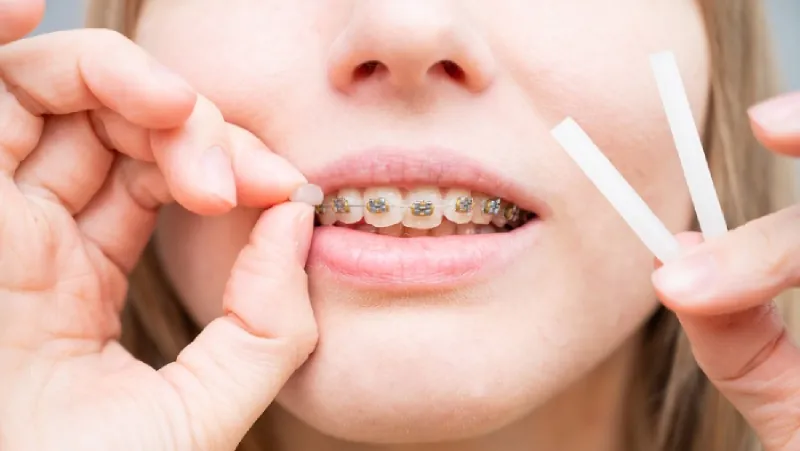
If a broken wire or bracket can be removed, remove it. If it can’t, or if there are still sharp objects protruding, you can cover the area with dental wax. Here’s how:
- Wash your hands.
- Brush your teeth.
- Pinch off a piece of wax about the size of a small pea.
- Squeeze until it softens and roll it into a ball, then flatten the ball slightly.
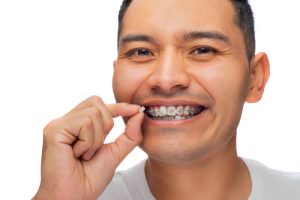
- Gently push the wax onto the problem area of the braces. You can also use your tongue to adjust the wax if it’s helpful.
We also recommend drying your braces with a piece of paper towel, cotton ball, or close-textured washcloth after rolling wax into a ball and before applying to the problem area. Doing so will help the wax adhere longer until you’re able to visit your orthodontist.
If you can’t get to see your orthodontist right away, you can safely wear dental wax for up to two days or until it falls off.
What’s the Best Wax for Braces?
Brand isn’t necessarily important. What is important is finding a braces wax that is safe and effective.
Most dental waxes are made from:
- Paraffin wax
- Beeswax
- Carnauba wax
All of these types of braces wax are generally recognized as being safe to use orally, so we recommend choosing a wax material that you feel most comfortable with.
For instance, if you live a vegan lifestyle, you may wish to avoid beeswax. If you’re concerned about using petroleum-based wax in your mouth, on the other hand, beeswax may be the better choice for you.
Ultimately, the type of wax that will work best for you is more of a matter of personal preference than efficacy or safety.
Other Methods to Treat Discomfort from Braces
Wax can be used to treat broken braces that may cause serious pain or discomfort otherwise. But there are many other non-dental emergency situations that cause pain or discomfort that wax may not help with.
According to the American Academy of Orthodontists, here are some other methods of treating mouth discomfort caused by braces:
- Dental Floss: Used to remove food particles that have become wedged between teeth or in hard-to-reach areas in braces.
- Tweezers: Used to adjust wires. Just be sure to sanitize or clean before using in the mouth.
- Interproximal Brushes: Used traditionally to reach gaps between teeth similar to floss, but can also be used to carefully clean in-between the archwire and braces brackets and other hard-to-reach areas.
- Topical Anesthetic: Popular topical oral anesthetics like Orabase and Ora-Gel may be used to alleviate pressure/discomfort from braces, especially in the beginning stages. They may also be used for some types of cuts or mouth sores, providing temporary pain relief.
- Over-the-counter Pain Relievers: Advil, Tylenol, Aleve, and other OTC drugs may be used to alleviate the pain associated with new braces. They also may be helpful after a follow-up appointment when braces are tightened.
- Warm Saltwater Rinse: A warm saltwater rinse can be soothing. It can also help fight bad bacteria if wires from braces have caused mouth sores or cuts. (1 tsp. salt to 8 oz. warm water)
Get Help With a Dental Emergency Now
Need help fixing your braces or your kid’s braces? If you’re looking to schedule an emergency appointment, we recommend you give us a call ASAP at 1 (855) GO SUPER (467-8737).
For non-emergency appointments, you can use our convenient online scheduling tool.
We look forward to providing you relief from pain and discomfort and the high level of orthodontic care that you deserve during every step of your orthodontic journey!