The Rise of SuperMouth has arrived! See the full movie right here.
Meet the SuperMouth Squad, a team of superhero dentists and their comical sidekicks, as they try to stop villainous candymaker Cavitar from spreading Sugar Bugs to ruin teeth throughout the galaxy.
This hybrid live-action animated comedy adventure film is ultimately about two kids taking to heart the lesson from their father about using the power of smiles to find their inner strength and reconnect as a family.
You’ll laugh. You’ll cry. You’ll floss before bedtime!
The Rise of SuperMouth is executive produced by world-renowned orthodontist, bestselling author, and pediatric specialist Dr. Kami Hoss and Richard Tiland, written and directed by Daniel Robert Cohn, and produced by Evan J. Cholfin, based on a story by Dr. Hoss, Cohn, and Cholfin.
The film stars Joe Chambrello (9 : 11: Lone Star), Jack De Sanz (Strays), Nova Gaver, Jack Brenner, Rachel Wirtz, Kayla Robinson, Natalie Polisson, Jared Fleming, Daisy Isles, and Acston Luca Porto.
Check out more content, games, comics, and cool oral care products at SuperMouth dot com!
Presented by SuperMouth, the world’s first MouthCare systems for kids.
The risk of developing cavities and tooth decay is genetic. Your genes can affect how your teeth develop, meaning that the development of your teeth can be why you are susceptible to dental issues.
While genetics are sometimes the cause of cavities, cavities can also develop due to the lack of poor oral hygiene, smoking, lack of saliva, or not flossing your teeth. To understand if cavities can be hereditary, it is essential to understand how genetics can affect oral health.
What Percent of Cavities are Genetic?
Many people wonder, “Are cavities hereditary?”. While cavities alone are not genetically passed down, the risk of dental susceptibility can be passed down. Genetics account for up to 65 percent of tooth decay or other dental predispositions.
Are cavities genetic? Some factors make the susceptibility to cavities or other dental issues genetic.
Enamel
Your genes strongly determine the enamel of your teeth. People with strong enamel teeth more easily absorb vital minerals, such as fluoride and calcium.
These essential minerals help to keep the teeth strong and resistant to bacteria and plaque, which can be the reason for cavities.
Saliva
Saliva can help prevent cavities and tooth decay by efficiently metabolizing vitamins and minerals. Therefore, your saliva can either hinder or aid the bacteria that cause cavities in your mouth.
Tasting Ability
While some people have a strong ability to taste, others do not, meaning that some people have a wider variety of tastes than others.
People with a stronger ability to taste are less likely to develop cavities or tooth decay, likely because their broader taste palate may help them consume fewer sweets.
Shape of Teeth
Is tooth decay hereditary? Sometimes, even the shape of your teeth due to genetics can contribute to cavities.
Everyone has the same shape of teeth. However, each person’s teeth vary by size and shape. If a person has teeth that are tight and crowded, it makes flossing difficult.
Without flossing regularly, there is a higher risk of developing a cavity due to the extra plaque buildup. Some people have teeth with more grooves in between their teeth, which gives the bacteria more space to gather.
Immune System
Every person has a lot of bacteria in their mouth, which is normal, but some bacteria are more harmful than others. If your immune system is compromised or does not work efficiently, it may not adequately protect your teeth from harmful bacteria.
Are Cavities Genetic: Can Parents Pass Down Cavities to Kids?
Parents can pass down the risk of developing cavities to their kids, especially mothers when pregnant with their children. Since tooth decay is a transmissible disease, the cavity-causing bacteria in the mother’s mouth can be passed down to a child in utero.
Mothers must visit their dentist regularly before and during pregnancy to ensure their mouths do not have cavity-causing bacteria.
In addition, sharing the same drink, or even a spoon or fork, with your child can contribute to them developing cavities through the transfer of saliva.
If a parent passes down the gene G20A, a child can be five times more likely to develop cavities throughout their lifetime than those who do not have this specific gene.
Are Some People More Prone to Cavities? Are Their Teeth?
Yes, certain teeth are more prone to cavities than others. For example, teeth with deep grooves are more likely to trap foods and develop cavities. Also, misaligned teeth can collect food or food particles between them, causing cavities.
If your teeth have thin enamel, you can also be more prone to developing cavities because you do not have the extra layer of protection.
When Genetics Do Not Contribute to Cavities
While the cause of cavities can be due to your genetics, often, it does not have to do with your genes. If you lack proper oral hygiene and have bad oral habits, you increase your likelihood of developing a cavity.
Smoking cigarettes also increases the risk of tooth decay because smoking decreases saliva production in your mouth. Since saliva is essential to help keep your teeth clean and wash away food particles throughout the day, insufficient saliva will leave the food particles stuck between your teeth.
Also, those with a diet high in starches or sugar are more likely to develop cavities. These are some other common causes of cavities that are not as well known:
Frequent Snacking
Snacking regularly brings a lot of sugar into contact with your teeth throughout the day. Limiting the number of snacks you consume throughout your day can help prevent cavities.
You should focus on consuming well-balanced meals instead of snacks, so you do not feel the need to eat between meals.
Snoring
Snoring can decrease the health of your teeth over time because it causes your mouth to dry. A dry mouth makes it easier for harmful bacteria to spread throughout your mouth, potentially causing cavities.
Not Going to the Dentist
One of the best preventative measures to help prevent cavities in a child is regularly going to dental exams with the pediatric dentist.
While flossing and brushing your teeth are helpful in tooth decay prevention, they are not enough to keep cavities away altogether. Getting your teeth cleaned and checked twice yearly is the best way to prevent tooth decay and cavities.
What Are the Symptoms of Cavities?
There are many symptoms of cavities to be aware of, as these signs and symptoms should not be ignored. If these symptoms occur, it is vital to visit the dentist to ensure the tooth decay does not become worse. Symptoms of a cavity include:
Tooth sensitivity
Pain when you bite down
Spontaneous toothaches
Mild to sharp pain when drinking or eating something cold, hot, or sweet
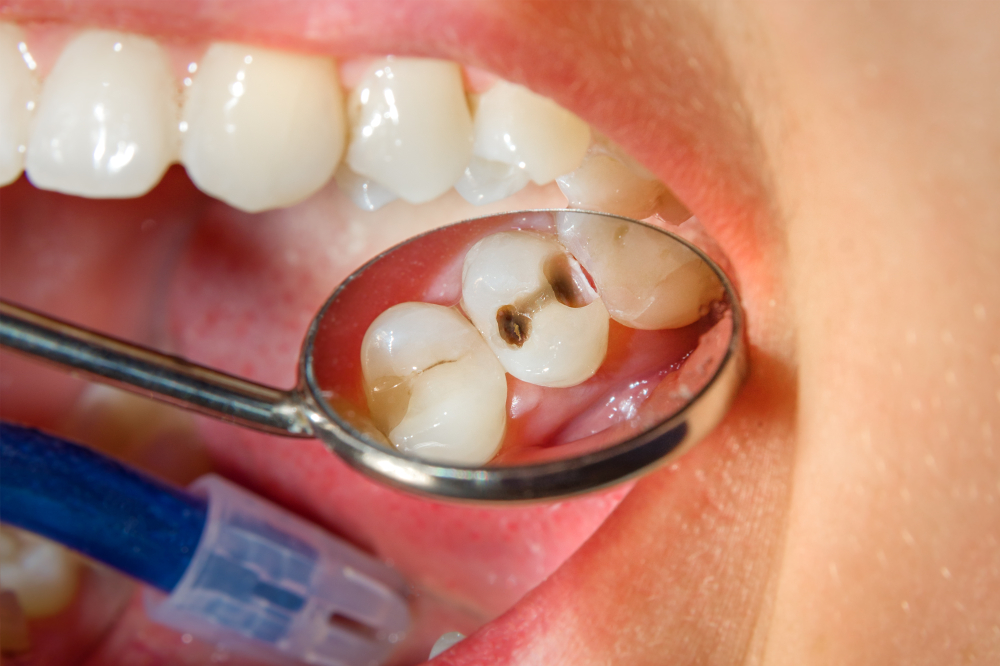
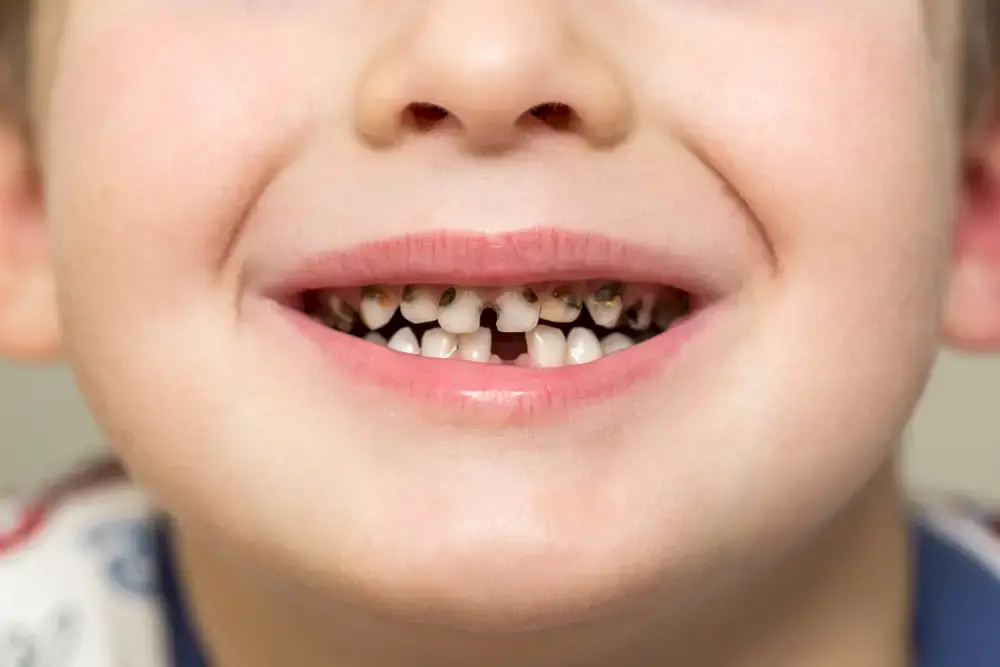
White, brown, or black staining on the tooth’s surface
Visible pits or holes in the teeth
Final Thoughts
While genetics can be the cause of cavities in children, it is crucial to remember how good oral hygiene can help prevent the development of tooth decay.
Regular visits to the pediatric dentist can help prevent cavities and promote good oral health. Make an appointment with The Super Dentists today!
How Does Music Affect the Development of a Young Mind?
Playing music with your son or daughter may foster the development of his or her mind. In fact, recent data indicates that music may affect the development of your child’s brain in many ways, including:
Improved Brain Architecture – UPMC HealthBeat reports studies have shown that kids who learn to play a musical instrument at a young age often can improve their brain architecture.
Playing a musical instrument may help your child develop stronger connections across the corpus callosum, a band of nerve fibers that links the left and right hemispheres of the brain. These connections impact how different parts of the brain communicate with one another.
Increased Brain Volume – Some studies have indicated there is a direct correlation between learning music and developing grey matter, darker tissue of the brain and spinal cord that helps a child process and retrieve information. Thus, playing music with your child may help him or her boost numerous intellectual and emotional skills, including:
Listening
Mathematics
Motor skills
Reading comprehension
Spelling
UPMC HealthBeat also pointed out that several university researchers have found playing music jump-starts the parts of the brain that are responsible for spatial-temporal reasoning, i.e. the ability for a child to identify a pattern and understand how various pieces play important roles in the pattern itself.
As a result, playing music may enable your son or daughter to build his or her problem solving skill set and better understand how to resolve problems both now and in the future.
Enhanced Neural Processing – Listening to music alone is insufficient for kids. Instead, playing music may allow your child to enhance his or her neural processing. Time reported a recent Northeastern University study revealed that children need to become active participants in a music class to reap the course’s cognitive benefits. Also, the study indicated students who played musical instruments were able to improve their neural processing more than those who did not.
Clearly, playing music with your child can make a world of difference in the development of his or her mind. If you play music with your child for even a few minutes every day, your son or daughter could enjoy the benefits of a fun, exciting and rewarding musical experience for years to come.
At The Super Dentists, we understand the importance of the development of a young mind. As such, we’ve launched a new song called “We Love the Super Dentists” that both you and your child are sure to enjoy.
Click here to play our new song,and don’t forget to sing along to it with your child. By doing so, you can foster the development of your child’s mind and teach your son or daughter about the importance of good dental habits.
This Valentine’s Day, give yourself a gift that both you and your special someone can enjoy – a beautiful smile.
Ultimately, maintaining a clean, healthy smile is paramount for individuals of all ages, particularly for those who want to make a great first impression on Valentine’s Day. With the right approach, you should have no trouble transforming an ordinary smile into an exceptional one.
What does it take to improve your smile? Here are three tips to ensure that you can enhance your smile just in time for Valentine’s Day:
Address the Root Causes of Bad Breath
Don’t let bad breath get the best of you on Valentine’s Day. Instead, take some time to address bad breath now, and you can eliminate this problem altogether. Bacteria in the gums, teeth and tongue often serve as the primary causes of bad breath. Fortunately, those who see the dentist regularly and understand how to brush and floss the teeth properly can eliminate harmful bacteria instantly. Spend at least two minutes twice a day brushing and flossing your teeth. By doing so, you can remove bacteria that otherwise can cause bad breath.
Avoid Excessive Alcohol and Nicotine
Resist the temptation to consume excessive alcohol or nicotine – you’ll be glad you did. Alcohol and nicotine consumption has been associated with a wide range of health issues, along with many severe oral health problems.
Excessive alcohol consumption has been linked to cavities, gum deterioration, tooth loss and other long-term oral health issues. Meanwhile, smoking may lead to periodontal disease, which can result in tooth decay and infection.
When it comes to alcohol and nicotine, it is always better to err on the side of caution. Thus, if you reduce alcohol and avoid nicotine consumption, you can minimize the risk of permanently staining your teeth.
Schedule a Teeth CleaningValentine’s Day is a few weeks away, which means there is still plenty of time for you to set up a teeth cleaning. As part of a comprehensive teeth cleaning, a dentist or dental hygienist will remove built-up plaque and tartar that can cause cavities, gum disease and other oral health problems. Plus, your dentist will be able to provide expert insights into how you can keep your smile looking great for years to come.Use these tips to improve your smile, and you enjoy a beautiful smile on Valentine’s Day and beyond.