Baby Lip Tie vs. Normal Lip Structure: What You Need to Know
TL;DR:
Lip tie in babies happens when the tissue connecting the lip to the gums is too tight or thick, potentially affecting feeding, comfort, and oral development.
In this blog, you’ll learn how to recognize the signs, understand the difference between baby lip tie vs normal anatomy, and explore treatment options.
- Lip tie can affect breastfeeding and bottle feeding, causing latch issues, gassiness, and slow weight gain.
- There are different types of lip ties, ranging from mild to more restrictive.
- Comparing lip tie vs normal pictures can help parents spot structural differences.
- Untreated lip ties may contribute to speech, dental, or orthodontic concerns later.
- A simple, gentle procedure may improve feeding and comfort when necessary.
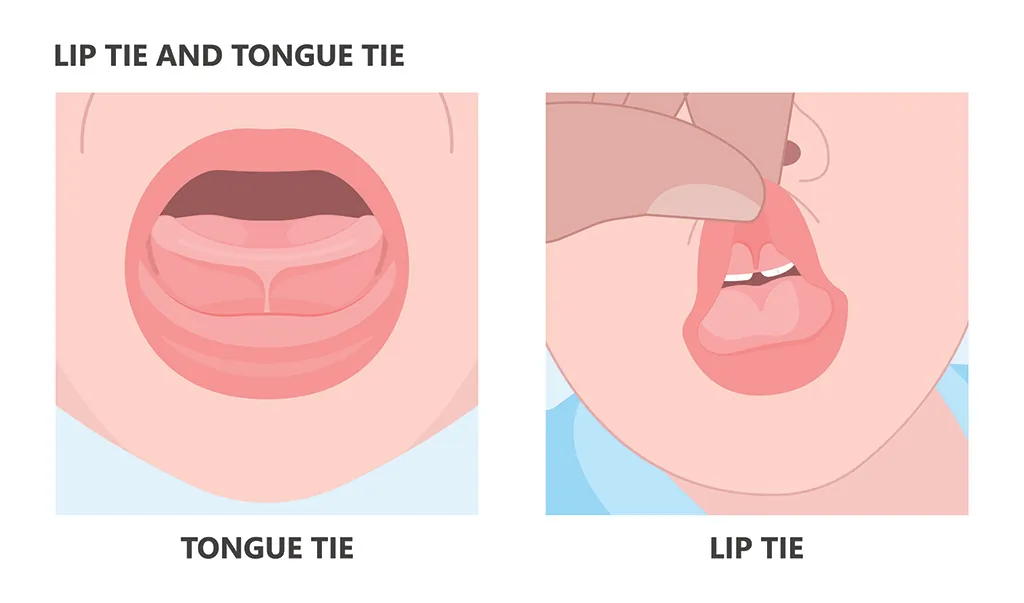
Lip tie in babies occurs when the labial frenulum, a piece of connective tissue that attaches your lip to your gums, is too closely attached (is too tight). Lip ties can create issues with breastfeeding or bottle feeding, as well as other dental issues, such as overbites. Therefore, it’s important to be sure that your baby is examined by a pediatric dentist to ensure that their labial frenulum is normal and not overly tight, especially if they exhibit some of the most common symptoms associated with lip tie.
When comparing baby lip ties vs normal anatomy, the key difference is mobility. In normal lip structure, the upper lip can gently flare outward during feeding. With a lip tie, on the other hand, the tissue may appear thick, tight, or extend lower toward the gum line, thereby limiting natural movement.
Many parents search for things like “lip tie vs normal pictures” to better understand what they’re seeing. Truthfully, while online images can offer general information, a professional evaluation is always the most reliable way to determine whether your baby’s lip structure is functioning normally or whether they have a lip tie.
Lip Tie in Babies: An Overview
Upper lip tie in babies is more common than lower lip tie, but it is possible for either the superior (upper) labial frenulum or the inferior (lower) labial frenulum to exhibit lip tie.
In either case, lip tie happens when the frenulum is either too tight, too thick, or both. While this is usually not painful for the baby experiencing lip tie, it can cause various issues with both feeding and oral development.
There are different types of lip ties, often classified based on how far the frenulum extends toward the gum line:
- Class I: Mild attachment with minimal restriction
- Class II: Attachment extends further down the gum
- Class III: Tight attachment near the edge of the gum ridge
- Class IV: Thick, restrictive attachment that may significantly limit lip mobility
It’s important to remember that appearance alone doesn’t determine whether treatment is necessary. Rather, function, or the loss of function, is what matters most.
Signs & Symptoms of Lip Tie
Recognizing the signs of a lip tie in your baby could help ensure early intervention. Some common indicators include:
• Feeding Challenges: Can a lip tie affect bottle feeding or breastfeeding? It sure can. Difficulty latching, prolonged feeding sessions, and frequent gassiness or fussiness during or after feeding are common feeding-related symptoms associated with lip tie in babies. Your baby may also make clicking sounds when feeding with lip tie.
• Oral Development Issues: What about the impact on oral development? Simply put, limited lip movement can impact a baby’s ability to suck effectively, which can lead to oral development issues like overbites.
If you notice any of these symptoms, it’s best to contact a trusted pediatric dentist to conduct a medical examination of your baby and determine if the lip tie should be removed to free up movement and prevent further issues.
In one study, parents concerned about lip tie cited the following as the most common symptoms associated with lip tie, in descending order:
- Breastfeeding problems
- Speech problems
- Bottle feeding problems
- Orthodontic problems
- Feeding problems in older children
- Reflux
- Snoring/sleep problems
- Dental decay
- Nasal problems
Impact of Lip Tie in Babies
Lip ties can cause a number of issues for both baby and mama in both the short-term and long-term. Here are some of the most common:
- Slow Weight Gain: A lip tie can make it hard for your baby to get enough milk, which can make them constantly hungry and cranky. This can, in turn, lead to abnormal weight gain, so keeping a log of your baby’s weight, especially if you suspect lip tie, could be smart.
- Pain for Nursing Moms: Lip ties can make breastfeeding uncomfortable and even lead to sore or cracked nipples. If you notice excess pain after nursing, lip tie could be contributing.
- Tummy Troubles: Lip ties can cause babies to swallow a lot of air, which can lead to abnormal levels of gas or spit up. If you’ve been burping your baby religiously but gas continues to be an issue, this could be to blame.
- Future Issues: In some cases, lip ties might even contribute to speech difficulties or dental problems, including dental decay or orthodontic issues down the road.
Treatment for Lip Tie in Babies: What to Expect
Not every lip tie in babies requires treatment. Many mild cases are monitored rather than corrected. At The Super Dentists, we take a conservative, function-first approach, weighing the risks and benefits before recommending any procedure.
If it is corrected, normal anatomy is usually restored via a relatively painless procedure called a lingual frenotomy.
During a lingual frenotomy, local anesthesia is usually applied, then the lip is held taught and the lip tie is cut, freeing up movement in the affected area.
During the recovery process, your baby might experience minor pain and swelling for a few days, but in most cases, healing begins in a day or two.
To avoid re-attachment of the frenulum, there are a number of post-surgical stretches and exercises you can perform on your baby to enhance the long-term outcome of success.
Get Your Baby Evaluated for Lip Tie Issues
Concerned about your baby’s lip tie? Wondering if what your baby is experiencing is, in fact, lip tie, or something else? We invite you to schedule a consultation with The Super Dentists today to ensure your baby gets the expert care they deserve.
FAQs About Lip Tie in Babies
Does a lip tie need to be corrected?
Not always. Many lip ties cause no functional problems and do not require treatment. Correction is typically recommended only if feeding, growth, or oral development is affected. It is important to get a professional diagnosis to understand whether your little one’s lip tie requires only monitoring or surgical correction.
Should I be worried if my baby has a lip tie?
In most cases, there’s no need to panic. Many lip ties are mild and harmless. The most important factor is whether your baby is feeding comfortably and gaining weight appropriately. A pediatric dental evaluation or medical evaluation can provide clarity and peace of mind.
What does a lip tie do?
A lip tie can restrict upper lip movement, potentially impacting latch during feeding, causing air intake and gassiness, and in some cases contributing to spacing or orthodontic concerns later in childhood.
What age is best for lip tie release?
If feeding is significantly impacted, lip-tie release can be performed in infancy. However, timing depends on symptoms and function, not just age. Some children never require treatment.