What is Baby Bottle Tooth Decay & How Do You Prevent or Treat It?: Your Questions Answered
TL;DR:
Baby bottle tooth decay is a form of early childhood tooth decay that can begin soon after a child’s first teeth appear.
Also sometimes called nursing bottle caries or baby bottle syndrome, it often develops when baby teeth are repeatedly exposed to milk, juice, or other carbohydrate-containing liquids, especially at or close to bedtime.
The good news is that early prevention and treatment can help protect your child’s smile.
- Caries is the tooth decay process that can eventually cause a cavity in babies & adults. Cavities are the result. Baby bottle syndrome, or baby bottle tooth decay, refers to a specific condition where babies develop cavities linked with bottle use.
- Baby bottle tooth decay often appears first on the upper front teeth.
- Bedtime bottles, frequent sipping, added sugars, and inconsistent oral hygiene can increase risk.
- Brushing with the right amount of fluoride toothpaste and seeing a dentist by age 1 can help prevent decay.
- Baby bottle tooth decay treatment depends on how far the decay has progressed.
Your child’s baby teeth eventually fall out, sure. But did you know that they have an important job to do first? No, they’re not just there to make your little one’s mouth look a little bit more adult-like.
Baby teeth serve several important biological and developmental functions. They help children chew, learn to speak clearly, and maintain space for the permanent teeth developing beneath them.
That last one is particularly relevant when it comes to the importance of preventing tooth decay in babies and toddlers. When baby teeth rot, they can leave space in the jaw that shouldn’t be there, causing spacing issues.
That’s partially why it’s important for parents to be aware of and try to prevent or treat baby bottle tooth decay.
Also sometimes referred to as nursing bottle caries, early childhood caries (ECC), or even baby bottle syndrome, baby bottle tooth decay is usually highly preventable.
This blog aims to help you understand what causes it, how to prevent it, how to recognize its warning signs, and how dentists can sometimes treat cavities once they’ve developed in babies.
What is Baby Bottle Tooth Decay & What Causes It?
Before we answer the question “What is baby bottle tooth decay?” it might help to clarify the difference between the terms “caries” and “cavities.”
Dental caries is the disease process of tooth decay. A cavity is the physical damage or hole that can develop when that decay progresses. In other words, caries can eventually cause cavities if the process is not stopped. That’s why you might sometimes hear baby bottle tooth decay referred to as nursing bottle carries or early childhood caries.
The resulting tooth decay that occurs is commonly referred to as baby bottle tooth decay or baby bottle syndrome.
Why is baby bottle tooth decay a thing? The bottle itself is not actually the problem. After all for babies of a certain age, breastfeeding or bottle feeding is the only source of nutrients. Bottle feeding is important.
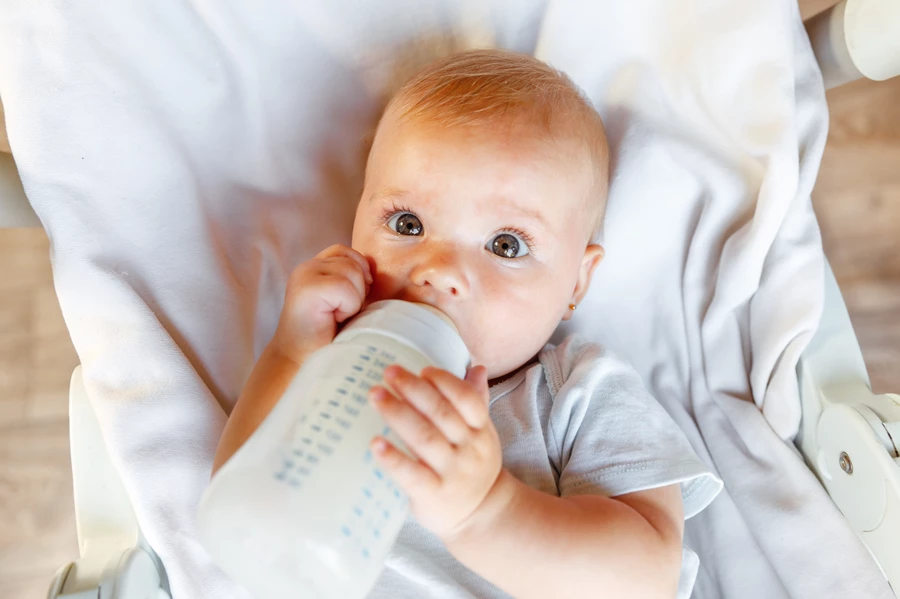
Plenty of babies are bottle fed and don’t suffer from baby bottle tooth decay. So why does it happen? Generally speaking, as Boston Children’s Hospital explains, this type of tooth decay happens when babies sleep with a bottle containing milk, juice, or another sugary beverage.
In particular can increase when a child:
- Falls asleep with a bottle containing milk, formula, juice, or another sugar-containing drink
- Uses a bottle or sippy cup for prolonged periods throughout the day
- Frequently snacks on sugary or sticky foods
- Does not have their teeth brushed thoroughly twice a day
- Has frequent acid and carbohydrate exposure without enough recovery time
- Does not receive appropriate preventive dental care
Key Takeaway: The concern therefore isn’t necessarily bottle feeding, the concern is more so how long and how frequently teeth are exposed to fermentable carbohydrates, not to mention how well parents take care of baby teeth.
But why? To understand that we must take a step back and understand how cavities develop in the first place.
How Cavities Develop in Babies vs. Adults
Certain bacteria in the oral microbiome use sugars and other carbohydrates as fuel. As they metabolize them, they create acids that temporarily lower the pH around the teeth and pull minerals from enamel.
Fortunately, your mouth has a built-in defense system: saliva. Saliva helps neutralize acids, clear food debris, and provide minerals that help enamel recover. This process of losing and replacing minerals happens throughout the day.
Problems can arise when the balance shifts too far in one direction. If teeth are exposed to fermentable carbohydrates frequently or for prolonged periods, cavity-associated bacteria have more opportunities to produce acid.
Eventually, repeated demineralization can progress into tooth decay and, ultimately, a cavity.
Why Baby Teeth Decay More Easily Than Adult Teeth
As our own Dr. Kami Hoss explains in his guide to toddler cavities and how to treat cavities in children, primary teeth (AKA baby teeth) have a thinner layer of enamel than permanent teeth, making them more susceptible to decay and cavities. That applies to both baby tooth decay in front teeth and back teeth, as well as top and bottom row teeth.
All primary teeth also have thinner dentin than adult teeth—the layer underneath the enamel. That means once decay breaks through the enamel, it has less tooth structure to travel through before potentially reaching the inner pulp of the tooth.
This is one reason it’s important to understand baby tooth decay treatment options and employ them to help stop the progression of decay once it’s developed, or better yet, to implement preventative measures before it happens.
The best case scenario is to reduce cavity risk from the moment those first little teeth arrive.
How Do I Prevent Baby Bottle Tooth Decay?: Before It’s Happened
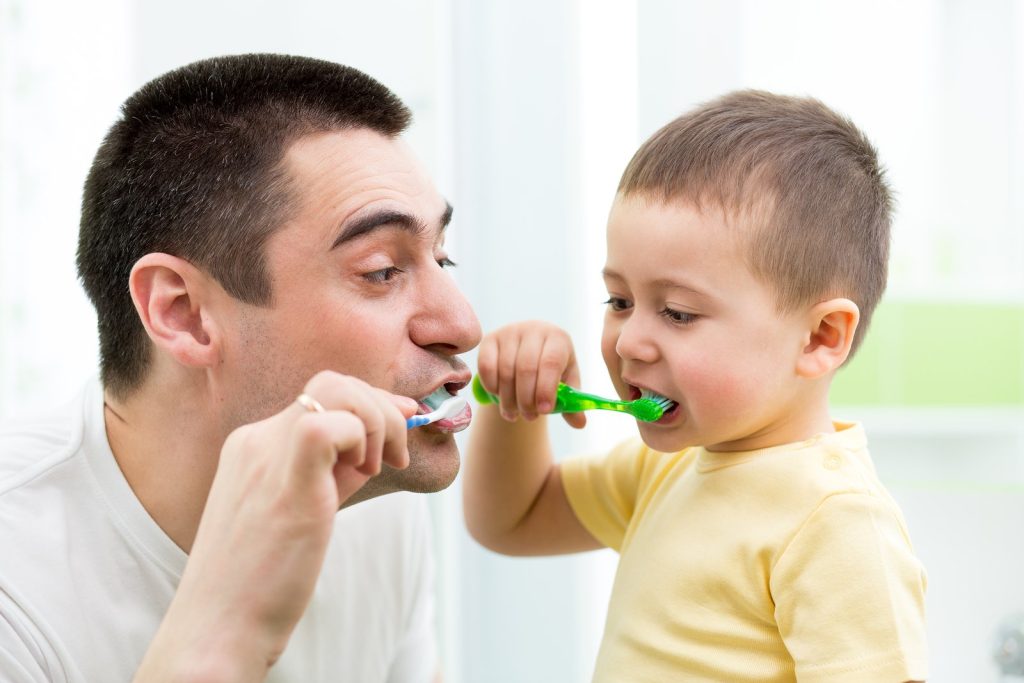
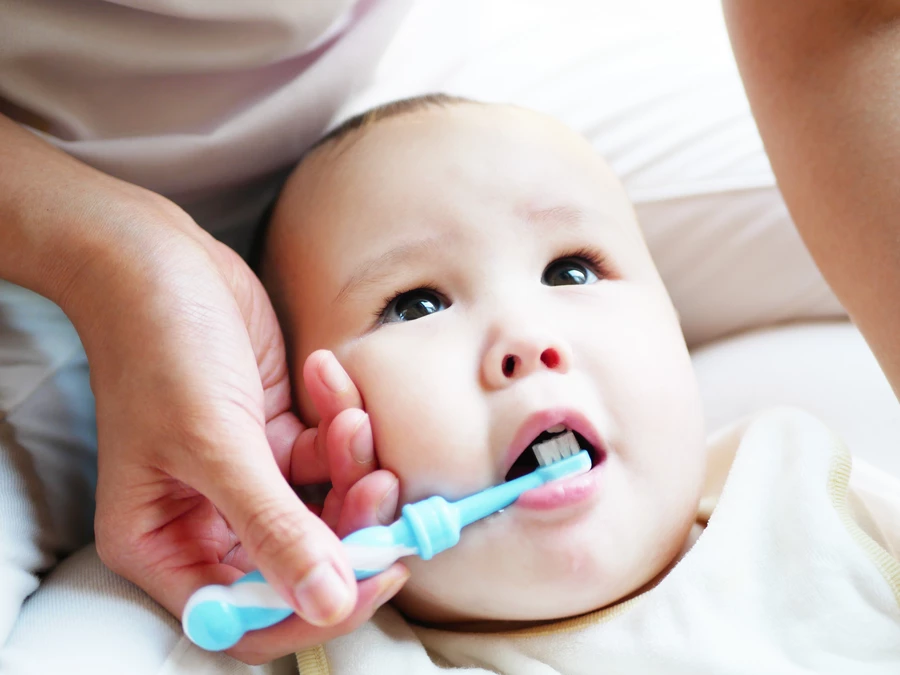
- Brush twice daily beginning with the first tooth.
- Use a rice-grain-sized smear of fluoride toothpaste before age 3 and a pea-sized amount from ages 3 to 6.
- Finish the last feeding before bedtime brushing.
- Avoid putting your child to sleep with a bottle containing milk, formula, juice, or another carbohydrate-containing drink.
- Limit frequent sipping and sugary or sticky snacks.
- Never dip pacifiers in honey, sugar, or other sweet substances.
- Schedule your little one’s first dental visit by age 1.
Consider Dental Sealants: Dental sealants applied to the chewing surfaces of babies’ teeth may help prevent up to around 80% of cavities?
One More Often Overlooked Piece of Advice: The oral microbiome matters, too. The ADA’s guidance on tooth decay with baby bottles notes that cavity-associated bacteria can be transferred through saliva, so avoid sharing spoons or cleaning your baby’s pacifier with your mouth.
How Do I Treat Baby Bottle Tooth Decay?: After It’s Happened
Baby bottle tooth decay treatment options depend heavily upon how far the decay has progressed.
Early mineral loss may sometimes be remineralized. In other words, the decay process may be able to be arrested through improved oral hygiene, dietary changes, fluoride or hydroxyapatite use, and professional care.
Once a cavity has formed, however, lost tooth structure will not grow back.
Depending on the severity, baby tooth decay treatment may include fluoride therapy, silver diamine fluoride (SDF), a filling or other restoration, treatment inside the tooth, or extraction when a severely damaged tooth cannot be restored.
There is no single treatment for baby bottle tooth decay that fits every child. Early evaluation gives your pediatric dentist the best opportunity to recommend the least invasive appropriate approach.
That’s why if you notice any of the telltale signs of cavities in your little one, including white spots, brown spots, dark or black spots, visible holes, or abscesses, you should immediately reach out to a qualified pediatric dentist.
Schedule a Baby Bottle Tooth Decay Dentist’s Appointment Today
Baby bottle tooth decay is highly preventable. Healthy feeding habits, twice-daily brushing, appropriate fluoride exposure, and early dental visits are your best lines of defense.
And, as you now know, baby teeth are well worth protecting. Keeping them healthy supports eating, speech, dental development, and the oral health habits your child will carry forward.
Have concerns about baby bottle tooth decay or child or toddler cavities? Schedule an appointment with The Super Dentists now!