Sedation Dentistry

Alleviating Your Children's Fears with Sedation Dentistry

The pediatric dentists at The Super Dentists consider the use of sedatives during certain dental treatments. Sedation dentistry is offered to help your child relax when he/she is afraid or fidgety, has low pain tolerance, has physical handicaps,exhibits strong gag reflexes.

Sedation dentistry is most commonly used during extensive procedures that require your child to sit still and be calm such as:

  • Bridges
  • Crowns
  • Cosmetic procedures
  • Extractions
  • Fillings
  • Pulpotomies
  • Periodontal treatments

Endorsed by the American Dental Association, sedation is an effective way to make your child comfortable during their dental visit. There are different types of sedation that your child's dentist may consider including:

  • Nitrous oxide (also known as "laughing gas")
  • IV sedation
  • Oral conscious sedation
  • General anesthetic

Before a sedative or anesthetic is used on your child, it is important to tell you kid's dentist about any medications he/she is taking or medical treatments being received.


The pediatric team at The Super Dentists carefully explains the sedation process before administering any sedative or anesthetic. We will also explain pre-and post-sedation instructions so you know the best way to care for your child (see some pointers below).

Dental Visits Made Easy with 'The Wand'

Is Your Child Nervous About Visiting The Dentist?

We realize that some patients become nervous at the sight of a needle and syringe. This is why our doctors at The Super Dentists use 'The Wand' - a lightweight, pen-like device that eliminates injection discomfort and pain. While Milestone Scientific - the manufacturer of the Wand call this anesthesia delivery system ComputDent or STA (Single Tooth Anesthesia) System, it is generally referred to as the The Wand because many patients who dislike needles describe it as their "magic wand'!

How ‘The Wand’ Works

The Wand helps us to deliver local anesthesia effectively, quickly and painlessly. The discomfort felt with a needle insertion is caused by the anesthesia being injected quickly into the tissue. Of course, it is possible for a dentist to control the flow speed with a syringe, but the idea behind the Wand is to remove the 'human error' factor. With this revolutionary device, the flow rate is controlled to result in the patient having two to three times more comfort than with a traditional syringe. The injection is guaranteed to be slow, steady and comfortable. This results, in the overall dental experience being much more positive for our young patients.

Just knowing that the Wand will be used can be very reassuring to anyone who has had a previously negative experience or to a patient with a needle phobia. The pen-like appearance of the Wand is very non-threatening so that it induces less anxiety than needle injections.

‘The Wand’ vs. Other Anesthesia

Another clear advantage to using the Wand is the fact that the patient will experience less drooling, when they leave our office. This painless technique anesthetizes the tooth and gums completely, but the patient's mouth feels perfectly normal. When the Wand is used, the patient can walk out of the office feeling just as comfortable as when he or she walked in.

The Wand is another great example as to how our team here at The Super Dentists makes every effort to offer our patients the latest in dental technology. We want each of our patients to have a pleasant and positive experience, and that’s why we’ve been voted the best Pediatric Dentistry office by our patients in the Nickelodeon Parents Choice Awards. Please feel free to contact us if you'd like to know more about the treatments we offer.

When Does a Pediatric Dentist Choose Oral Conscious Sedation?

Pediatric dentists recommend oral conscious sedation for moderately apprehensive children, very young children, and children with special needs. It is used to calm your child and reduce the anxiety or discomfort associated with their dental treatment. Your child will become quite drowsy and may even fall asleep, but he/she will not become unconscious.

Does "Laughing Gas" Make My Child Laugh During a Dental Procedure?

Some children are given nitrous oxide (also known as "laughing gas") to help them relax. While your child remains fully awake and alert, laughing gas doesn't make them laugh during the procedure. Nitrous oxide is very safe.

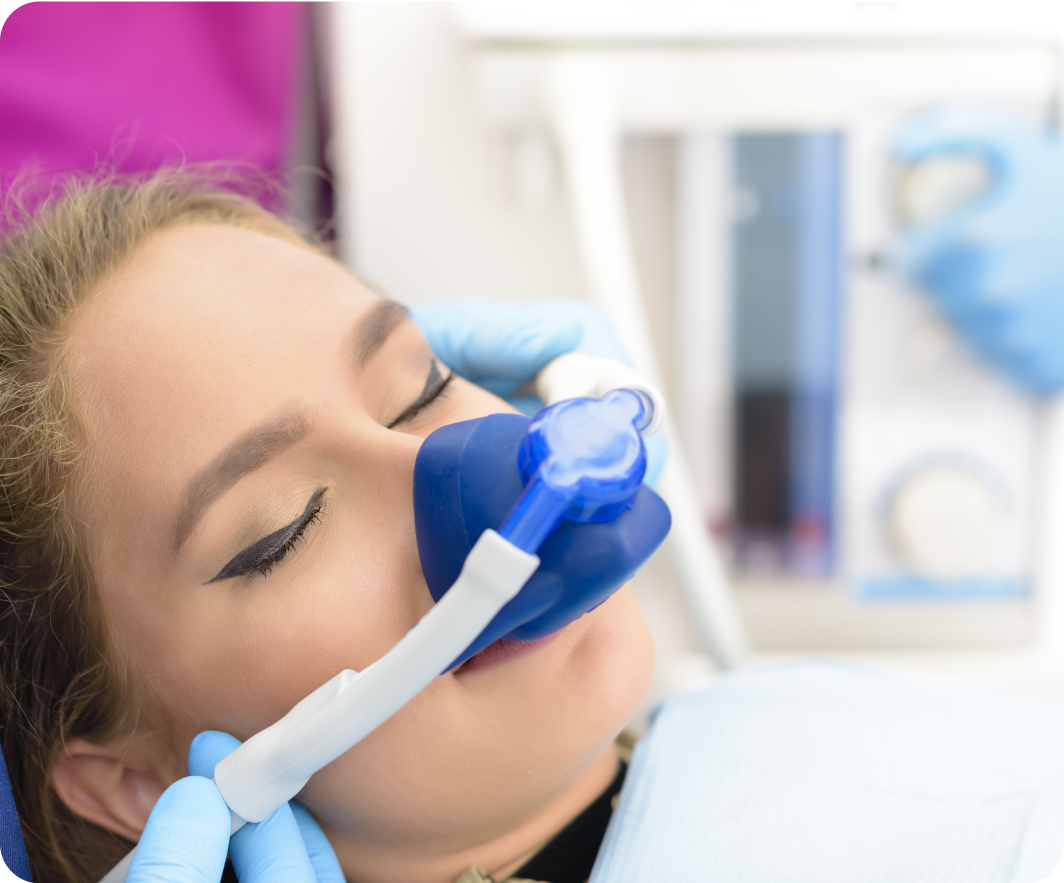
A blend of two gases, oxygen and nitrous oxide, nitrous oxide is given through a small breathing mask placed over your child's nose. The gas is mild, easily taken, and quickly eliminated from the body. The relaxed state it produces in the patient allows them to respond more favorably to dental procedures.

How Should I Prepare for My Child's Sedation Procedure? 5 Tips from Your Pediatric Dentist

  1. Please call the office if your child becomes sick or develops a fever, cough, sore throat or has a runny nose within two days before their dental appointment. Another appointment will be scheduled.
  2. When the sedative is administered orally, your child must have an empty stomach in order for the medication to be absorbed and be effective. Do not give your child milk or any solid foods after midnight before their dental appointment.
  3. Your child must be accompanied by a parent or guardian who must stay at the dentist's office for the duration of their dental appointment.
  4. If you are driving, make arrangements to have another adult in the car with you to assist your child on the trip back home. Use a seat belt and an appropriate car seat to protect your child in the car.
  5. If you have any questions or concerns, before your visit, please call the pediatric team at (619) DENTIST. We are available through our answering service at all times and are pleased to return your call promptly.

What's the Best Care for My Child After the Dental Treatment?

Although your child is awake after the dental work has been completed, he/she may be drowsy and may want to sleep for a few hours or most of the day. Don't worry. That's okay.

  • Immediately after the dental treatment, your child may be hungry and thirsty. At this time, your child may drink only clear liquids.
  • Once you're back at home, encourage your child to drink plenty of liquids and serve him/her soft solids such as JELL-O or applesauce. Chewing hard food may cause your child to bite theor lip, tongue or cheek.
  • Your child may still have the effect of the local anesthesia. Please instruct your child not to bite their lip, tongue or cheek. Supervise your child carefully until the local anesthesia wears off.
  • Supervise your child's activities for the rest of the day. He/she may be slightly unsteady and should not be allowed to play outside or climb stairs without close supervision.
  • Some children my be irritable or experience nausea and vomiting. If your child has to throw up let him/her do so. Do not attempt to prevent the child from throwing up.
  • If you have any questions or concerns, after your visit, please call our office at (619) or (760) DENTIST. We are available through our answering service at all times and are pleased to receive and promptly return your call.

Browse this Web site for more details about The Super Dentists' San Diego pediatric practice. You'll find lots of detailed information designed to help you make a smart decision regarding your children's dental care.


Then, when you're looking for a kid's dentist in north or south San Diego county, call our office at (619) or (760) DENTIST (336-8478). If you prefer to e-mail us first, please do so at WhatsNew@TheSuperDentists.com. One of our friendly team members will respond to you promptly. For our office hours, San Diego locations and maps, simply click here.